
Evolutionary insights into the development of the human intestine
Could evolution be behind the recent surges in gastrointestinal disorders around the globe?
5:00 AM
Author |
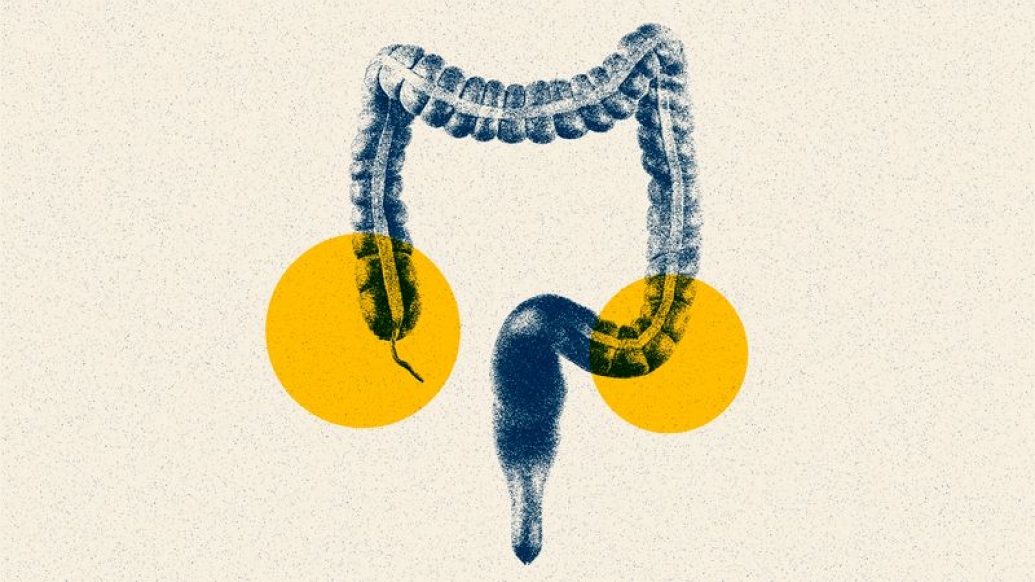
Research from an international team finds that the human gut is a site of rapid change, with recent and important deviations from other mammals, including our closest living relative, the chimpanzee.
Led by Gray Camp, Ph.D., of Roche Innovation Center in Basel, Switzerland; Jason Spence, Ph.D., of the University of Michigan and Craig Lowe, Ph.D., of Duke University, the team used stem cells to create human, chimp and mouse intestinal organoids—tiny models of the intestine that offer an unprecedented glimpse into the development of the small intestine.
The work was published in the journal Science.
Using single cell RNA sequencing to compare cell types across species, they identified that each cell type of the epithelium (lining of the gut) had differently expressed and regulated genes.
Human gut epithelial genes contained signs of recent evolutionary change, including one for an enzyme responsible for the digestion of lactose in milk as well as differences in the expression of genes associated with immunity, lipid metabolism and cholesterol absorption.
Specifically, the group discovered that overall, enterocytes, cells that specialize in nutrient absorption and barrier function have undergone rapid evolution in people.
This is important, the authors state, because areas of the human genome that have rapid change influence disease risk and are associated with metabolic and gastrointestinal disorders.
The study offers previously unknown insight into human-specific alleles in the gut and how they may have primed the human intestine to more effectively absorb nutrients.
Additional authors: Qianhui Yu, Umut Kilik, Stefano Secchia, Lukas Adam, Yu-Hwai Tsai, Christiana Fauci, Jasper Janssens, Charlie J. Childs, Katherine D. Walton, Rubén López-Sandoval, Angeline Wu, Marina Almató Bellavista, Sha Huang, Calen A. Steiner, Yannick Throm, Michael James Boyle, Zhisong He, Joep Beumer, and Barbara Treutlein.
Michigan Research Core(s): This work was made possible in part by the Michigan Medicine Translational Tissue Modeling Laboratory, a U-M funded initiative (Center for Gastrointestinal Research, Office of the Dean, Comprehensive Cancer Center, Departments of Pathology, Pharmacology and Internal Medicine) with support by the Endowment for Basic Sciences.
Paper cited: “Recent evolution of the developing human intestine impacts metabolic and barrier functions,” Science. DOI: 10.1126/science.adr862

Health Lab
Explore a variety of health care news & stories by visiting the Health Lab home page for more articles.
Media Contact

Public Relations
Department of Communication at Michigan Medicine
In This Story

Jason R Spence, PhD
Professor
Stay Informed
Want top health & research news weekly? Sign up for Health Lab’s newsletters today!
Featured News & Stories

Stopping Ewing sarcoma relapses where they start

Rx Kids linked to reductions in preterm births and low birthweights, fewer NICU admissions

Vascular STING activation facilitates natural killer cell anti-tumor immunity in small cell lung cancer

Researchers identify a potential “Achilles heel” of psoriasis

Nanoparticles genetically modify several human cell types

