
More articles about: computational medicine
Health Lab
New algorithmic tool enables to scientists to see cells “talk” to one another
A new U-M study, featured in Nature Genetics, details a technique to infer cell-cell communication using spatial transcriptomics
Health Lab
Applying engineering principles to biological studies could identify disease biomarkers more quickly
In a new paper published in PNAS, a research team proposes that the fundamental principles of control theory and observability can be applied to study biological processes that change over time.
Health Lab
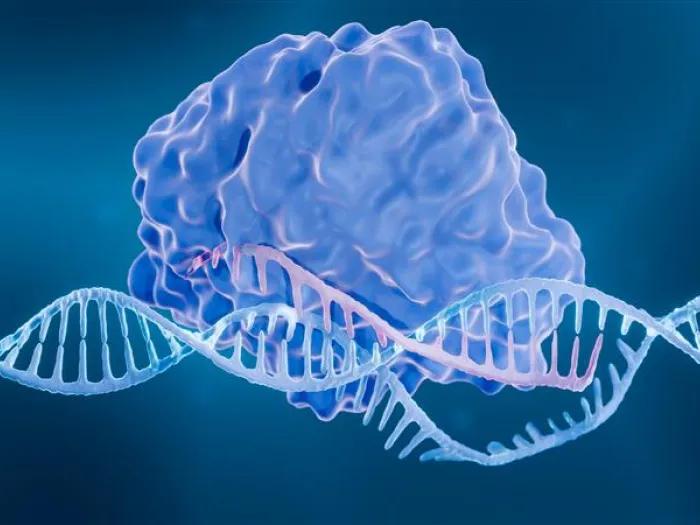
CRISPR study reveals surprising role of Cas9 as a guardian of bacterial defense
New research overturns a common assumption about CRISPR Cas9—that unbound from its usual RNA partners, the “empty” or apo form of Cas9 is functionless.
Health Lab
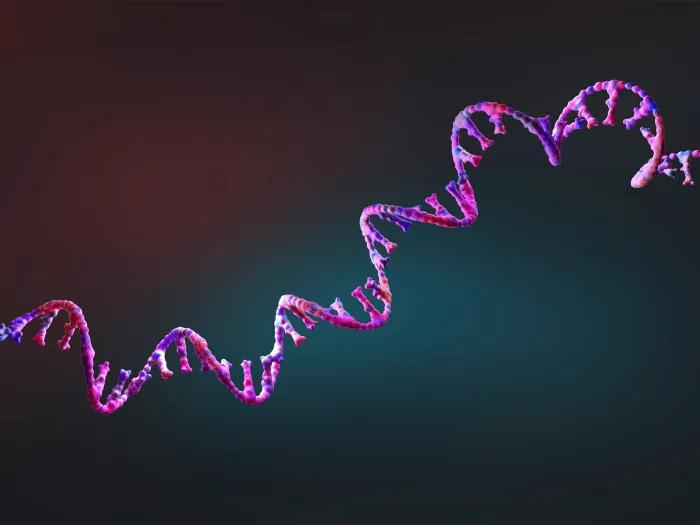
A structural biologist weighs in on the tricky task of determining RNA’s shape
A recent article in Nature details why the quest to determine the shapes of RNA is difficult even for artificial intelligence.
Health Lab
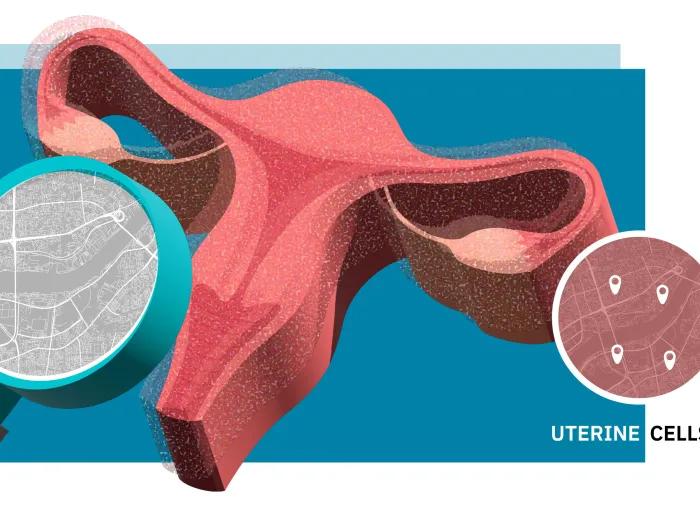
Mapping the human uterus: diverse cells interact in surprising ways
Michigan Medicine researchers identify new uterine cell types, how they change and how work together through cycles, laying the groundwork for studying challenges like infertility.

Health Lab
Who feels ready for residency?
Helen Morgan, M.D., of Michigan Medicine, authored a study that surveyed obstetric and gynecology residents to determine who feels prepared for the transition from medical school to residency.
Health Lab
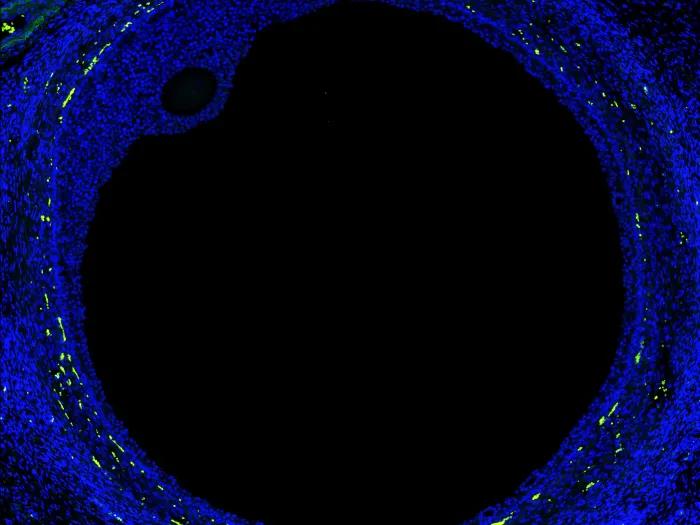
Spatial atlas of the human ovary with cell-level resolution will bolster reproductive research
New map of the ovary provides a deeper understanding of how oocytes interact with the surrounding cells during the normal maturation process, and how the function of the follicles may break down in aging or fertility related diseases.

Health Lab
An updated rat reference provides more accuracy for research
An updated rat reference provides more accuracy for research; could help researchers using rat models for the study of DNA, RNA, evolution, or genes linked to disease risks
The Fundamentals
Combine Data With Knowledge to Build AI Systems That Can Be Trusted
An interview with Dr. Geoffrey Siwo on AI, computational medicine and advancing global health equity.
