
Circadian rhythm drives the release of important immune cells
Research reveals it's driven by Earth’s 24-hour day/night cycle
3:36 PM
Author |
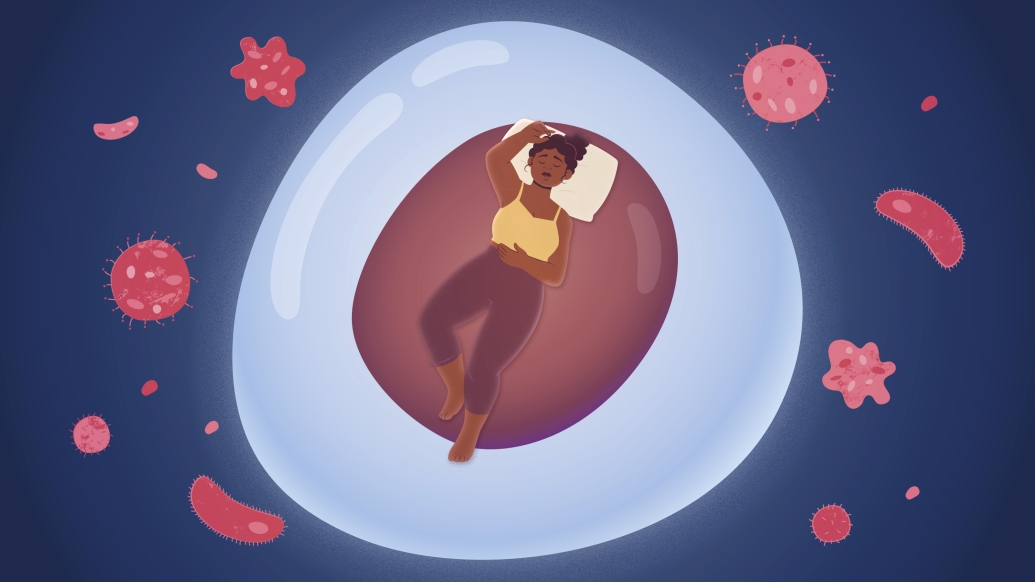
The sites where our bodies come into contact with the outside world—via skin, the surface of the eye, inside the mouth, the lining of the intestine and the urinary tract, for example—are known as barrier tissues.
Helping to defend those tissues are innate lymphoid cells, or ILCs, which when faced with a threat, stimulate proteins called cytokines that further activate the immune system and control intestinal microbiome.
These cells naturally diminish with aging or can be depleted by certain medical conditions.
ILCs are made inside bone marrow and circulate in the blood. But how are they activated to mobilize and travel to their target sites to replenish the depleted pool of tissue ILCs?
A Michigan Medicine study reveals that this migration is ruled by circadian rhythms and are one of the many biological functions dictated by the Earth’s 24-hour day/night cycle.
To determine this, the team, led by Chang H. Kim, Ph.D., professor of Pathology and the Kenneth and Judy Betz Research Professor, Mary H. Weiser Food Allergy Center, looked at how the process plays out in mice, who are active at night and sleep during the day.
For both mice and humans, a stress hormone called cortisol peaks upon awakening, while a decrease in cortisol and an increase in melatonin and adenosine bring on feelings of sleepiness.
The investigators discovered that ILCPs (progenitor cells that go on to become ILCs), heavily express so-called clock genes that lead to them being active at different times of the day.
Specifically, they found that cortisol increases activation of a chemoattractant receptor called CXCR4 on ILCPs to keep them inside the bone marrow.
At the time of rest, the cytokine interleukin-18 and a receptor called RORα activate the receptor S1PR1 on ILCPs, triggering them to be released from the bone marrow into the blood.
“Building cells takes time. Instead of constantly releasing cells as they are made, we think that to maximize efficiency, the body synchronizes to a rhythm where you build up ILCPs for 12 hours while animals are active and then release them while sleeping,” said Kim.
This process is repeated daily and is necessary to maintain adequate levels of barrier tissue ILCs in the gut.
“What this suggests is if you mess up your circadian rhythm, you decrease ILCs in the tissue, making you more vulnerable to infection and an imbalance in your microbiome,” Kim said.
Understanding how ILCs are mobilized on a circadian rhythm is an important concept that could be applied to other types of stem cells and eventually applied for certain cell therapies, he notes.
Additional authors include Qingyang Liu, Shams Tabrez, and Patrick Niekamp
This work was made possible in part through use of the U-M Advanced Genomics Core.
Paper cited: “Circadian-clock-controlled endocrine and cytokine signals regulate multipotential innate lymphoid cell progenitors in the bone marrow,” Cell Reports. DOI: https://doi.org/10.1016/j.celrep.2024.114200.
Sign up for Health Lab newsletters today. Get medical tips from top experts and learn about new scientific discoveries every week by subscribing to Health Lab’s two newsletters, Health & Wellness and Research & Innovation.
Sign up for the Health Lab Podcast: Add us on Spotify, Apple Podcasts or wherever you get you listen to your favorite shows.

Health Lab
Explore a variety of health care news & stories by visiting the Health Lab home page for more articles.
Media Contact

Public Relations
Department of Communication at Michigan Medicine
Stay Informed
Want top health & research news weekly? Sign up for Health Lab’s newsletters today!
Featured News & Stories

Michigan’s Medicaid expansion improved both health and finances

Stopping Ewing sarcoma relapses where they start

Rx Kids linked to reductions in preterm births and low birthweights, fewer NICU admissions

Chang Kim is the Next BRCF Flow Cytometry Core Faculty Director

Researchers identify a potential “Achilles heel” of psoriasis

