Inactivation of key pathway boosts the body’s immune response against tumors
Targeting CDK12/13 improves the efficiency of cancer therapies
5:00 AM
Author |
Immunotherapy uses the body’s immune system to recognize and destroy cancer cells.
One way to do this is through immune checkpoint inhibitors.
Immune checkpoints are a normal part of the immune system, and they help prevent the immune response from destroying healthy cells in the body.
Therapeutic drugs that set up an immune checkpoint blockade inhibit proteins that prevent the immune system from attacking cancer cells.
As a result, T cells can more effectively target and destroy tumors.
However, many patients are resistant to this therapy, which poses a challenge to their treatment.
A study led by researchers from the University of Michigan showed that targeting CDK12 and a related gene, CDK13, strongly activates the stimulator of interferon genes, or STING, signaling pathway, enhancing the effectiveness of immunotherapies.
The work was published in The Journal of Clinical Investigation.
Previously, U-M researchers had identified a new subtype of aggressive prostate cancer and had shown that patients who have lost the CDK12 gene develop metastatic disease.
This finding prompted them to further investigate the role of CDK12.
Using preclinical models, they later found that targeting CDK12/13 results in STING activation.
In this process, CDK12 loss activates other genes that drive cancer.
Both the overexpression of these genes as they try to create proteins and the rapid DNA replication causes a collision, resulting in DNA damage.
In their previous study, the team found that the inactivation of CDK12/13 was associated with higher levels of T cells in advanced prostate cancer.
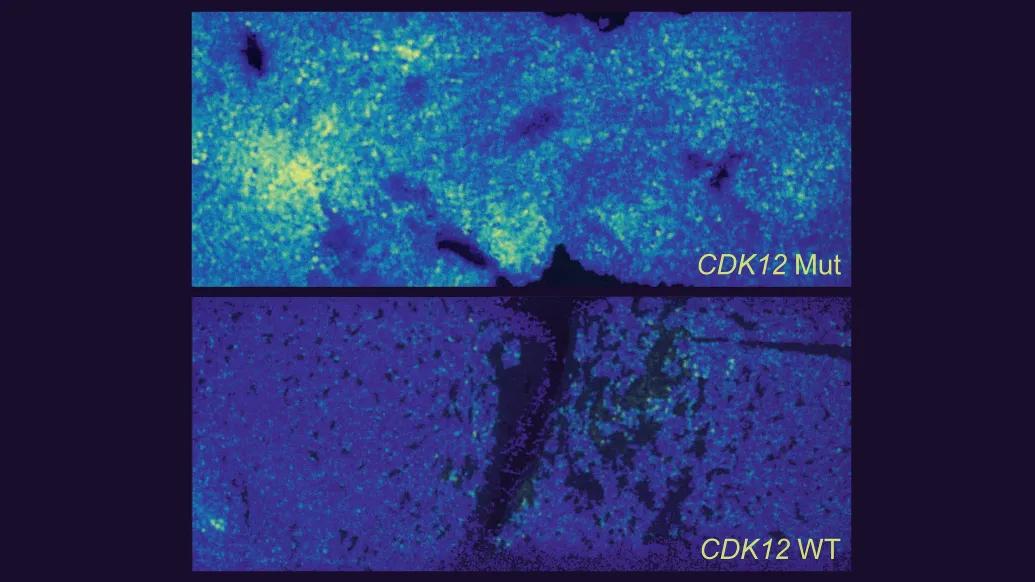
To understand the connection between the immune system and CDK12/13, the team looked at metastatic prostate cancer samples with either active or inactive CDK12 in the study.
In clinical samples across a broad range of cancer types, they found that inactivation of both CDK12 and CDK13 was associated with higher STING activity and more favorable immunotherapy treatment outcomes.
The researchers confirmed these findings in preclinical models using a CDK12/13 degrader. Mice treated with this molecule had higher STING activity.
This increased activity was due to the release of DNA fragments inside tumor cells, which is a result of DNA damage triggered by the loss of CDK12/13.
STING activation, in turn, recruited T cells to the tumor, and strongly sensitized them to immune checkpoint blockade, revealing a promising novel strategy to improve current cancer therapies.
“Now the question is whether we will see similar results in clinical trials,” said Arul Chinnaiyan, M.D., Ph.D., S.P. Hicks Professor of Pathology and member of the Rogel Cancer Center.
“We hope that the CDK12/13 degraders will combine nicely with the immune checkpoint inhibitors in future therapies.”
Additional authors: Yi Bao, Yu Chang, Jean Ching-Yi Tien, Gabriel Cruz, Fan Yang, Rahul Mannan, Somnath Mahapatra, Radha Paturu, Xuhong Cao, Fengyun Su, Rui Wang, Yuping Zhang, Mahnoor Gondal, Jae Eun Choi, Jonathan K. Gurkan, Stephanie J. Miner, Dan R. Robinson, Yi-Mi Wu, Licheng Zhou, Zhen Wang, Ilona Kryczek, Xiaoju Wang, Marcin Cieslik, Yuanyuan Qiao, Alexander Tsodikov, Weiping Zou and Ke Ding.
Funding/disclosures: This research was funded by the National Cancer Institute Outstanding Investigator Award (R35CA231996), the NCI Prostate SPORE grant (P50CA186786), the NCI EDRN (U2C CA271854) and the Strategic Priority Research Program of the Chinese Academy of Sciences (Grant No. XDB1060000).
Tech transfer(s)/Conflict(s) of interest: Chinnaiyan is a co-founder and serves on the Scientific Advisory Board of Lynx Dx, Esanik Therapeutics, Medsyn and Flamingo Therapeutics. Chinnaiyan is a scientific consultant for EdenRoc, Proteovant, Aurigene Oncology, RAPPTA, Belharra and Tempus. Ding provides advisory services to Kinoteck Therapeutics and has received financial support from Livzon Pharmaceutical Group. Zou acts as a scientific advisor for NGM, CrownBio, Cstone, Proteovant, Hengenix, NextCure, and Intergalactic. Patents related to the CDK12/13 degrader, YJ1206, have been filed by both the University of Michigan and the Shanghai Institute of Organic Chemistry, with Chinnaiyan, Ding, Chang, Wang and Tien recognized as co-inventors.
Paper cited: “CDK12/13 inactivation triggers STING-mediated anti-tumor immunity in pre-clinical models,” The Journal of Clinical Investigation. DOI: 10.1172/JCI193745
Sign up for Health Lab newsletters today. Get medical tips from top experts and learn about new scientific discoveries every week.
Sign up for the Health Lab Podcast. Add us wherever you listen to your favorite shows.

Health Lab
Explore a variety of health care news & stories by visiting the Health Lab home page for more articles.
Media Contact

Public Relations
Department of Communication at Michigan Medicine
In This Story

Arul Chinnaiyan, MD, PhD
Professor
Related
Research points to potential new treatment for aggressive prostate cancer subtype
Researchers Pinpoint New Subtype of Prostate Cancer
Stay Informed
Want top health & research news weekly? Sign up for Health Lab’s newsletters today!
Featured News & Stories

Gifts advance colon cancer prevention and early detection
A method to prevent falls before they happen
Study explains how colorectal cancer cells maintain high iron levels

Emergency EEG study suggests need for faster seizure diagnosis and care options

When should parents stop tracking their kids' location?