
More articles about: Artificial intelligence (AI)

Minding Memory
Is the United States Lagging Behind Europe in Memory Improvement?
In this episode, Lauren & Matt speak with Neil Mehta, PhD who is the associate dean for research and a professor in the Department of Epidemiology at the University of Texas Medical Branch in Galveston. Dr. Mehta’s research focuses on US life expectancy trends, the effects of obesity on disability and mortality, the sources of socioeconomic status disparities in mortality, and patterns of health in the United States and Europe.
Dr. Mehta talks about a recent manuscript from the NIA-funded TRENDS study called “Trends in Memory Function and Memory Impairment Among Older Adults in the United States and Europe, 1996 to 2018.”, which looks at data from several sources to compare trends in memory function across 13 different countries.
Well-Being at Michigan Medicine
AI, Well-Being and the Human Connection
Artificial intelligence is changing healthcare — but what does that mean for the people who deliver and receive care? Cornelius James, M.D., FACP, FNAP, a clinical assistant professor and primary care physician at for U-M Departments of Internal Medicine and Pediatrics, joins Chief Well-Being Officer Elizabeth Harry, M.D., to explore AI literacy, clinical judgment, governance, education and well-being.
They discuss how healthcare can embrace new technologies while protecting human connection, empathy, wisdom and the meaningful moments that define care.

Department News
Stephan Taylor, M.D., quoted in Ars Technica story, "Man told ChatGPT he was feeling delusional. ChatGPT insisted he was Jesus"
Stephan Taylor, M.D., was interviewed by Ars Technica about the case of a bipolar man’s ChatGPT use which led to AI psychosis and a suicide attempt

Health Lab Podcast
Caregiver Resources: Reduce the Risk of Burnout
If you are a caregiver, whether you’re helping a spouse, parent, another adult relative or a friend with a disability, health need or medical crisis, you don’t have to go it alone.

Health Lab
Studying neurons using neurons
Labs at the University of Michigan Medical School are exploring a new technology that leverages the biological capabilities of human neurons for artificial intelligence.
Health Lab
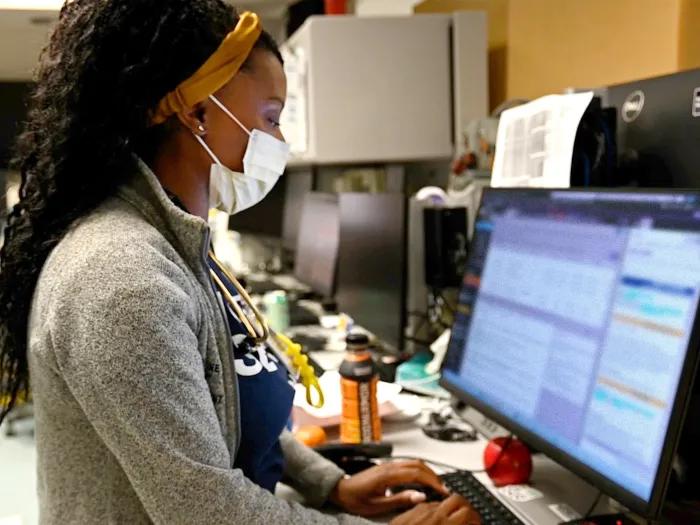
How AI is helping emergency physicians learn from their patients
How the “Tell Me What Happens Next” initiative is being used by the Department of Emergency Medicine’s new Division of Clinical Informatics using artificial intelligence.
News Release
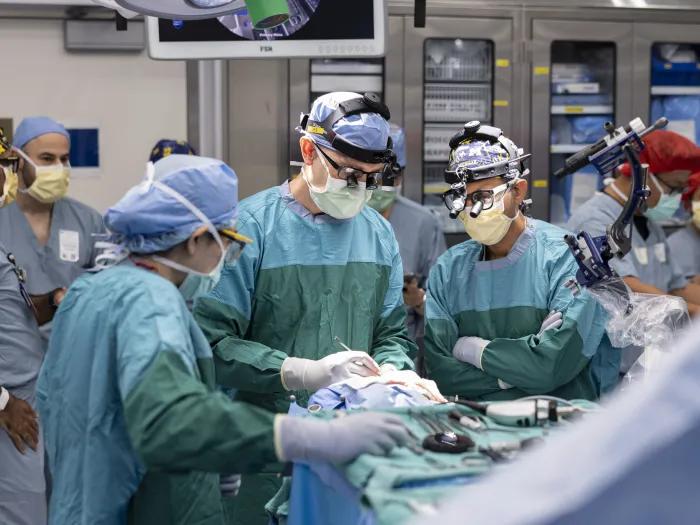
University of Michigan implants first-in-human Paradromics wireless brain-computer interface, designed to restore communication
Neurosurgeons at University of Michigan Health completed the first-in-human implantation of a Paradromics Inc., wireless brain-computer interface, or BCI, as part of a national clinical trial for patients with difficulty speaking.
Health Lab
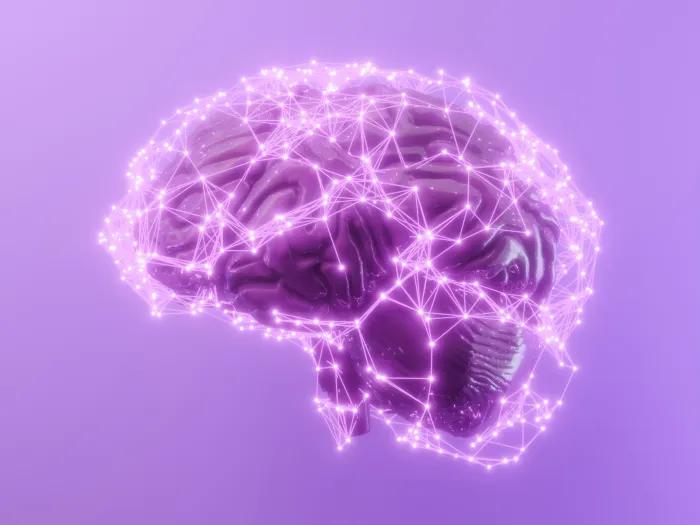
New algorithmic tool enables to scientists to see cells “talk” to one another
A new U-M study, featured in Nature Genetics, details a technique to infer cell-cell communication using spatial transcriptomics
The Fundamentals
The Bioethics of Data and A.I. in Healthcare
Season four of The Fundamentals is here, and we're celebrating by doing a special two-episode release to launch the season!
On this episode of the Fundamentals, we talked to Professor Kayte Spector-Bagdady, the George E. Wantz Professor of Bioethics, about the use of massive amounts of data, artificial intelligence, and more.
Be sure to check out our second launch episode and our entire back catalog on The Fundamentals website, or on your favorite podcast player.

Health Lab
The algorithm will see you now? Patients say not without a doctor nearby
Researchers at the University of Michigan and Michigan State University found that U.S. adults were significantly more likely to trust in and choose medical AI in scenarios with better AI performance, U.S. Food and Drug Administration approval, national and local certifications, the presence of a clinician, and the use of representative data.

Health Lab
AI tool can predict heart failure from genetic and health record data
Michigan Medicine researchers found that by collecting genetic information and clinical data from an individual patient can help predict their heart failure risk a decade before it’s diagnosed.
Health Lab Podcast
AI and Mental Health
As concern grows about online chatbots and mental health, an expert cautions about potential risk to already-vulnerable people, especially teens and young adults. Read the full article on the Health Lab website. All Health Lab content including health news, best practices and research insights are for informational purposes only and are not a substitute for professional medical guidance. Always seek the advice of a health care provider for questions about your health and treatment options.

Health Lab
AI reveals hidden features of a developing embryo model
In Michigan Medicine-led research, artificial intelligence reveals hidden features of a developing embryo model.

Health Lab
An AI model accurately predicts how cells end up in position inside tissues
Understanding transitions from cell to tissue in space and over time: A new modeling tool from the Welch lab at Michigan Medicine.

Research News
Weil and University of Connecticut partnership awarded $2.8 million to develop defibrillator decision support algorithms
The algorithms will help rescuers make rapid, more effective shock decisions by removing motion artifacts generated during CPR.
