
More articles about: Neurodegenerative Disorder
News Release
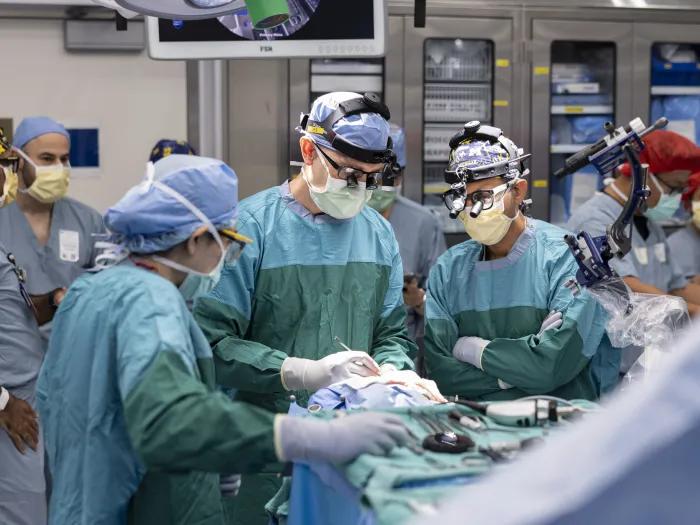
University of Michigan implants first-in-human Paradromics wireless brain-computer interface, designed to restore communication
Neurosurgeons at University of Michigan Health completed the first-in-human implantation of a Paradromics Inc., wireless brain-computer interface, or BCI, as part of a national clinical trial for patients with difficulty speaking.

Health Lab
Psychoactive substances and adverse side effects for patients with multiple sclerosis
Psychoactive substances can give immediate relief to people living with multiple sclerosis, but some come with adverse side effects. Research led by University of Michigan Health looks at the positive and negative impacts of using psychoactive substances to manage symptoms.
Health Lab
Researchers develop models to help diagnose ALS earlier through blood biomarkers
New machine learning models by Michigan Medicine may help diagnose amyotrophic lateral sclerosis, or ALS, earlier on through a blood sample.

Health Lab
The faces of epilepsy: finding strength in hope
There are over 60 types of epilepsy, 30 kinds of seizures and four categories of complexity. Five families share their unique journeys with the condition.
Health Lab
Study reveals the dual role for a protein critical for healing nerve damage
A recent University of Michigan study in mice finds a specific protein inside of the nerves, called Sarm1, appears to be essential for nerve regeneration.
Health Lab
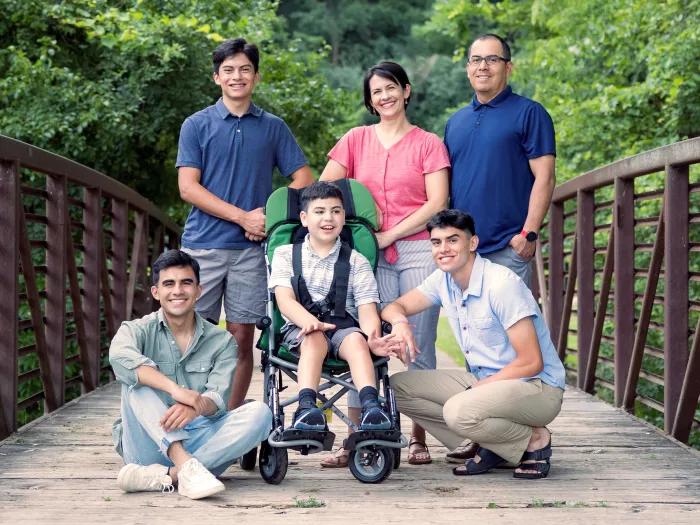
Teen with severe epilepsy finds seizure relief through ketogenic diet
Since starting the ketogenic diet to treat Dravet syndrome, 16-year-old Armando hasn't had seizure clusters or hospital stays from his rare form of epilepsy.

Health Lab
Finding answers for Dravet syndrome, a deadly form of epilepsy
Michigan Medicine researchers talk about changing the disease course of Dravet syndrome and families caring for the condition.
Philanthropy News
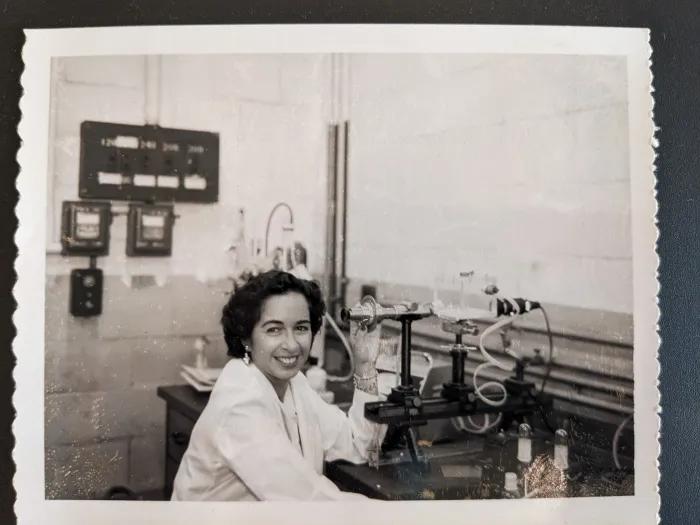
Elaine Shafrin’s life and legacy
Inspired by her passion for education and helping people overcome obstacles, Elain Shafrin has made a planned gift to support U-M student scholarships and movement disorders research.

Health Lab
Living near harmful algal blooms reduces life expectancy with ALS
Living close to cyanobacterial harmful algal blooms — which are present nationwide but are more common in coastal and Great Lake states — heightens the rate of dying from amyotrophic lateral sclerosis, or ALS, a study suggests.

Health Lab
Teen’s journey with severe epilepsy inspires family’s mission for awareness
Teen has a severe form of epilepsy called Lennox-Gastaut syndrome, which involves multiple types of seizures and is one of the most challenging types to treat.

Health Lab
Family seeks answers as rare neurodegenerative disease affects teen daughter
A family seeks answers for BPAN, a rare neurodegenerative disease, affecting their teen daughter.
Health Lab
Gene therapy for rare epilepsy shows promise in mice
Dravet syndrome and other developmental epileptic encephalopathies are rare but devastating conditions. Research from Michigan Medicine takes aim at variant in SCN1B, which causes an even more severe form of DEE.
Health Lab
ALS survival may be cut short by living in disadvantaged communities
Living in a disadvantaged community may decrease the length of time a person can survive with ALS by over 30%, a Michigan Medicine-led study finds.

Health Lab
85% of Mexican Americans with dementia unaware of diagnosis, outpacing overall rate
More than three-quarters of older adults with dementia may be unaware of their diagnosis, a University of Michigan study finds.

Health Lab
“Miracle Maddy” pursues high school diploma after complex brain surgery for extremely rare epilepsy
Six years after brain surgery for rare epilepsy Rasmussen’s encephalitis that caused rapid brain deterioration, high school senior is seizure free and planning to pursue nursing.
