
Ananya Sen
Sen covers cancer clinical care and pediatric cancer research, ophthalmology, endocrinology, diabetes, emergency medicine, survival flight, and children's and women's health. Sen completed her Ph.D. in Microbiology from the University of Illinois Urbana-Champaign where she then worked as a science writer after graduation.


Health Lab
Collaboration with community child care centers creates innovative research tool
Michigan Child Care Related Infections Surveillance Program, or MCRISP, brings together child care providers in Washtenaw County, Mich. and doctors at the University of Michigan Health to effectively monitor pediatric respiratory and gastrointestinal illness transmission.

Health Lab
Teenage patient receives treatment for papillary thyroid cancer
Teen hockey player Gavin Hewitt was diagnosed with papillary thyroid cancer and underwent surgery and radioactive iodine treatment.

Health Lab
Phase 1 trial of alrizomadlin shows promise in targeting metastatic salivary gland cancers
University of Michigan researchers, in partnership with Ascentage Pharma, developed a drug known as alrizomadlin, or APG-115, to target metastatic salivary gland cancers.

Health Lab
Urine-based test detects aggressive prostate cancer
Researchers at have validated a previously developed urine test, which can potentially bypass invasive procedures for prostate cancer detection among men who are unlikely to benefit.

Health Lab
Gut hormone FGF15 changes how mice respond to weight loss
University of Michigan researchers found that a gut hormone known as fibroblast growth factor 15, or FGF15, is essential for preserving lean mass during diet-induced weight loss. Their results suggest that effective weight-loss strategies need to be tailored to each patient.

Health Lab
New dual-target drug may help overcome immunotherapy resistance in pancreatic cancer
U-M researchers developed a new strategy to improve immunotherapy treatments for pancreatic cancer.
Department News
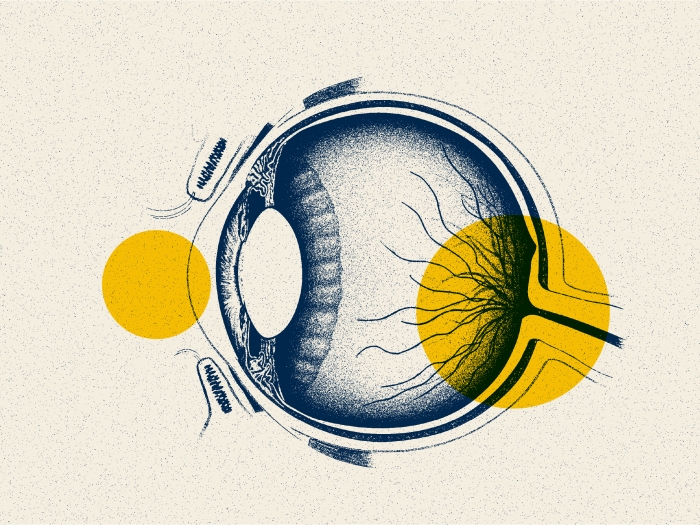
UM researchers awarded grants from BrightFocus Foundation for vision research
BrightFocus Foundation awarded $15.2M in research grants for Alzheimer’s, macular degeneration, and glaucoma, including support for Michigan Medicine researchers Jason Miller, MD, PhD, and Mark Draelos, MD, PhD, advancing new approaches to vision loss and disease detection.

Health Lab
First U-M patient receives newly FDA-approved stem cell therapy for sickle cell anemia
Elijah Dottery, diagnosed with sickle cell anemia as a baby, becomes the first U-M patient to receive the newly-approved FDA therapy which involves using mesenchymal stem cells.

Health Lab
Researchers identify new therapeutic target for neuroendocrine tumors in the gastrointestinal tract
University of Michigan researchers have identified a new target that can suppress tumor growth. Their findings may lead to new treatment methods for gastroenteropancreatic neuroendocrine tumors.

Health Lab
Researchers identify cellular pathways that drive precancerous lesions to form pancreatic tumors
Researchers identify cellular pathways that can influence metabolic changes when cells progress from metaplasia to cancer
Health Lab
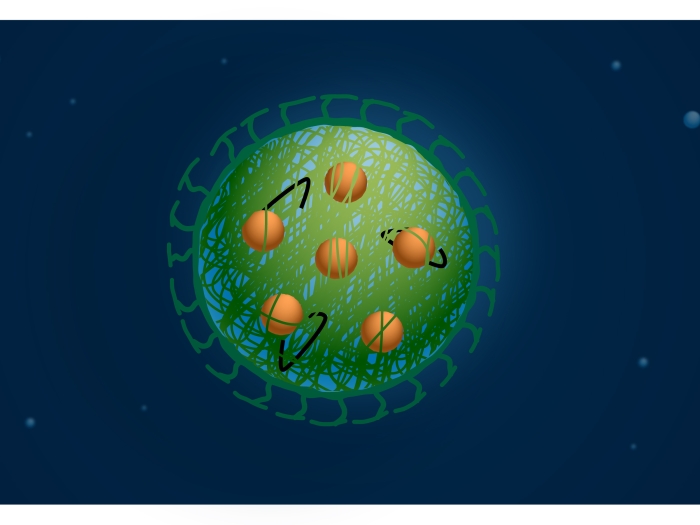
Copper-loaded starch nanoparticles can target bacteria in microbial communities
University of Michigan researchers developed copper-loaded starch nanoparticles that can be broken down by specific bacteria to release antibacterial copper molecules.
Health Lab
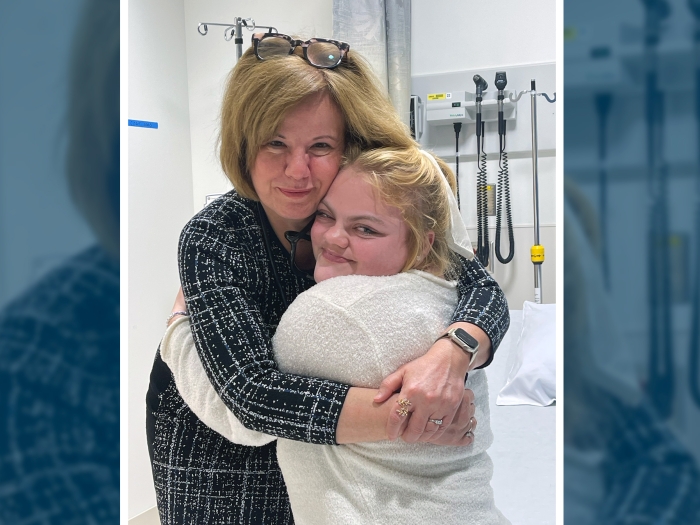
A unique patient case inspiring research
Mallory Mattison serves as the inspiration behind critical medical research that’s supporting other patients like her with lipodystrophy syndromes

Health Lab
Doctors perform first liver transplant in Michigan for colon cancer
Andrew Sweeney was diagnosed with stage 4 colorectal cancer at age 31 and underwent a liver transplant, chemotherapy and radiation treatment.
Health Lab
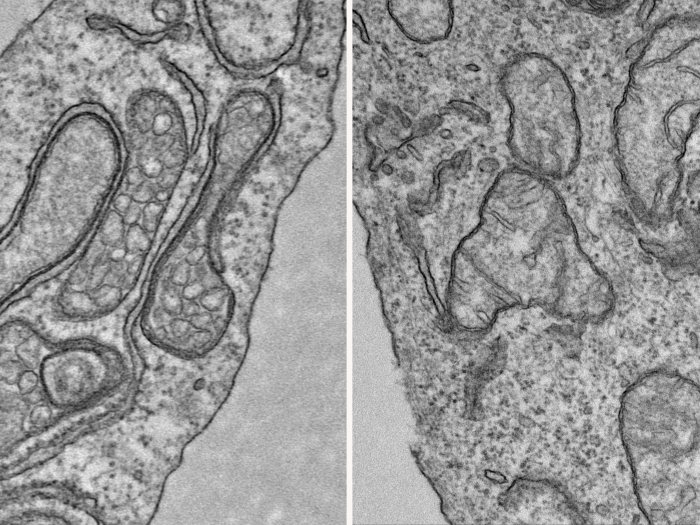
FDA-approved cancer drug fedratinib reshapes how cell organelles communicate, providing new therapeutic avenues
University of Michigan researchers found that the FDA-approved drug fedratinib can lead to endoplasmic reticulum and mitochondria contact site formation, providing a potential therapeutic avenue.
Health Lab
Cell death in photoreceptor cells is reversible, study finds
A team of researchers from the University of Michigan found functional mitochondria are key to the recovery of dying photoreceptor cells.
