Jun Hee H Lee
109 Zina Pitcher Place
Ann Arbor, Michigan 48109-2200
Manage Your Profile
About
We study the relationship between stress, aging and metabolism. Environmental stresses are generally considered to accelerate aging and age-associated tissue dysfunction because they damage important cellular macromolecules such as DNA, protein and lipids. However, cells have several stress adaptation mechanisms that can reduce negative impacts on cell and organismal homeostasis. Interestingly, appropriate activation of such adaptive mechanisms could often lead to not only increased stress resistance but also general extension of health and lifespan. We hope that, in the future, we are able to utilize some of these protective mechanisms to generate therapeutics for age-associated degenerative disorders.
Links
Lee Lab
Center Memberships
-
Center MemberGlobal REACH
-
Center MemberCenter for Computational Medicine and Bioinformatics
-
Center MemberCaswell Diabetes Institute
-
Center MemberRogel Cancer Center
-
Center MemberSamuel and Jean Frankel Cardiovascular Center
-
Center MemberCenter for Cell Plasticity and Organ Design
Research Overview
(1) Stress-inducible Sestrins and their role in age- and obesity-associated metabolic pathologies, (2) Biochemical mechanisms underlying physiological functions of Sestrins, (3) Pathogenetic mechanisms of how autophagy is abrogated in human diseases including non-alcoholic fatty liver disease (NAFLD) and movement disorders, (4) Stress-induced protein inclusions and RNA granules, (5) Single cell-level understanding of stress-induced transcriptome changes, and (6) Technology development for single-cell and subcellular studies of spatial transcriptome and proteome.
Recent Publications
-
Si Y, Lee CH, Hwang Y, Yun JH, Cheng W, Cho CS, Quiros M, Nusrat A, Zhang W, Jun G, Zöllner S, Lee JH, Kang HM. Nature Methods, 2024 Oct 1; 21 (10): 1843 - 1854.Journal ArticleFICTURE: scalable segmentation-free analysis of submicron-resolution spatial transcriptomics
DOI:10.1038/s41592-024-02415-2 PMID: 39266749 -
Cobb T, Hwang I, Soukar M, Namkoong S, Cho US, Safdar M, Kim M, Wessells RJ, Lee JH. Proceedings of the National Academy of Sciences of the United States of America, 2023 Jan 1; 120 (39):Journal ArticleIditarod, a Drosophila homolog of the Irisin precursor FNDC5, is critical for exercise performance and cardiac autophagy
DOI:10.1073/pnas.2220556120 PMID: 37722048 -
Cho CS, Xi J, Si Y, Park SR, Hsu JE, Kim M, Jun G, Kang HM, Lee JH. Cell, 2021 Jun 24; 184 (13): 3559 - 3572.e22.Journal ArticleMicroscopic examination of spatial transcriptome using Seq-Scope
DOI:10.1016/j.cell.2021.05.010 PMID: 34115981 -
Kim M, Kowalsky AH, Lee JH. Annual Review of Physiology, 2021 Feb 10; 83: 381 - 403.Journal ArticleSestrins in Physiological Stress Responses
DOI:10.1146/annurev-physiol-031620-092317 PMID: 33113341 -
Kim M, Sujkowski A, Namkoong S, Gu B, Cobb T, Kim B, Kowalsky AH, Cho CS, Semple I, Ro SH, Davis C, Brooks SV, Karin M, Wessells RJ, Lee JH. Nature Communications, 2020 Dec 1; 11 (1):Journal ArticleSestrins are evolutionarily conserved mediators of exercise benefits
DOI:10.1038/s41467-019-13442-5 PMID: 31929512 -
Park SR, Namkoong S, Friesen L, Cho CS, Zhang ZZ, Chen YC, Yoon E, Kim CH, Kwak H, Kang HM, Lee JH. Cell Reports, 2020 Aug 25; 32 (8):Journal ArticleSingle-Cell Transcriptome Analysis of Colon Cancer Cell Response to 5-Fluorouracil-Induced DNA Damage
DOI:10.1016/j.celrep.2020.108077 PMID: 32846134 -
Cho CS, Park HW, Ho A, Semple IA, Kim B, Jang I, Park H, Reilly S, Saltiel AR, Lee JH. Hepatology, 2018 Oct 1; 68 (4): 1331 - 1346.Journal ArticleLipotoxicity induces hepatic protein inclusions through TANK binding kinase 1–mediated p62/sequestosome 1 phosphorylation
DOI:10.1002/hep.29742 PMID: 29251796 -
Namkoong S, Ho A, Woo YM, Kwak H, Lee JH. Molecular Cell, 2018 Apr 5; 70 (1): 175 - 187.e8.Journal ArticleSystematic Characterization of Stress-Induced RNA Granulation
DOI:10.1016/j.molcel.2018.02.025 PMID: 29576526
Featured News & Stories
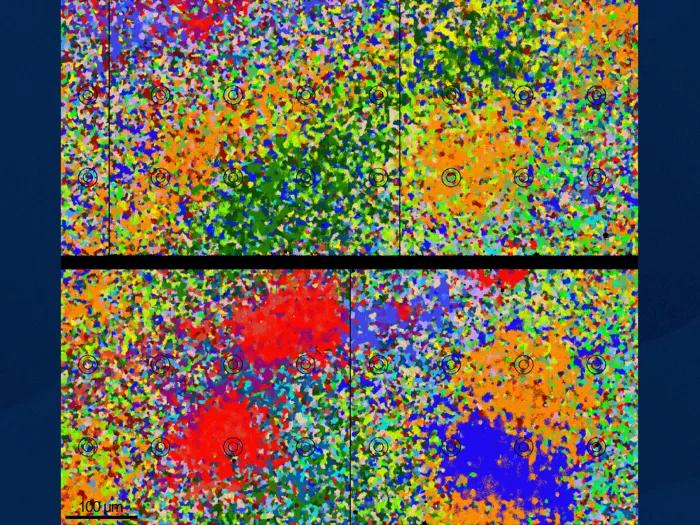
An upgrade to U-M developed tech enables researchers to see even finer transcription detail inside cells

A newly developed algorithm shows how a gene is expressed at microscopic resolution
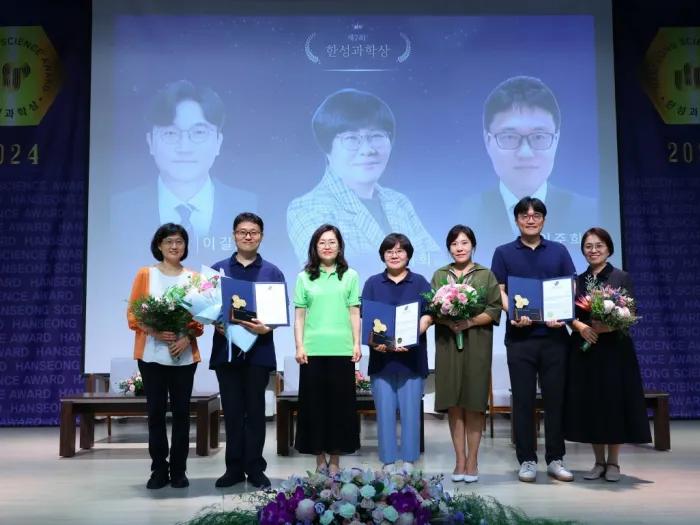
Jun Hee Lee received the 2024 Hanseong Science Award in Life Sciences