Center For Healthcare Outcomes & Policy

CHOP evaluates healthcare delivery with an interdisciplinary team including health services researchers, clinician scientists, economists, biostatisticians, implementation scientists and qualitative experts. 
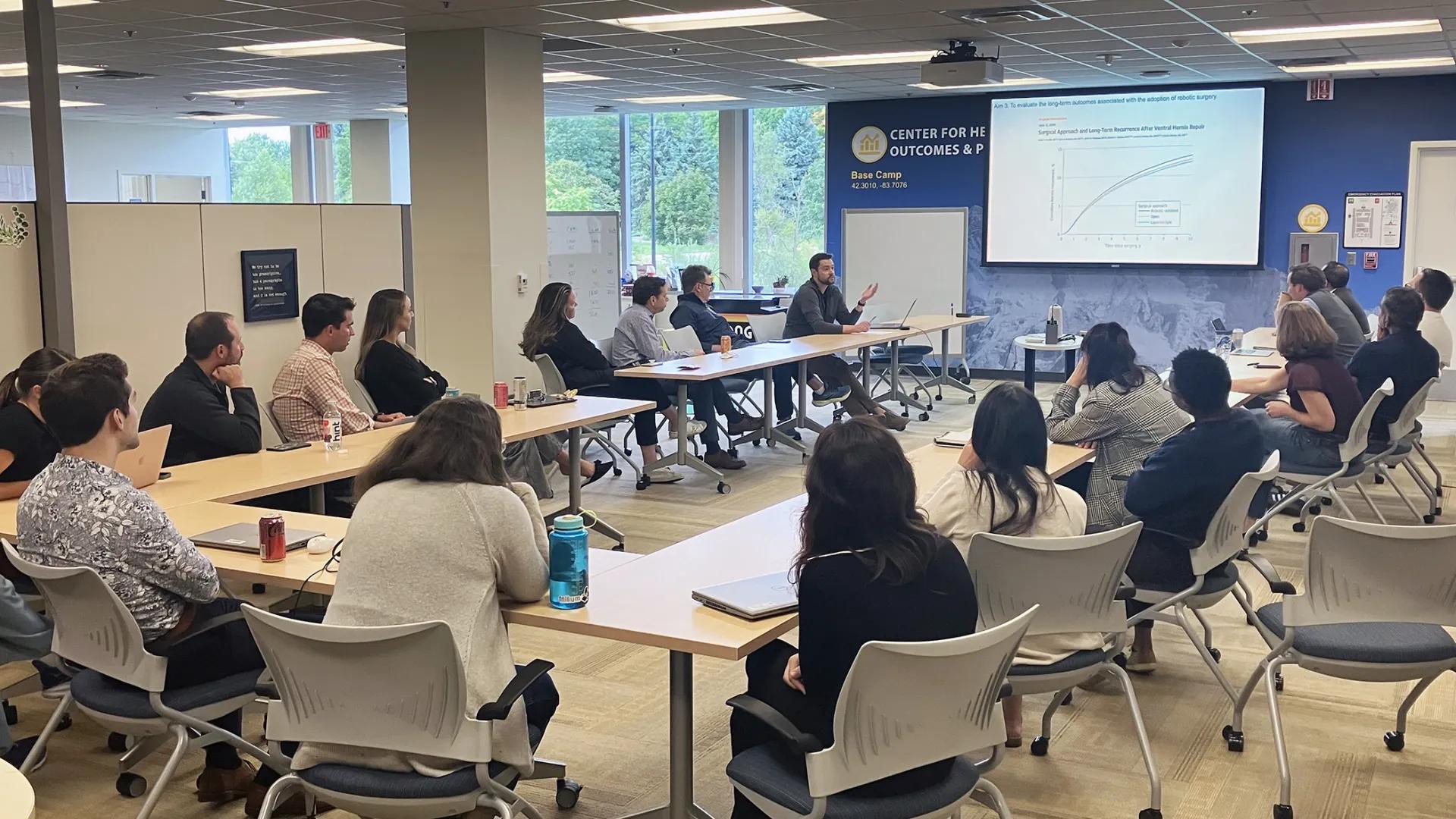
CHOP members discussing a presentation

Explore CHOP

People

Meet the team behind the Center for Healthcare Outcomes & Policy.

Research

Learn more about our groundbreaking research.

Education

Learn more about education and training from the center.

Community & Mentorship at CHOP

CHOP offers broad range of in-person programming for faculty and trainees at every career stage and across multiple domains for healthcare outcomes and policy research. Members at CHOP within the Institute for Healthcare Policy & Innovation (IHPI) have access to a wide array of resources throughout the research and grant writing processes. Our goal is to foster mentorship and collaboration across the University of Michigan for investigators in the field of health outcomes research.

  • Friday Seminars: Every Friday, we gather in-person for a collection of didactic and work-in-progress sessions. 

  • K-Award Writing Group: The K-Award Writing group gathers on Friday afternoons for small group feedback on K awards. 

  • Mock Study Section: In partnership with the Institute for Health Policy and Innovation (IHPI), we host formal mock study sections with reviewers, to provide grant writers with robust feedback prior to their grant submission.

  • Data & Donuts: These educational sessions take place every other Tuesday during the academic year, so CHOP statisticians, fellows and staff can gather to brush up on their skills and learn new methods. 

  • Qual & Capps: These qualitative work-in-progress sessions with cappuccinos take place every other Friday afternoon during the academic year. 

  • Medicare 101: The CHOP team offers workshops to help orient members on new uses to the Medicare claims data.
  • Writing for Impact: CHOP offers several workshops throughout the year focused on writing.
  • SPARC (Surgical Practice AI Research Community): These monthly sessions focus on artificial intelligence in surgery and spark discussion among those interested in being more involved with AI.
  • Journal Club on Understanding Methods & Presentations (JUMP): A journal club one Friday a month at 10 am focused on health services research study design and methods by drawing on a mix of current and cornerstone literature in the field.

Contact

Center for Healthcare Outcomes & Policy
North Campus Research Complex
2800 Plymouth Road, Building 16
Ann Arbor, MI 48109

Featured News & Stories

See all news
graphic drawing of hospital with road in front of it with red car driving
Health Lab

Long drives, high costs stand between rural adults and safe surgery
Rural patients face long drives for surgery, especially if they want to reach a high quality and affordable hospital.
Minding Memory with a microphone and a shadow of a microphone on a blue background
Minding Memory

Exposure to a Natural Disaster and Long-term Cognition
In this episode, Matt and Lauren speak with Drs. Elizabeth Frankenberg at the University of North Carolina at Chapel Hill and Duncan Thomas at Duke University about their research which focuses on understanding how survival and physical health evolve after exposure to large scale shocks like the 2004 Indian Ocean Earthquake and Tsunami. They will specifically speak about the STAR Study and what they’re learning about long-term effects on cognitive outcomes.
Well-Being at Michigan Medicine with Dr. Elizabeth Harry
Well-Being at Michigan Medicine

Episode 1: The Enterprise Triad

The inaugural episode of Well-Being at Michigan Medicine has Dr. Elizabeth Harry welcoming the organization’s triad leadership – Dr. Paul Lee of the U-M Medical Group, Julie Ishak, M.S.N., the chief nurse executive, and Dr. Charlie Reuland, the chief operations integration officer overseeing operations at the clinical enterprise. Some of the topics that the quartet discuss include fostering a culture of people feeling cared at work and how it can make a difference in patients’ lives, recognizing stress and structural issues and how to stave off burnout, and reducing cognitive load. Learn more about the host of Well-Being at Michigan Medicine, Dr. Elizabeth Harry. Episode guests: • Julie Ishak, M.S.N., R.N. • Paul Lee, M.D., J.D. • Charlie Reuland, Sc.D., M.H.S.
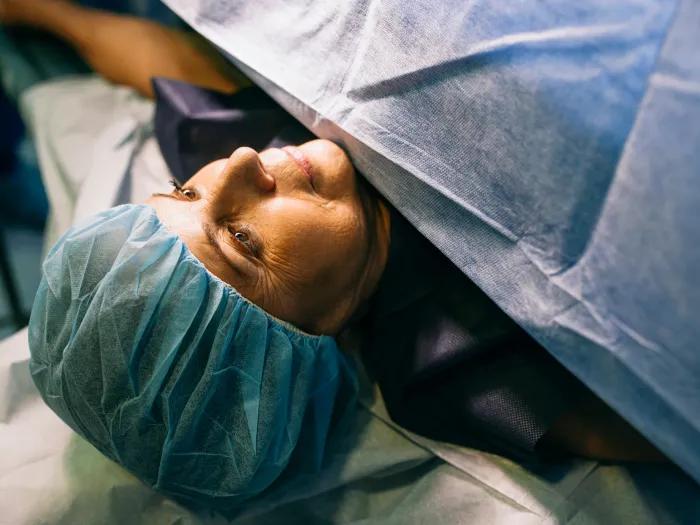
woman laying down and sheet over going into surgery
Health Lab

Older women more likely to receive heart surgery, die at low quality hospitals

Women over the age of 65 who require complex heart surgery are more likely than men to receive care at low quality hospitals — where they also die in greater numbers following the procedure, a Michigan Medicine study finds.
Blurred image of health care professionals in blue scrubs pushing a gurney down a hallway
Health Lab

Primary care scarcity linked to more surgical emergencies, problems
Patients living in areas with the worst shortages of primary care providers are more likely to have emergency surgery, surgical complications and hospital readmissions.
script on rx
Health Lab

Opioid limits didn’t change surgery patients’ experience, study shows

Surgical opioid prescription limits reduced the number of narcotic pills patients received after their operations, but didn’t lead to worse pain scores or less satisfaction.