
Rogel and Blondy Center for Pancreatic Cancer
Explore the Rogel and Blondy Center for Pancreatic Cancer
A life saving vision - A life saving partnership
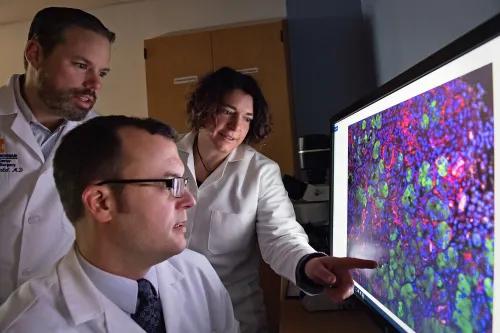
The Rogel and Blondy Center for Pancreatic Cancer at the Rogel Cancer Center supports patient care and translational research for pancreatic cancer. With more than 100 doctors, scientists, and trainees from across the University of Michigan, the Rogel and Blondy Center is gaining new insights into pancreatic cancer and translating this knowledge into treatments for our patients.
About the Rogel and Blondy Center

In 2024, Richard and Susan Rogel gave $50 million to establish the Rogel and Blondy Center for Pancreatic Cancer at the Rogel Cancer Center. The center reflects a bold vision to provide resources around a specific disease to achieve transformative impact that cannot be supported by typical grant funding. In this case, our mission is to double the survival rate for pancreatic cancer in the next 10 years.
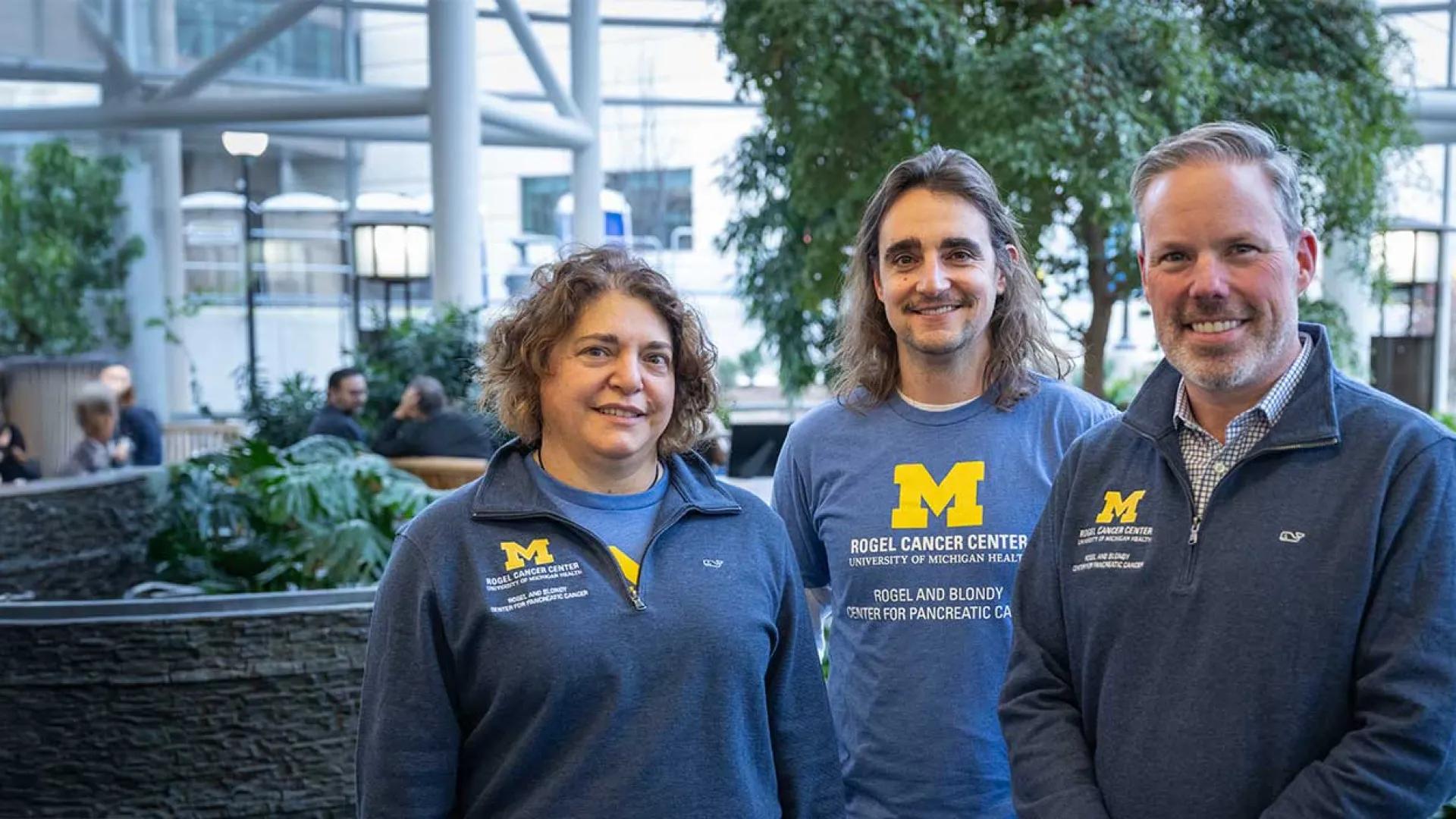
The center is led by Timothy Frankel, MD; Costas Lyssiotis, PhD; and Marina Pasca di Magliano, PhD. Meet the team.
Learn more about how you can support this important research.
Support Pancreatic Cancer Research
Pancreatic cancer is the third leading cause of cancer-related death in the United States, for men and women. The Rogel and Blondy Center for Pancreatic Cancer Center is working to improve this cancer's outcomes. Learn how you can help.
The Rogel and Blondy Center includes four strategic pillars
- Enhancing and expanding access to world-class patient care
- Innovating and advancing discovery and translational research
- Accelerating new treatment options through clinical research and clinical trials
- Investing in infrastructure, including a biobank and leading-edge research technologies
About pancreatic cancer
Pancreatic cancer remains one of the deadliest of the major cancers, with a five-year survival rate of only 13%. It is a complex and stealthy disease that often can’t be diagnosed until it is too difficult to treat with current therapies.
Rogel and Blondy researchers are focused on accelerating what they learn in their laboratories to move discoveries quickly to the clinic to benefit patients.
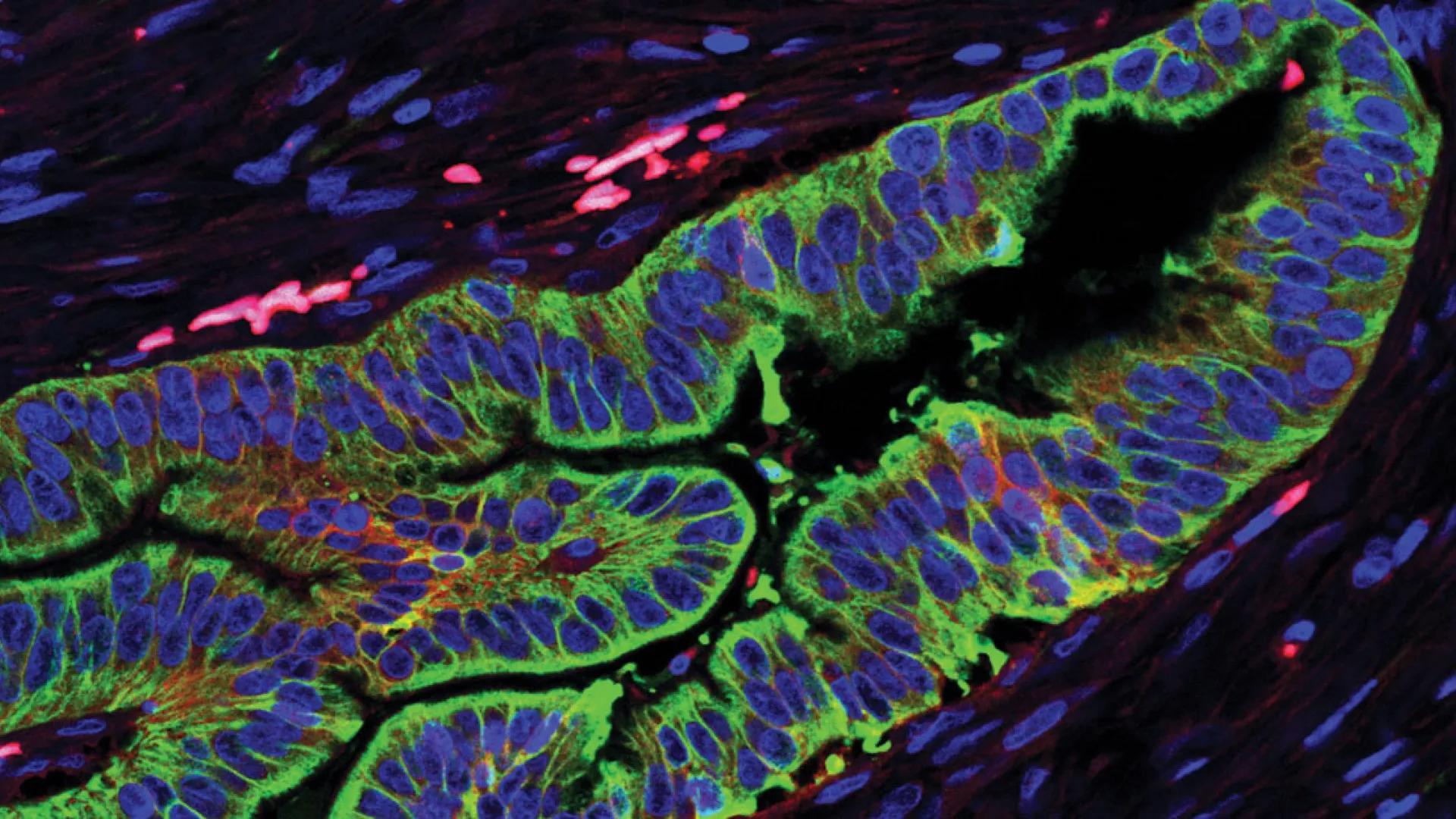
Pancreatic Cancer Facts
Meet Our Researchers
Dr. Jamie Mills explains the importance of clinical trials in finding new treatment options for pancreatic cancer.
Dominik Awad, Ph.D. studies how microorganisms interact with tumors and may impact how pancreatic cancer develops and responds to therapy.
Dr. Kumar is looking at donated pancreas tissue from Gift of Life to understand how and when pancreatic lesions become cancer.
News and Stories
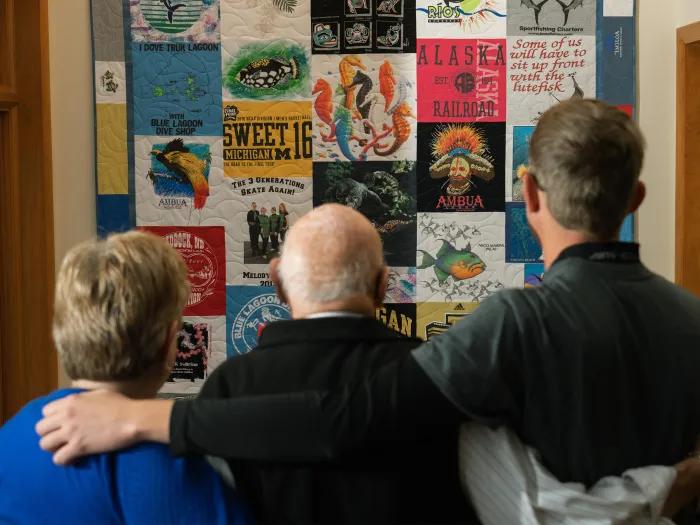
Online resources and coaching helped people seek genetic testing for cancer
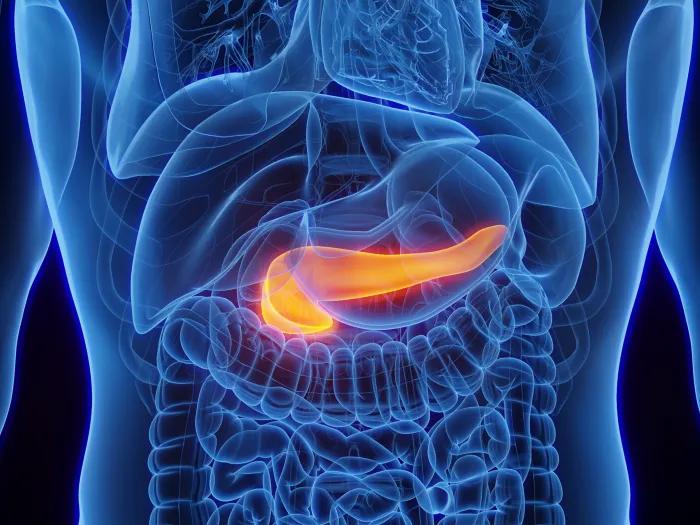
Explaining the KRAS inhibitor breakthrough
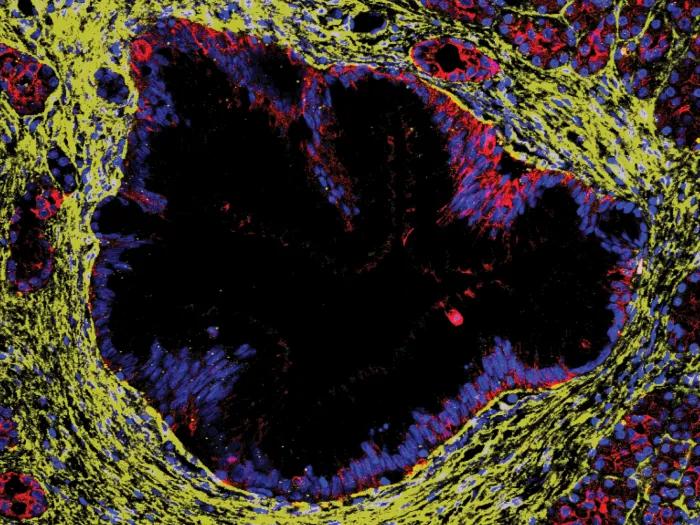
Study sheds light on how early pancreas lesions become cancerous

New dual-target drug may help overcome immunotherapy resistance in pancreatic cancer
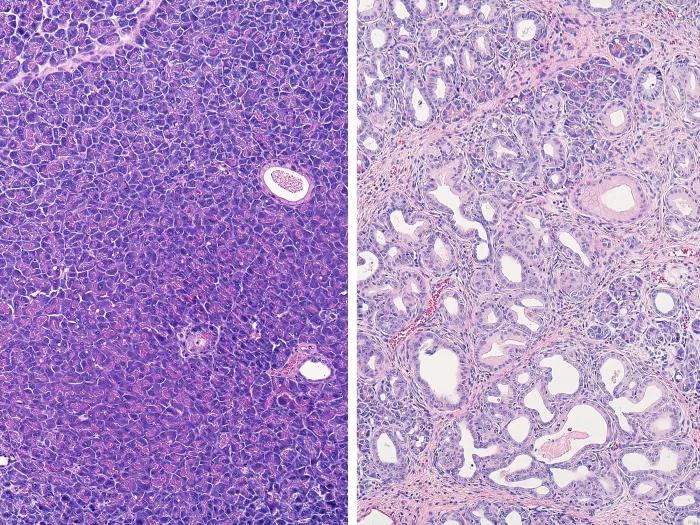
Researchers identify cellular pathways that drive precancerous lesions to form pancreatic tumors
Diagnosed with pancreatic cancer: Now what?
Follow us and start a conversation
Get the latest news and information about the Rogel and Blondy Center for Pancreatic Cancer. Find us on X!
