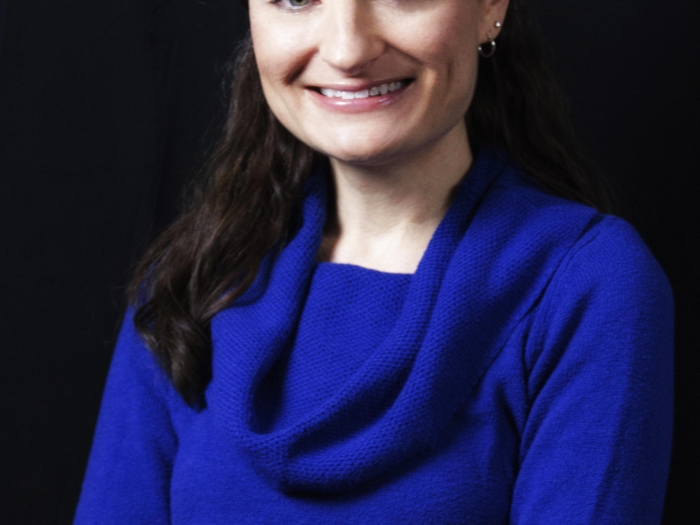
“From data to discovery” - Introducing Dr. Kin Fai Au and his lab members

The Department of Computational Biomedicine and Bioinformatics welcomes Dr. Kin Fai Au as Professor, starting February 1, 2023.
Dr. Au was the vice chair of research development at Department of Biomedical Informatics, The Ohio State University, and he joins DCMB with eight lab members: Yunhao Wang, Dingjie Wang, Bo Li, Aifu Li, Xiaoyu Cai, Puwen Tan, Haoran Li and Hsin Lun Hsieh.
Dr. Au first obtained his bachelor degree at the Tsinghua University in China and then studied structural biology at University of Oxford in the U.K. where he received his Ph.D. While researching the crystal structure of proteins, Dr. Au developed a strong interest in statistical methods, at the time when second-generation sequencing technology yielded huge amount of data that required new data analytic methods and algorithms. Dr. Au went on studying statistics at Stanford University, CA, and obtained an additional M.S. degree before becoming a post-doctoral fellow with Dr. Wing Wong. When third-generation sequencing came out, Dr. Au was one of the early algorithm developers for the data analysis of this “next-next generation” sequencing.
As an Assistant Professor at the University of Iowa, Dr. Au received his first NIH R01 grant, and continued to develop his own data analytic methods to fully leverage the unique information of third-generation sequencing data. As an Associate Professor at The Ohio State University in 2018, he was awarded two other NIH R01 grants to expanded his transcriptome analysis work and developed not only statistical methods but also new biological assays for studying epigenetics in the regulatory processes of developmental biology and transposon elements activity.
Dr. Au’s interests span from the dry lab to the wet lab, from the data analysis to biomedical discovery. He identifies several dimensions to his research: one is about developing new methods to analyze the data coming from novel long-read sequencing technology. These methods inform new biological assays that Dr. Au and his team also develop. Their current work focuses on gene isoforms and transposon elements that have been little studied because of their length. With long-read sequencing, the transcriptomic and epigenetic status of these complex targets can now be sequenced as intact units, launching new and more accurate investigations with potential applications for cancer, embryonic development, and brain research. Eventually, these new methods might also be applied to other types of data and biological studies.
“It is very important to integrate the two areas of expertise. We build the “data-science” bridge with technology and biology, but we also need to walk the bridge to advance science and therapies.”
–Dr. Kin Fai Au
Dr. Au’s lab collaborators have either a background in technology or in biomedicine. For Dr. Au, “It is very important to integrate the two areas of expertise. We build the “data-science” bridge with technology and biology, but we also need to walk the bridge to advance science and therapies.” Inspired by the historical discovery of the DNA double helix structure by Watson and Crick based on Rosalind Franklin’s X-ray crystallography work, Dr. Au is highly enthusiastic about new technology that offers a promising way to advance biological discoveries when appropriate data analysis is carried out.
At DCMB, Dr. Au shares interests with many of our faculty, including Ryan Mills, Joshua Welch, Alan Boyle and Indika Rajapakse. He is also planning on collaborating with faculty members from other departments and institutions to apply the methods of long-read sequencing to developmental biology, neuroscience and cancer biology. Several U-M colleagues are also long-time friends from his college-time in China and Stanford, and he is glad to join this community that shares his passion for science.
In This Story
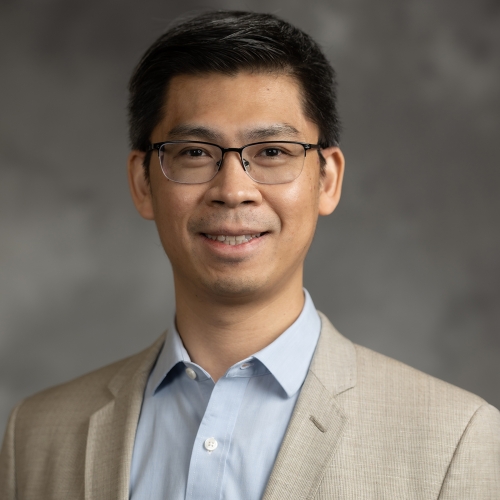
Kin Fai Au, PhD
Professor
Featured News & Stories
Faculty Spotlight: Dr. Cornelius James - Preparing Healthcare for the AI Era

New project aims to predict depressive symptoms after surgery
2026 Moses Gunn Research Conference Highlights
Receiving personalized treatment for a rare neuroendocrine tumor

Helping an employee-turned-patient overcome a brain tumor