Defying the Odds Through a Clinical Trial

Video Source: American Association for Cancer Research

As part of the inaugural American Association for Cancer Research (AACR) Pediatric Cancer Report for 2025, Dr. Carl Koschmann is featured in a new video highlighting the journey of a young patient diagnosed with diffuse midline glioma (DMG). 

In 2020, eight-year-old Kaley Ihlenfeldt began experiencing persistent headaches and nausea that ultimately led to a devastating diagnosis: DMG, an aggressive pediatric brain tumor with historically no effective treatments and a survival rate of less than 5% beyond two years.

Determined to find options, Kaley’s family connected with Dr. Koschmann’s clinical trial of ONC201—now known as dordaviprone, the first FDA-approved therapy for recurrent DMG. Kaley began the trial in late 2020 and has continued treatment with minimal side effects, allowing her to enjoy a full, active teenage life while the medication helps slow the tumor’s progression.

The video profiles both Kaley’s remarkable resilience and Dr. Koschmann’s pioneering research, which helped uncover how dordaviprone works by reprogramming cancer cell metabolism and partially restoring molecular features of healthy brain cells. His work, supported by patient families and organizations such as the ChadTough Defeat DIPG Foundation, contributed to a milestone moment: the 2025 FDA approval of dordaviprone—the first-ever approved therapy for this devastating disease.

In This Story
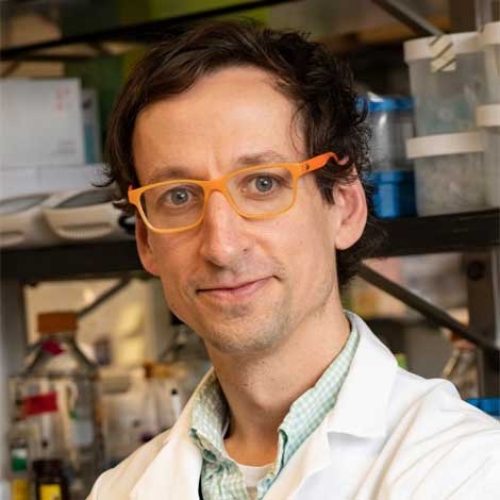
Carl Koschmann, MD

Carl Koschmann, MD

Associate Professor

Related

brain scan on computer
Health Lab

FDA clears new DMG treatment: What it means for a deadly pediatric brain tumor

Diffuse midline gliomas are aggressive tumors that begin in the brain or spinal cord. It is universally fatal, and patients typically live for nine to 15 months after diagnosis. The FDA has approved ONC201 (dordaviprone) to treat recurrent H3K27M-mutant diffuse glioma. It's the first-ever FDA-approved treatment for this disease.

Featured News & Stories

couple sitting on bench black and white kissing on cheek
Health Lab

Helping an employee-turned-patient overcome a brain tumor

A patient with a brain tumor talks about their experience being an employee receiving care at Michigan Medicine.
A small child in a blue t-shirt picks up a bunch of carrots from a produce display.
Philanthropy News

Shipt gift helps address food insecurity
A gift from Shipt supports Michigan Medicine's Tammy Chang, M.D., MPH, in developing Nutrition Value Pathways to expand access to Food is Medicine programs and help address food insecurity.
Women with black hair and a blue shirt, set against a black background.
Department News

Family Medicine researchers find clinicians question Black expectant moms more about cannabis use than white moms
Department of Family Medicine researchers examined how often clinicians talked to women about cannabis use during pregnancy and breastfeeding, finding that they brought up the topic of cannabis use more often with Black expectant moms than white moms.
A BRCF Flow Cytometry Instrument
Office of Research

BRCF Flow Cytometry Service Enhancements Coming July 1

The BRCF Flow Cytometry Core is introducing a new billing structure that gives researchers greater transparency, precision, and control over their spend.
Groups of people stand together. These are the 2026 EBS awardees.
Medical School News

Celebrating outstanding teaching and research at the 2026 Endowment for Basic Sciences Awards

The 2026 Endowment for Basic Sciences Awards recognized nine faculty and nine research staff members for their accomplishments in teaching and research.

Health Lab Podcast in brackets with a background with a dark blue translucent layers over cells
Health Lab Podcast

7-OH, kratom and the emerging public health crisis for sale across the country

A patient, his doctor and other experts warn of dangers of 7-OH, which is touted as a derivative of kratom and is widely available, but packs far more opioid danger.