Leaders and Best in Rheumatology: University of Michigan Faculty at ACR Convergence 2026
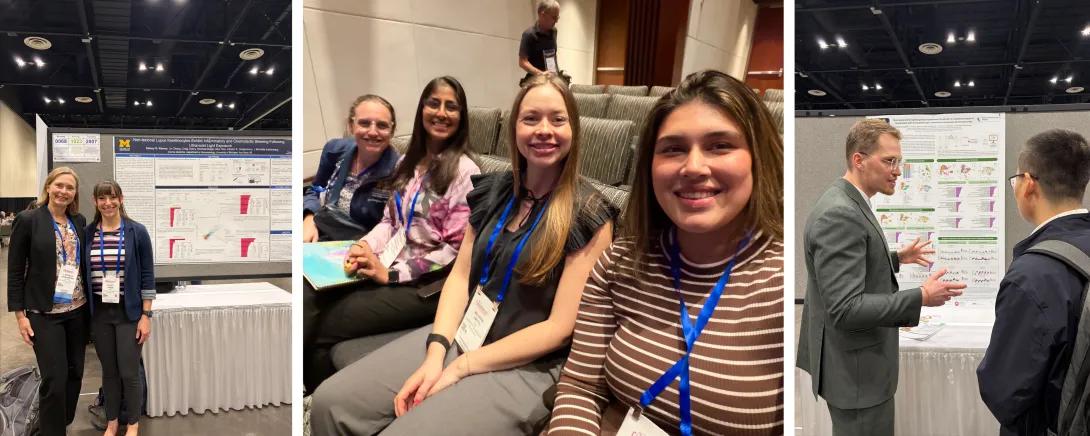
The University of Michigan’s Division of Rheumatology and its collaborators brought their expertise in research, clinical care, and medical education to ACR Convergence 2026, one of the leading conferences for rheumatology professionals worldwide. Through scientific presentations, educational sessions, and discussions on emerging approaches to rheumatic diseases, U-M faculty highlighted Michigan’s commitment to advancing the field while keeping patients at the center of care.
Among this year’s featured contributors was Susan Murphy, OT, ScD, a professor in the Department of Physical Medicine and Rehabilitation and the Division of Rheumatology. Murphy presented “Renewing Energy: A Patient Co-Designed Intervention to Address Fatigue in People with Spondyloarthritis,” highlighting the importance of incorporating patient perspectives into interventions for fatigue. She also presented “Year in Review: Digital Health in Rheumatology,” exploring developments that may shape the future of rheumatology care.
Clinical education was another important part of Michigan’s presence. Puja Khanna, MD, MPH, led a Meet the Professor session on crystalline arthritis, offering rheumatology professionals an opportunity to discuss challenging clinical questions and approaches to diagnosis and management. Dr. Khanna also contributed to conference programming on patient engagement in research, emphasizing the importance of incorporating patient experiences and priorities into the development of new treatments and care strategies.
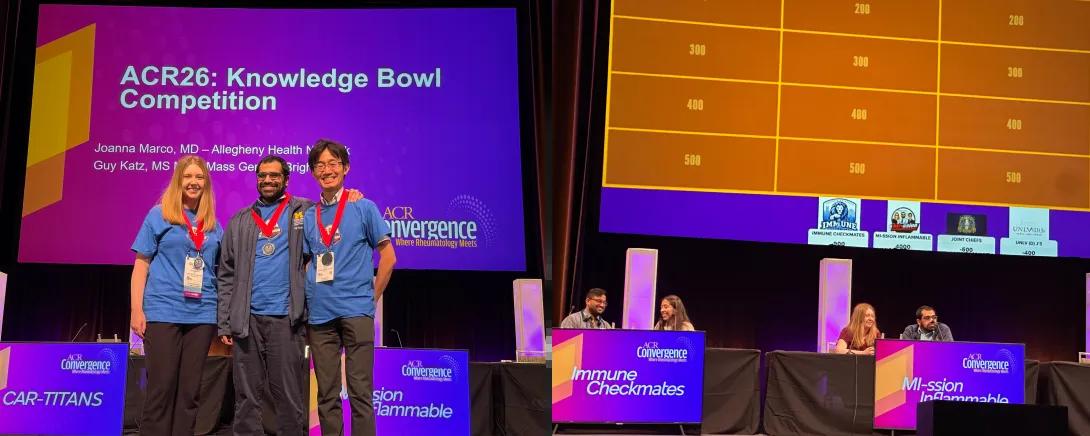
Michigan’s commitment to rheumatology education was also reflected in an exciting achievement by its fellowship program. At the ACR Knowledge Bowl, a competition bringing together rheumatology fellowship programs from across the country to test their knowledge of the field, the University of Michigan team earned recognition as the top U.S. team. U-M fellows demonstrated their clinical knowledge and teamwork in the competition, with Dr. Kato serving as their coach.
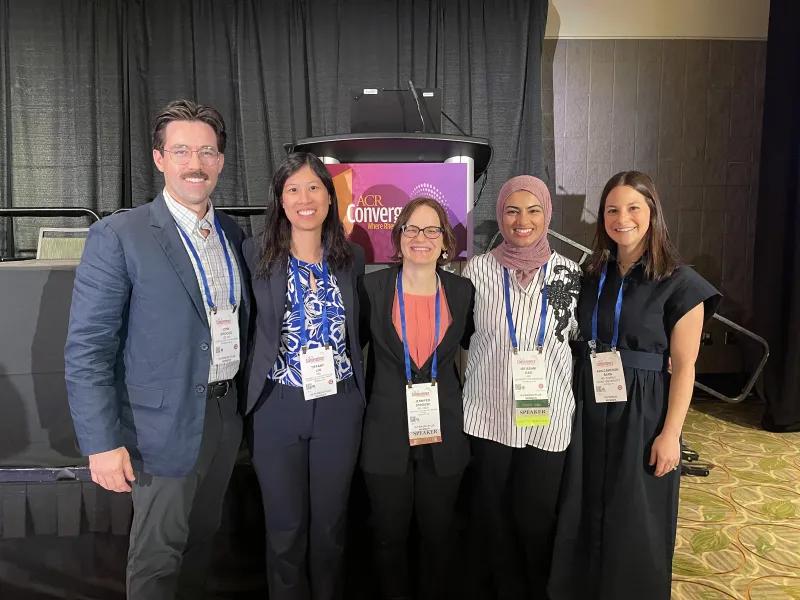
Ibtissam Gad, MD, a Clinical Assistant Professor in the Division of Rheumatology, showcased innovative approaches to medical education through her participation in “The SimRheum: Bridging Gaps in Rheumatology Education with Simulation,” part of the Simulation Strategy Lab. Dr. Gad’s work focuses on simulation-based learning to strengthen clinical examination skills. She developed a low-cost hand simulator that allows medical learners to practice identifying subtle swelling in the small joints, an important skill in recognizing inflammatory arthritis, including rheumatoid arthritis and lupus.
U-M faculty also shared their expertise in basic science and disease mechanisms. Dinesh Khanna, MD, MSc, the Frederick G. L. Huetwell Professor of Medicine and director of the University of Michigan Scleroderma Program, participated in sessions addressing advances in rheumatology research and patient-centered care. Johann Gudjonsson, MD, PhD, presented research examining how the Hippo signaling pathway regulates fibroblast activation in scleroderma, advancing understanding of the biological processes involved in fibrosis.
Together, these presentations, educational activities, and fellowship accomplishments demonstrated the breadth of Michigan’s contributions to rheumatology, spanning scientific discovery, clinical innovation, and the education of future specialists. From sharing research and advancing patient-centered care to earning national recognition in the Knowledge Bowl, U-M faculty and fellows represented Michigan's commitment to excellence in rheumatology.
Featured News & Stories

How to discuss health care and end-of-life wishes during the holidays
Wife of man diagnosed with 2 types of dementia recalls first symptoms: 'It wasn't obvious'

Court appointed medical guardian study reveals role in care of highly vulnerable older adults
What Can a Blood Test Really Tell Us About Alzheimer’s Disease?

What’s changing in Medicaid and what can you do?