MDisability new clinical exam pilot prepares students to care for patients with disabilities
Medical students who want to learn more about interacting with people with disabilities typically do so through workshops and seminars. Yet 30-plus years after the passage of the American Disabilities Act, most medical schools still don’t offer dedicated courses designed to get medical students ready to care for a patient population that accounts for nearly one in four people in the United States who identify as having a disability.
MDisability, a Family Medicine-sponsored program, is taking another step to get medical students, family medicine residents and primary care doctors in training real-world experience in clinical interactions with those who have disabilities.
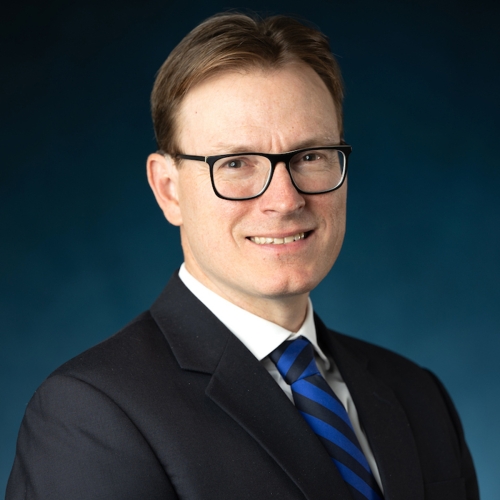
“There is a troubling lack of medical education to prepare future doctors to provide effective and equitable care for people with disabilities,” said MDisability Director Michael M. McKee, MD, MPH and associate professor in Family Medicine. “Through innovative pipeline programs, we are preparing medical students to become doctors aware of the specific and unique needs of patients with disabilities.”
In the spring, MDisability launched an Objective Structured Clinical Exam (OSCE) pilot program through the support of a National Institute on Disability, Independent Living and Rehabilitation Research grant. The funded Rehabilitation Research and Training Center is titled, “Advancing Health Equity for Adults with Disabilities from Diverse Communities”. Also known as the standardized patient care program, students interact with individuals with disabilities, or those who are trained to act as if they have a disability, in a simulated clinical environment.
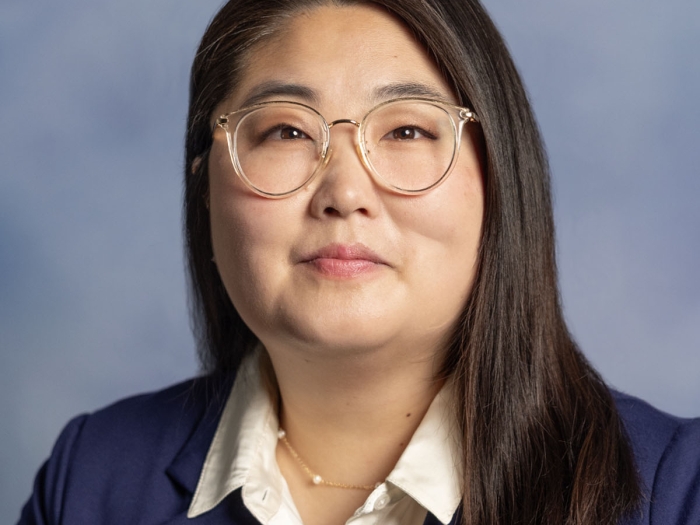
Organizers, which include McKee and program coordinator Josee Li, among many others, helped recruit seven community members who served as ‘standardized patients.’ In addition to serving as ‘standardized patients,’ they were instrumental to developing a series of training videos and tip sheets for medical students and trainees.
“Everyone was carefully selected based on their disability advocacy work and dedication to promoting inclusive healthcare,” said Li, an incoming University of Michigan Medical School student, as of this fall. “Each of our standardized patients are heavily-involved champions in the local community and most have had previous experiences in either teaching or education.”
The two-and-a-half-hour clinical training took place in mid-April at the Taubman Health Sciences Library. Before the event, MDisability coordinators and program participants prepped students on how to interact with patients with a specific disability, such as those with intellectual and developmental disabilities; are deaf or hard of hearing; are low vision or blind; or have physical disabilities, as well as their caregivers. Panelists in these pre-event prep sessions included community advocates, physicians and researchers who also answered medical students’ questions.
Still in its pilot phase, the mid-April event attracted two first-year medical students at the University of Michigan Medical School, Grayson Buning and Sahil Tolia.
Buning, a member of the Medical Students for Disability Health Advocacy (MSDHA) at U-M and former MDisability summer intern, helped spread the word among the approximately 160 first-year medical students about the event.
“I don’t think there’s any other experience where you can go to a clinic-like setting and get experience working with people who have a disability,” he said. “It’s stress-free training and I think it’s very valuable to get this experience now” as first-year medical students.
Buning, who interacted with three standardized patients, said it was valuable for him to learn how to use the practical medical equipment that helps accommodate patients with various disabilities in the clinic space.
"I got to experience these tools that I wouldn’t have had experience with any other way,” he said, which included the Hoyer lift – a hydraulic-powered device that helps the doctor move the patient from a chair to another resting place -- and a door knocker device that emits a bright light to let patients who are deaf know the doctor is knocking on the door.
Tolia, who heard about the OSCE training through the MSDHA group, interacted with standardized patients with simulated (or actual) disabilities including a person with lupus, a patient with cerebral palsy, and a person who was deaf who was accompanied by a caretaker who was blind.
Tolia said he wasn’t sure of what to expect of the training, but came away with a lot of practical lessons and a deeper understanding about how to interact with patients with disabilities.
“When treating patients with disabilities, don’t make assumptions about these patients,” he said. “Ninety-five percent of the patient encounter is going to be the same,” adding that the interactions with his three patients underscored the importance of being a good communicator and having empathy.
“That’s what this first year in medical school is about – learning in a low-stakes environment,” he said. “I thought this was a perfect opportunity to do this. It was a really fun experience and I took away a lot of important things from it.”
After the clinical portion was over, all participants did a debriefing, with the standardized patients discussing what clinical interactions they felt worked and what could use improvement. Tolia and Buning said they both found this extremely valuable.
One of those standardized patients was Neika White, an employer engagement coordinator in the Office for Student Engagement and Practice at U-M’s School of Public Health. White, who has profound hearing loss, presented as a deaf person who was experiencing a sore throat and fever and had requested an interpreter.
White said that the clinical interactions were respectful and provided a real-life scenario in how complex it can be to interact with someone with a disability.
“Any time I have a chance to teach people about the importance of how to interact with individuals with a disability, I am always willing to help,” White said. "I think students expected to observe other doctors interact with us, but the interaction ended up being between the patients and the students themselves."
White hopes to see the educational program grow.
“Great moves are being made, but (training students on how to care for people with disabilities) still needs work,” she said. “Unfortunately, in the medical field, this isn’t on people’s radar. It really is not something that people usually speak out about or feel is essential in the progression in their medical careers or journeys. I am always pushing for a required class or session that students should have to go through” to help prepare them to care for people with disabilities.
Coordinators of the OSCE program plan additional sessions in the Fall semester 2024 for medical residents and in the Spring semester 2025 for medical students. Li will continue to stay on as the primary coordinator for next year’s residency training program and April OSCE event as a medical student. She and fellow collaborators are considering moving the sessions to the evenings to accommodate more student participants.
Buning said he and his fellow MSDHA members are also pushing to make this a mandatory part of the medical school curriculum.
“I think with a lot of these unique patient populations, we can talk about the disparities that they face but until you’re put into a situation where you’re responsible for their care, people don’t understand the full breadth of what you (as a doctor) are responsible for,” Buning said.
For more information about participating in the OSCE program as a student, or if you are a community member who identifies as disabled and would like to support the program, please reach out to Josee Li at [email protected]; MDisability manager Dawn Michael at [email protected] or McKee at [email protected].
In This Story
Michael M McKee
Professor
Featured News & Stories
Heather Giebink and Michael Rankin receive Endowment for Basic Sciences Awards
Dr. Jorge Ruas featured in article "Supplementing with peptides: Good for extra pep or a needless step?"
Family Medicine faculty, residents and students showcase innovative studies at Michigan Family Medicine Research Day
After near-fatal car crash, singer regains voice at U-M Vocal Health Center
Rx Kids linked to reductions in preterm births and low birthweights, fewer NICU admissions