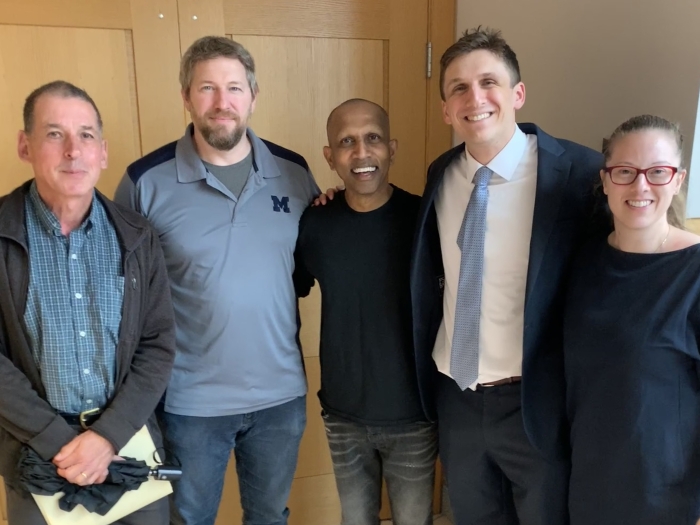
Meet Chen Sun, PhD candidate in Ryan Mills's lab
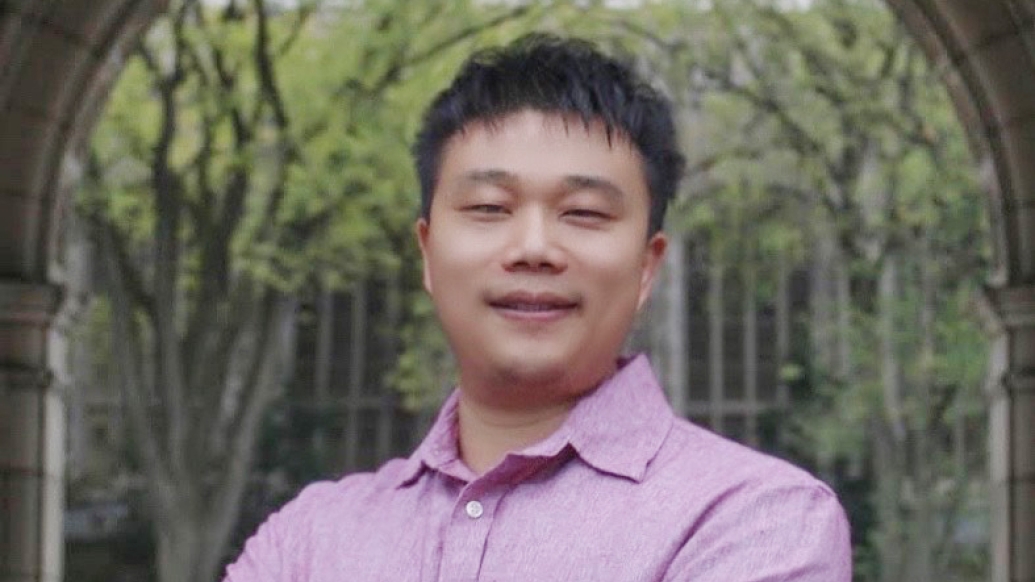
Dissertation defense, Thursday, April 20, 3:00 pm, Earl Lewis Rm, Rackham Bldg. Congratulations Chen Sun!
Dissertation title: Development of computational methods for identifying mosaic copy number variation with single-cell sequencing
Research abstract
Somatic mutations have important implications for various biological processes and diseases, but detecting them from bulk tissue samples presents significant challenges. In my dissertation, a method called SCOVAL was developed to verify single-cell copy number variation (CNV) calls using additional phased loss-of-heterozygosity information. The development of a single-cell CNV simulator and a deep learning-based method named ScovalNN also contributed to the advancement of somatic CNV detection using single-cell DNA sequencing data. These contributions have significant implications for the understanding of somatic mutations in non-cancer diseases and the development of personalized medicine.
What interests you about single-cell sequencing?
Single-cell sequencing allows for the study of genomic heterogeneity at the resolution of individual cells, which can reveal new insights into complex biological processes and diseases. It is a powerful tool that can provide a deeper understanding of the molecular basis of diseases and pave the way for personalized medicine.
How did you come up with this topic?
I was initially interested in somatic mutations and their role in disease. The potential of single-cell sequencing to study the genomic diversity at the level of individual cells caught my attention. This led me to focus on the development of methods for somatic CNV detection using single-cell DNA sequencing data.
What drew you to U-M computational medicine and bioinformatics in the first place?
I was drawn to the Bioinformatics program because of its interdisciplinary approach, which allowed me to integrate my interests in genomics, genetics, and machine learning. The program's faculty and resources provided me with the opportunity to pursue my research interests and make significant contributions to the field.
What was your most exciting moment during your PhD training?
One of the most exciting moments during my PhD training was when I applied the SCOVAL method to 2,125 frontal cortical neurons from a neurotypical human brain and discovered a novel class of neurons with complex karyotypes characterized by whole or substantial losses of multiple chromosomes. This finding shed new light on the genomic diversity of neurons and has important implications for our understanding of somatic mutations in the brain.
What are your career plans and how did your training prepare you for these?
My career plan is to become a bioinformatics scientist, working at the intersection of genomics, data science, and machine learning. My PhD training equipped me with technical skills in single-cell sequencing data analysis, machine learning, and statistical modeling. Collaborating with experts from various fields, I also developed communication and leadership skills, invaluable for my future career.
Featured News & Stories
Alum reconnects to his roots through Doctors of Tomorrow scholarship fund
Advancing proteomics through computational innovation: Kai Li successfully defends dissertation
Scholarship honors love and gratitude
Dr. Sanjay Gupta to serve as 2026 Medical School Commencement speaker
Elaine Shafrin’s life and legacy