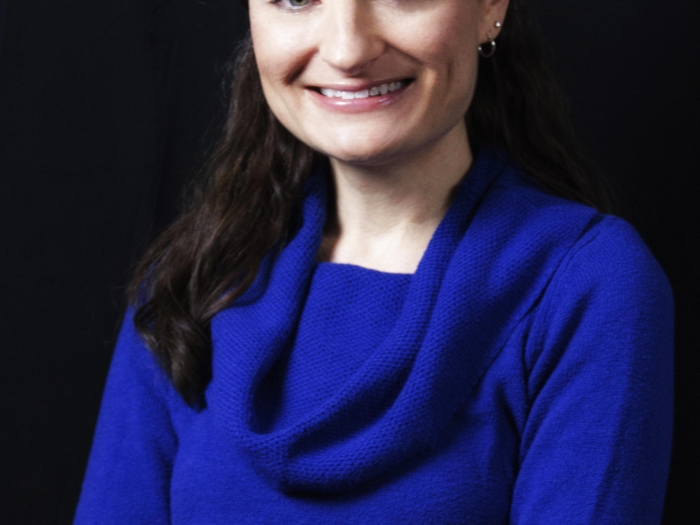
Yufeng Zhang, PhD, defended her bioinformatics dissertation thesis on machine learning models
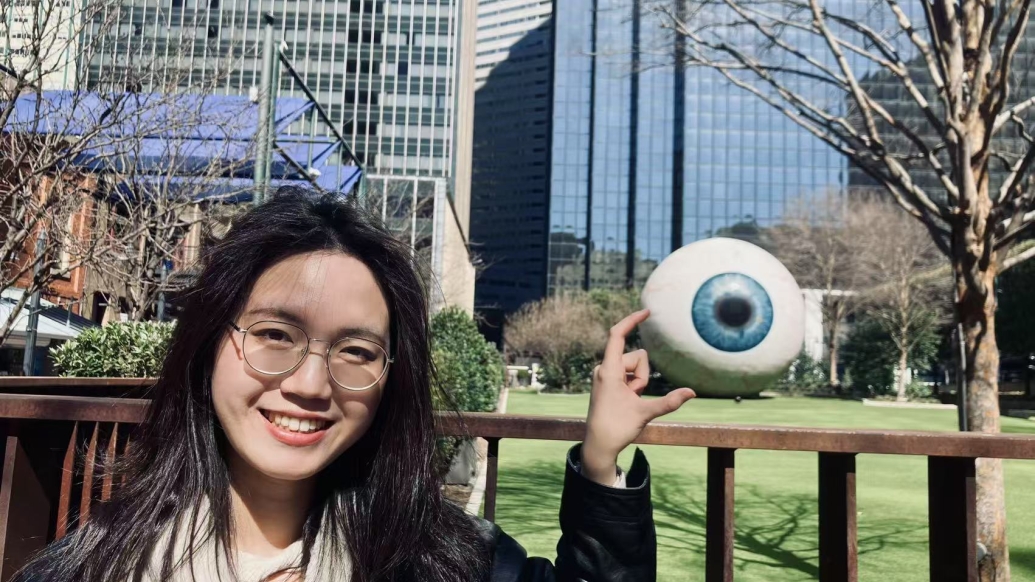
On January 17, 2025, Yufeng Zhang, Ph.D., defended her bioinformatics thesis titled: "Improving Automatic Clinical Decision Support System with Advanced Computational Methods." This work aims at supporting clinical assessment and improving healthcare delivery using AI and machine learning models. Her mentor was Dr. Kayvan Najarian.
Below is a Q&A with Dr. Zhang.
What is your research topic?
My research focuses on developing data-driven identification and prediction systems for real-world medical applications. I am particularly interested in enhancing the generalization and interpretability of machine learning and deep learning models in medicine, as well as exploring innovative methods to improve model accuracy. To address challenges such as the lack of annotated data, limited generalization capabilities, and the need for interpretable models, I have applied several strategies, including privileged information learning, self-supervised learning, and approximate reasoning.
What does particularly interest you about your research?
What interests me most about my research is the potential of clinical support systems to enhance healthcare delivery significantly, from diagnosing diseases more accurately to personalizing treatment plans. In discussions with clinicians, a recurring concern is the interpretability of models. Without interpretability, there is a lack of trust, making it less likely for the models to be deployed in real-world settings. Therefore, enhancing model interpretability is crucial. Additionally, other concerns often exist in medical informatics, such as model generalizability and the lack of data annotation. Addressing these concerns provides me with a deep sense of fulfillment as I help clinicians tackle these critical issues.
How did you come up with this topic?
I developed the topic in discussions with my advisor and clinicians. We aimed to build a bridge between artificial intelligence and clinical applications.
What drew you to U-M DCMB in the first place?
U-M DCMB is an inclusive environment. During my Ph.D. interview with five professors, I felt more like a peer than a candidate. Their willingness to engage in discussions was compelling. Additionally, DCMB's roster of distinguished professors, including my mentor Dr. Kayvan Najarian, who has extensive collaborations with multiple clinicians, perfectly aligns with my research interests.
What was your most exciting moment during your Ph.D. training?
The most exciting moment was when I had the opportunity to initiate the NEC-LACE project, which focuses on developing an automatic clinical decision support system based on abdominal X-rays for infants. We are the first group to utilize AXR for disease diagnosis in infants and I was very lucky to present this work in front of the NEC community.
What are your career plans and how did your training prepare you for these?
I am moving to Indianapolis to work as a generative AI data scientist at Eli Lilly, focusing mainly on developing chatbots and platforms using large language models, including pre-training and fine-tuning. The last chapter of my dissertation prepared me well with both theoretical knowledge and hands-on experience with LLM training and applications.
What advice do you have for upcoming students?
Always believe in yourself and don't let others define you. No one can prevent you from achieving your goals except yourself.
What do you like to do outside the lab?
I love playing the piano and reading detective novels. The piano has been a constant companion through ups and downs, offering solace and joy. Detective novels allow me to experience lives I could never lead. I also enjoy Pilates and plan to explore more physical activities as I embark on my new journey.
Congratulations, Dr. Zhang!
In This Story
Kayvan Najarian, PhD
Professor
Featured News & Stories
Helping an employee-turned-patient overcome a brain tumor

Shipt gift helps address food insecurity
Family Medicine researchers find clinicians question Black expectant moms more about cannabis use than white moms
BRCF Flow Cytometry Service Enhancements Coming July 1
Celebrating outstanding teaching and research at the 2026 Endowment for Basic Sciences Awards