THNK Spectral Education Series & Flow Cytometry
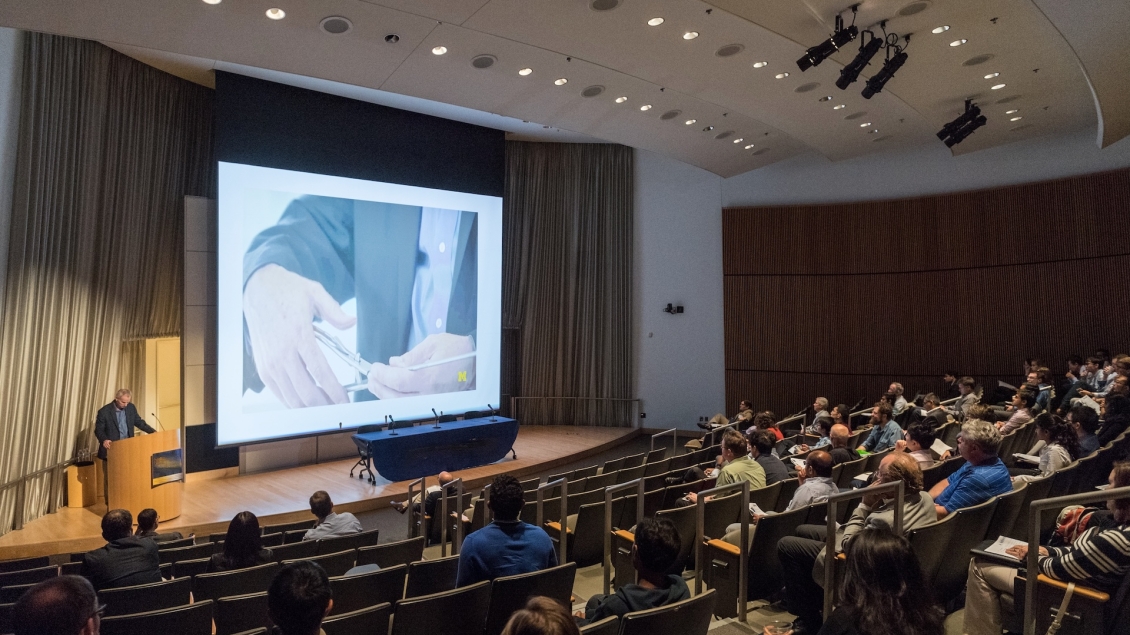
Med Sci II, 3600 South Lecture Hall
About This Event
(This event was originally listed as happening on April 19. Apologies for the error.)
The THNK Spectral Education Series will help you understand the differences between spectral and conventional flow cytometry with basic of multicolor panel design experiments.
Attendees will gain deep knowledge of high parameter panel design and an understanding of how to overcome obstacles for spectral data.
Agenda:
1:00 pm: Introduction to Spectral Flow Cytometry & Tools, and Considerations for the Design of Multicolor Flow Cytometry Panels, David Morris, Ph.D., applications science and technical consultations, BD Biosciences.
2:00 pm: Refreshment Break.
3:00 pm: Best Practices for Design of High Parameter Spectral Panels: Overcoming Challenges in 35+ Color Panels, David Morris, Ph.D., applications science and technical consultations, BD Biosciences.
3:15 pm: Spectral Discussion Hour and Open Forum.
Presented by the THNK Spectral Education Series and the BRCF Flow Cytometry Core. Refreshments will be provided.
>> Please RSVP using this short form to assist us with event planning.
Contact Us
Biomedical Research Core Facilities
Office of Research, University of Michigan Medical School
Email: [email protected]
General Inquiries Form
About Us
The Biomedical Research Core Facilities (BRCF) are part of the Medical School Office of Research, where our mission is to foster an environment of innovation and efficiency that serves the Michigan Medicine research community and supports biomedical science from insight to impact.
The Flow Cytometry Core provides instrumentation and expertise to University of Michigan investigators – and the surrounding biotech community – in a broad range of basic and medical science disciplines. Samples are prepared by individual investigators, who then deliver samples to the Core for flow cytometric analysis or cell sorting. The Core also provides assistance in grant and publication preparation, publication-quality graphics, and the development of experimental designs.