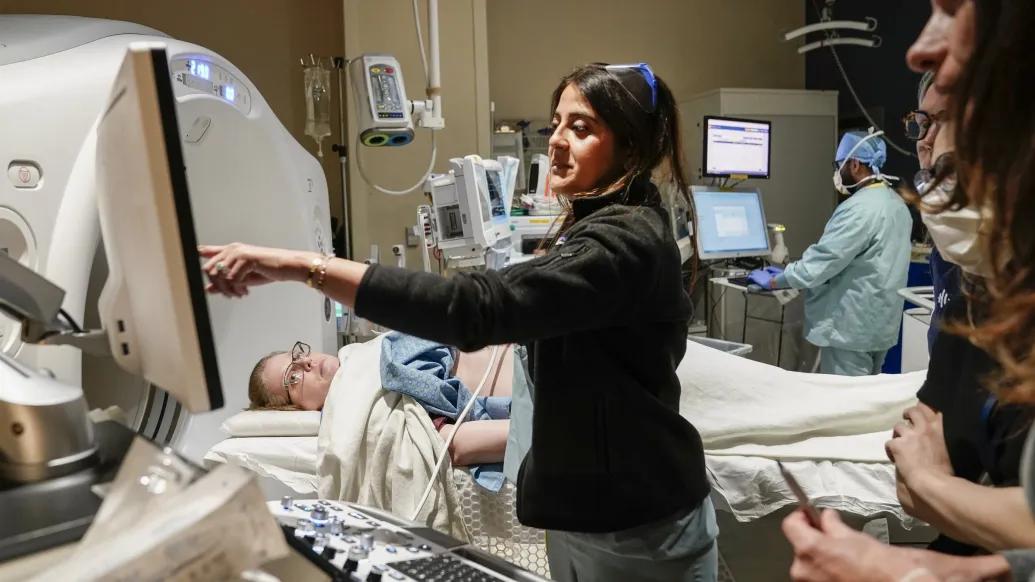
In late 2023, the United States Food and Drug Administration (FDA) approved the use of sound waves to break down tumors — a technique called histotripsy — in humans for liver treatment.
This new therapy, which was developed at the University of Michigan and received support from the National Institutes of Health, provides a non-invasive alternative to surgery, chemotherapy and radiation treatments for cancer, which often have significant and life-altering side effects.
A clinical trial underway since 2021 at the U-M Rogel Cancer Center and other locations has treated patients with primary and metastatic liver tumors via histotripsy. This trial demonstrated the technology’s ability to meet the testing’s primary effectiveness and safety targets.
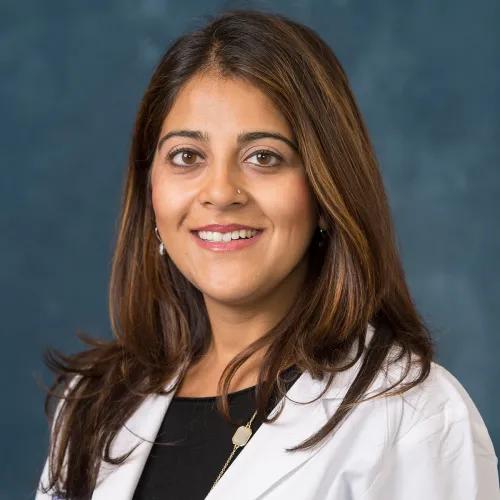
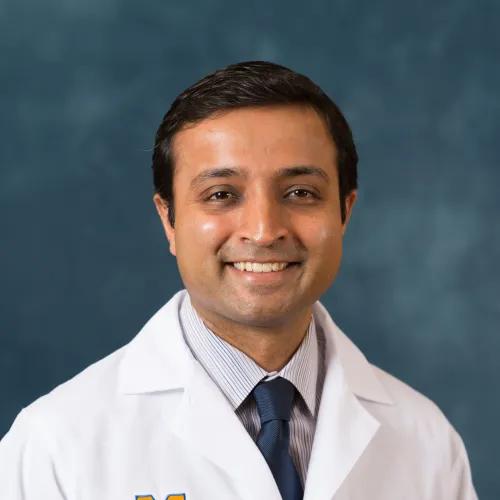
Dr. Mishal Mendiratta-Lala, professor of radiology with Michigan Medicine and principal investigator on the trial at U-M, worked with Dr. Zhen Xu, U-M professor of biomedical engineering and an inventor of the histotripsy approach, Dr. Clifford Cho, chief medical officer of UM Health-West, Dr. Neehar Parikh, Michigan Medicine transplant hepatologist, and a close knit team of fellow experts to develop, refine and safely implement the new technology that works by using targeted and high intensity ultrasound waves to form microbubbles within liver tumors. The forces created as those bubbles form and collapse cause the tumor masses to break apart, killing their cells and leaving the debris to be cleaned up by the immune system.
Histotripsy technology ultimately means patients can receive non-invasive cancer treatment with fewer side effects, shorter recovery times, and less treatment discomfort. And in an exciting development, Dr. Cho is now working closely with colleagues in the Cancer Network of West Michigan (a partnership between UM Health-West and Trinity Health) to establish a new histotripsy program that will provide patients in west Michigan with easier access to this groundbreaking technology.
The Detroit Free Press ran a front-page story featuring Drs. Mendiratta-Lala and Xu, and their pioneering work related to histotripsy. The piece highlights the story of Elissa Robinson, a patient from Macomb Township, Mich., who was among the first five people in Michigan to undergo histotripsy to treat liver tumors.
In This Story

Clifford S Cho
Professor
Mishal Mendiratta-Lala, MD
Clinical Professor
Neehar Dilip Parikh MD, MS
Associate Professor

Zhen Xu
Professor
Related
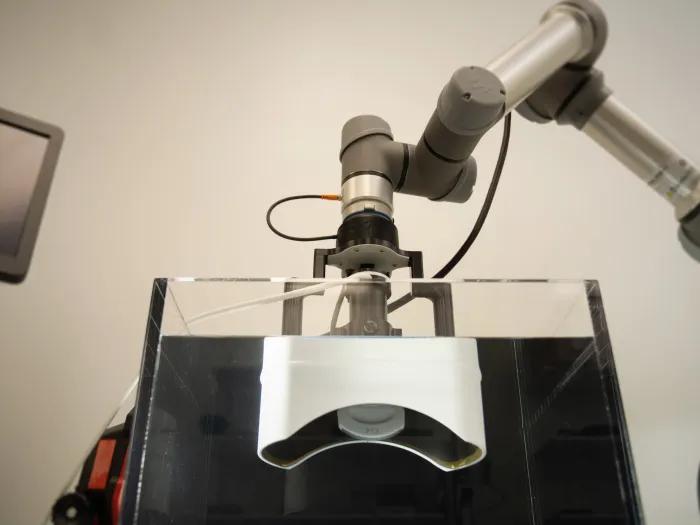
Histotripsy liver tumor trial successful, early clinical adoption recommended
Featured News & Stories
Researchers discover what may be the root cause of preeclampsia, and how to fix it
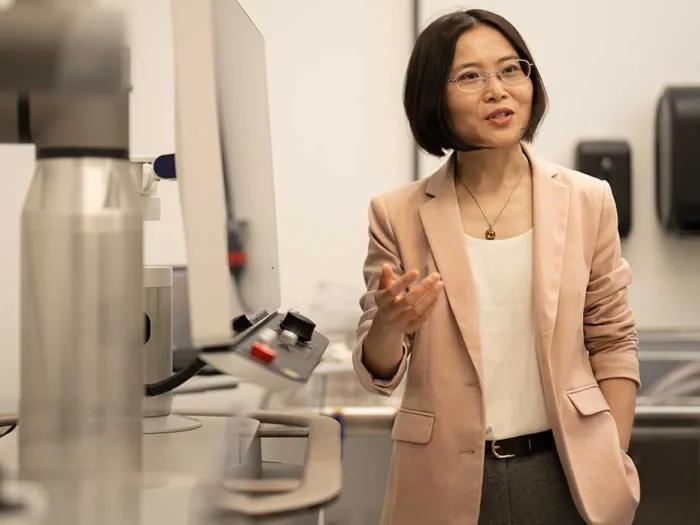
Xu named among Time magazine’s most influential in health
New research brings power of AI, robotics, deep datasets to test drugs for devastating bird flu
A protein tape-recorder enables scientists to measure and decode cellular processes at scale and over time
Leukemia drug secures FDA approval