Researchers identify a potential “Achilles heel” of psoriasis
Study reveals how IL-23 therapies drive long-lasting disease control and points towards strategies to prevent relapse
11:01 AM
Author |
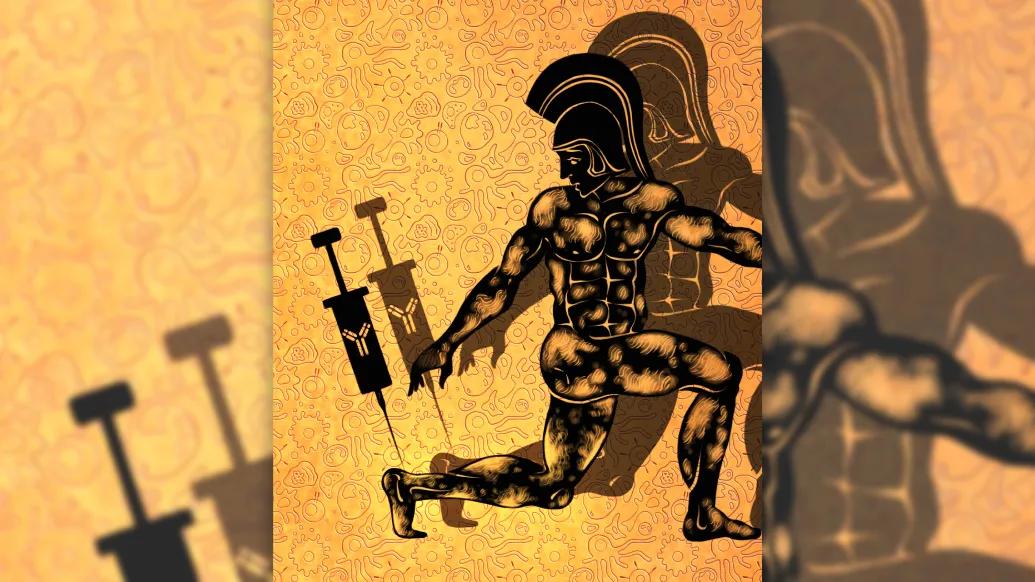
Psoriasis is a chronic immune-mediated inflammatory skin disease affecting more than 8 million Americans and nearly 125 million people worldwide.
Characterized by painful, scaly, and inflamed skin lesions, the disease often begins in adolescence or early adulthood and persists through life.
Although highly effective therapies are now available, psoriasis remains incurable, and lesions commonly recur in the same skin location after treatment is stopped.
“Even when the skin appears clinically clear, tissue resident memory T cells, or TRMs, can persist within the tissue and drive disease relapse,” explained Rundong Jiang, Ph.D. student, first author of the study and a researcher at Michigan Medicine.
“Understanding how these cells survive long term has been a major unanswered question in psoriasis research.”
A new study from researchers at Michigan Medicine provides important insight into how one of the most widely used classes of psoriasis therapies, IL-23 blockade, achieves durable disease control.
By mapping the immune landscape of psoriasis lesions before, during, and after treatment, the team identified how these therapies reshape the inflammatory environment over time and uncovered mechanisms that may explain both prolonged remission and eventual disease recurrence.
Exploring how IL 23-blockade works
Anti-IL-23 therapies, including widely used drugs such as Skyrizi, have transformed the treatment of psoriasis. However, exactly how these therapies produce long-lasting disease control within the skin itself has remained incompletely understood.
“Although these drugs are highly successful clinically, we still did not fully understand how they work within the tissue microenvironment of psoriasis lesions,” said Rundong Jiang.
“We wanted to define the cellular and molecular mechanisms responsible for their durable effects.”
Using high-resolution single-cell analyses, the researchers found that pathogenic immune cells remain embedded within the epidermis, the outermost layer of the skin, where they can persist for years or even decades.
“What was remarkable is that IL-23 blockade, particularly at higher doses, profoundly reduced these TRM cells within the epidermis,” said Johann E. Gudjonsson, M.D., Ph.D., senior author of the study.
“These cells appear to function as a reservoir for disease recurrence."
The study also identified additional signaling pathways that may help sustain these residual pathogenic cells including IL-7 and IL-34 signaling.
These findings suggest that combining IL-23 blockade with therapies targeting survival pathways in TRMs could potentially drive deeper and more durable remission.
“We think we may now understand why these drugs are so effective, but also why the disease eventually returns,” Gudjonsson said.
“Current therapies dramatically suppress the inflammatory response, but they may not completely eliminate the cells capable of reigniting disease.”
Towards deeper remission and potentially disease reset
The team’s next goal is to determine whether these residual TRM populations can be more completely eliminated or functionally reprogrammed to achieve prolonged remission or potentially reset the disease state.
“We’re still quite a way from that goal,” Gudjonsson cautioned, “but this study provides an important roadmap for how we might eventually get there.”

Health Lab
Explore thousands of health news & research stories by visiting the Health Lab homepage for more.
Media Contact

Public Relations
Department of Communication at Michigan Medicine
In This Story

Johann E Gudjonsson, MD, PhD
Professor
Stay Informed
Want top health & research news weekly? Sign up for Health Lab’s newsletters today!
Featured News & Stories
How a common virus's hijack of cell repair processes may promote cancer
Medical students develop novel technological solutions for unmet patient needs
Study overturns 100-year-old assumption about common bacteria in the lungs

More leucovorin prescribed to kids after federal officials touted its unproven benefits for autism
Biomarkers aid cost-benefit analysis of head and neck cancer immunotherapy