Supplementing with peptides: Good for extra pep or a needless step?
A basic scientist weighs in on the latest wellness tool
5:00 AM
Author |
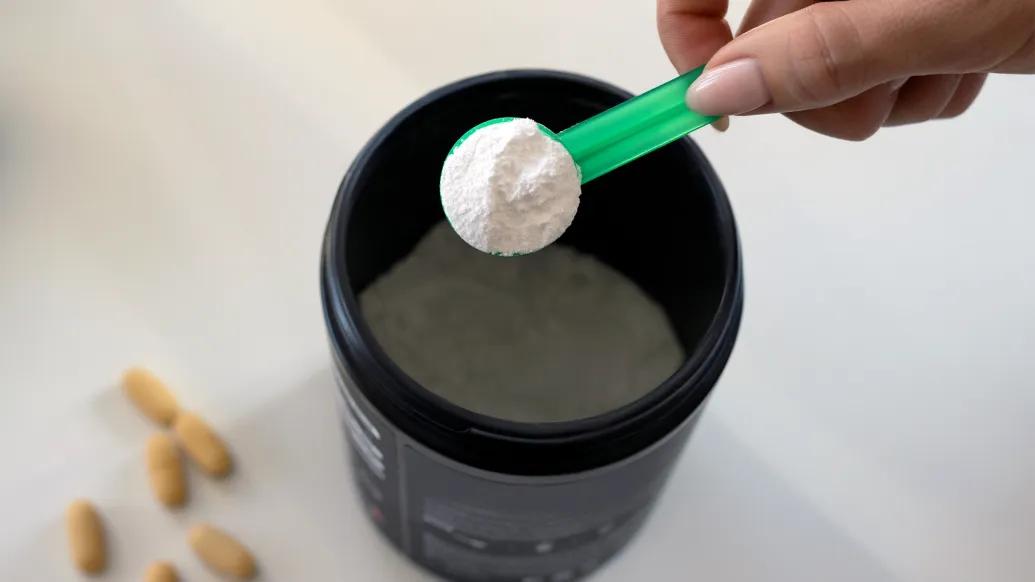
In the most basic of terms, peptides are short proteins: chains of amino acids, the body’s building blocks, that are between 2 and 50 units long.
Peptides and proteins alike are touted as a sort of fountain of youth by health and wellness influencers.
Here, Jorge Ruas, Ph.D., of the U-M Department of Pharmacology, talks about peptides, how they work and whether supplementing them lends any benefit.
How does what you study relate to peptides?
Ruas: My lab is very interested in the idea of organ-to-organ communication to understand how the body adapts to exercise.
For example, when you are running, your muscles release a variety of substances, including peptides and small molecules (metabolites), that together can inform the rest of your body, your brain, heart, liver, fat tissue, kidneys, about the state of your body’s systems.
And this is fundamental for your whole body to adapt to the benefits of exercise training.
We're interested in it from a physiological perspective, because these are exactly the same mechanisms that get dysregulated in many diseases and from a pharmacology perspective, since we want to know if these substances can have therapeutic value.
Can you explain more about what peptides are and what they do?
Ruas: Proteins and peptides as made of amino acids linked together.
There are 20 different amino acids, 9 of which the body can’t make and has to take in from diet.
If you imagine each amino acid represented by a letter (which they can be), each peptide and protein can be any combination of those 20 amino acids in any possible order.
You can imagine it’s complicated to talk about their functions because they are so diverse.
One of the most familiar peptides is the hormone insulin, which is secreted from the pancreas to control blood sugar, by communicating with muscle, fat, the liver and the brain.
It’s involved in the systemic regulation of energy.
What is an example of a peptide drug?
Ruas: With peptide drugs, we are essentially trying to mimic what the body does naturally.
For example, GLP-1 is released by the intestine after a meal to stimulate insulin production and suppress appetite and tell you when to stop eating (GLP-1 analogues were initially developed to treat diabetes).
People have thought, well, if GLP-1 naturally suppresses appetite, let’s just use it to suppress appetite to treat obesity.
The problem is that the GLP-1 that the body makes has an extremely short half-like, meaning it goes into circulation and then quickly disappears.
What pharmaceutical companies were able to do is come up with a method so that after you inject GLP-1 it would last longer in circulation so that your brain is constantly receiving the message to stop eating.
What are some of the challenges that come with peptide supplementation?
Ruas: There is a whole class of drug investigation centered around identifying peptides the body’s organs use to communicate with each other and then trying to copy them.
One of the issues is with taking these drugs or supplements by mouth.
The acid and protein-digesting enzymes in the stomach break down proteins and peptides (that are too large to be absorbed into circulation) into their components, amino acids.
Those can then be absorbed in the intestine, distributed to the organs, and used for whatever processes the body needs.
So what's absorbed into your body is no longer the peptide you ingested, but its building blocks.
The pharmaceutical industry has techniques to try to work around these limitations and produce something that has a consistent, reproducible effect that can be studied with clinical studies, a process that costs many millions of dollars.
Supplements don’t have this level of study or regulation.
While the idea of the peptide may not be wrong, non-regulated supplements are often produced without proper formulation, quality control or human testing.
What that means is that there's not enough information or very small clinical studies to support their use.
And if they do exist, the results were not impressive, because otherwise people would have pursued them as pharmaceuticals (which would fall under FDA regulation.)
Do most people need supplements?
Ruas: If you have a balanced diet, you don’t need a supplement.
You will get all the amino acids you need from your food, unless you’re doing a restrictive diet.
And while you can provide your body with extra, it will not take what it does not need.
If you are actively exercising and lifting weights, then the supplementation of amino acids does have an effect because your body is building more muscle.
But the body of a sedentary person will either not use extra peptides and proteins or store that energy in the form of adipose tissue, or fat.
What is your message for people interested in peptides and the like for longevity?
Ruas: My most boring and repetitive message is to care about your diet, exercise and sleep well; this is not just my message, but what the World Health Organization recommends.
The movement of your body, the contraction of your muscles naturally releases a lot of these peptides and substances that keep you healthier, more alert and so on.
As for supplements, think about whether you really need them and what the price might be in the long run by ingesting or injecting something that is not properly validated for safety and efficacy.
In biology there’s always a price to pay.
Sign up for Health Lab newsletters today. Get medical tips from top experts and learn about new scientific discoveries every week
Sign up for the Health Lab Podcast. Add us wherever you listen to your favorite shows

Health Lab
Explore thousands of health news & research stories by visiting the Health Lab homepage for more.
Media Contact

Public Relations
Department of Communication at Michigan Medicine
In This Story

Jorge L Ruas
Professor
Stay Informed
Want top health & research news weekly? Sign up for Health Lab’s newsletters today!
Featured News & Stories

Comprehensive DNA sequencing reveals hidden drivers of cancer

Many older adults make Medicare decisions quickly and most don’t change plans, poll finds
What’s the latest on 7-OH and kratom availability and addiction care?

A metabolic “switch” that could help reset scar-producing cells in scleroderma

Depression in OBGYN residents needs more attention, study suggests