
More articles about: Metabolism, Endocrinology & Diabetes

Health Lab
Supplementing with peptides: Good for extra pep or a needless step?
Health Lab talks to Jorge Ruas, Ph.D., of the U-M Department of Pharmacology, about peptides, how they work and whether supplementing them lends any benefit.

Health Lab
New study reveals a missing step in a weight control pathway that could be targeted for obesity treatment
New research led by Liangyou Rui, Ph.D., of the Department of Molecular & Integrative Physiology at the University of Michigan Medical School outlines a missing step in one of these alternative pathways, an important discovery in the fight against obesity.
Health Lab
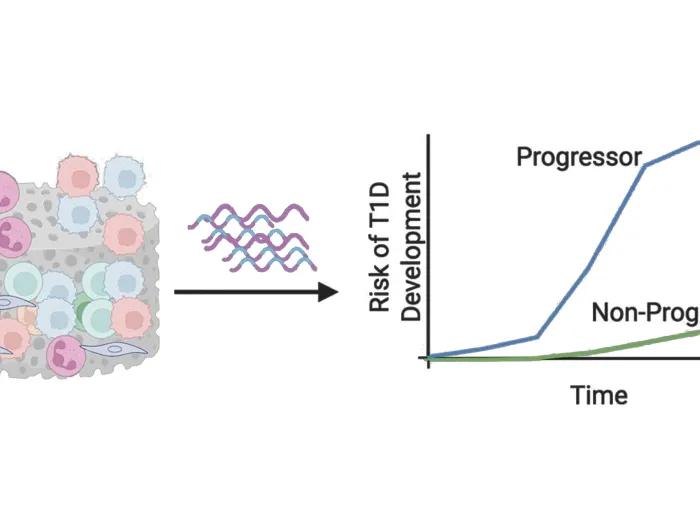
New hope for early diabetes detection
The research offers an actionable monitoring method that may guide the administration of current and emerging therapeutics more effectively than the current diagnostics that only assess disease risk or detect disease after destruction of insulin producing cells.

Health Lab
Podiatry clinic helps patient with recurring foot ulcer
Marcia Sherman, a patient with diabetes, dealt with a recurring foot ulcer for more than two years before having surgery that cured her wound.

Health Lab
Helping patients with diabetic foot disease
Diabetes-related foot complications are the most common cause of non-traumatic amputations in the United States. The Michigan Lower Extremity Services clinic at the University of Michigan Health is a multidisciplinary diabetic foot clinic that offers a comprehensive approach to managing diabetic foot disease.

Health Lab
Former pediatric patient “comes home” as patient care technician at C.S. Mott Children’s Hospital
Olivia Ohmer was diagnosed with type 1 diabetes as a child. Despite developing Hashimoto’s disease and urticaria as well, she spent most of her life as a patient advocate and is now training to be a medical professional.

Health Lab
New guidelines issued for treating thyroid cancer
The American Thyroid Association first published guidelines for managing differentiated thyroid cancer in 1996. The current updates consider every aspect of the patient’s journey, including diagnosis, monitoring and treatment. Megan Haymart answers questions about understanding the risk for thyroid cancer, active surveillance and current treatment options.

Health Lab
Protein targets can act as a switch for obesity and anorexia
In the U.S., dietary obesity has a prevalence of 40% and obesity increases the risk of other chronic diseases such as heart disease and diabetes. Even though anorexia nervosa has a prevalence of 1%, it is the second-highest death rate of any mental illness. Roger Cone discusses how melanocortin receptors can be used to treat both obesity and anorexia.

Health Lab
Randy Seeley gets a lot of questions about GLP-1s. Here’s why
A Michigan Medicine Ph.D. researcher dissected bariatric surgery to understand how it actually works, contributing to obesity therapies that have given rise to drugs like Ozempic and Wegovy.

Health Lab
Managing your diabetes can help prevent associated vision loss
Diabetic retinal disease screening remains challenging because patients often do not have any symptoms in the early stages and, therefore, misunderstand the importance of regular screenings. In a recent publication Thomas Gardner discusses current screening recommendations and treatment options for DRD.

Health Lab
Mitochondria may hold the key to curing diabetes
Mitochondria are essential for generating energy that fuels cells and helps them function. In a new study researchers used mice to show that dysfunctional mitochondria also trigger a response that affects the maturation and function of β-cells.

Health Lab
National Diabetes Prevention Program saves costs for enrollees
The National Diabetes Prevention Program was created by the Centers for Disease Control and Prevention in 2010 to offer an effective way to help prevent type 2 diabetes. U-M researchers evaluated the uptake and outcomes of the National DPP and found that enrollees saved in medical costs and had a reduced risk of developing type 2 diabetes.

Health Lab
Diabetic retinopathy is being diagnosed more in younger patients
Although previously rare in young people with diabetes, an editorial in JAMA Ophthalmology notes that diabetic retinopathy is increasing in younger patients, urging clinicians to remain vigilant of symptoms.

News Release
U-M Health ranked among nation’s best in more specialties than any other Michigan hospital by U.S. News & World Report
University of Michigan Health ranks among the nation’s best hospitals in more specialties than any other Michigan hospital, according to U.S. News and World Report’s Best Hospitals Rankings for 2024-2025.

Health Lab
New drug could help those with CAH reduce the use of corticosteroids
Michigan Medicine researchers discover that a new drug could help those with CAH, or congenital adrenal hyperplasia, reduce the use of corticosteroids.
