Rogel Cancer Center adds 3 new senior leadership roles
Deininger, Dossett to serve as deputy directors; Kaffenberger appointed associate director for clinical operations
2:47 PM
Author |
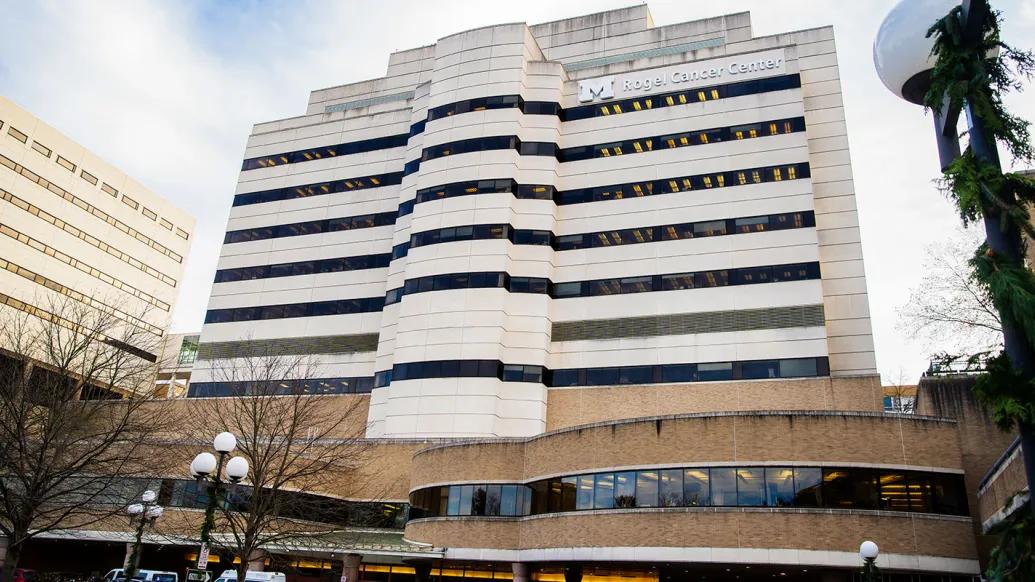
ANN ARBOR, Michigan – The University of Michigan Rogel Cancer has named two new deputy directors and a new associate director to provide strategic leadership in cancer care, research and training.
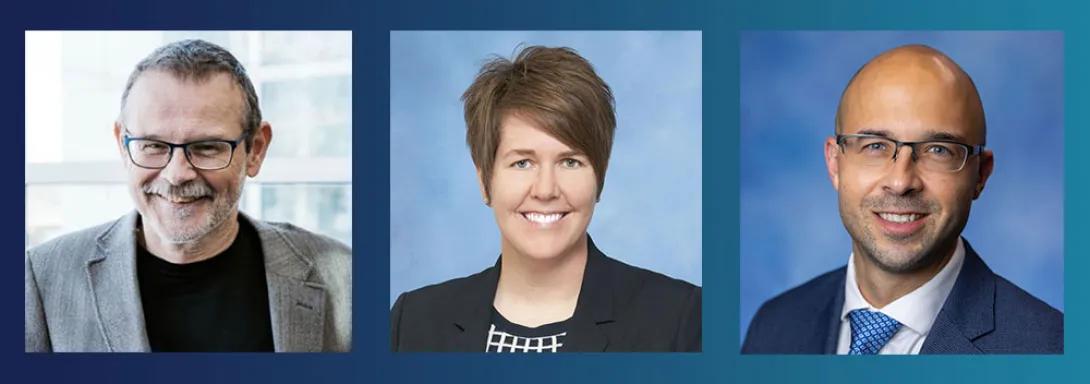
- Michael Deininger, M.D., Ph.D., deputy director for team and transdisciplinary research
- Lesly Dossett, M.D., M.P.H., deputy director for clinical innovation and engagement
- Samuel Kaffenberger, M.D., associate director for clinical operations
“I look forward to partnering with these three outstanding leaders to set strategic directions for the Rogel Cancer Center to advance our missions in research and service to the patients and communities we serve across Michigan and beyond,” said Eric R. Fearon, M.D., Ph.D., director of the Rogel Cancer Center.
All three positions will be part of Rogel’s senior leadership team, under the direction of Fearon.
Deininger, professor and division chief of hematology/oncology at Michigan Medicine, will lead Rogel efforts to enhance translational research, team science and transdisciplinary collaboration across the center. He will work to leverage disease-specific teams to strengthen the breadth and depth of discovery, translational, clinical and health services research across technology platforms and emerging therapy areas.
Deininger joined the University of Michigan from Versiti Inc. and the Medical College of Wisconsin, where he served as director of Versiti’s Blood Research Institute, chief scientific officer and executive vice president for research. He was professor of medicine and associate dean for research at MCO. He previously led hematologic malignancies programs at the Knight Cancer Institute at OHSU and the Huntsman Cancer Institute at the University of Utah.
Deininger received his medical degree from the University of Würzburg Medical School in Germany, completed his residency and fellowship at the Institute of Medical Oncology and Hematology at Nürnberg General Hospital. He also completed a fellowship in cellular cancer therapy at the University of Leipzig. He received his doctorate from Imperial College in London.
Deininger focuses on the biology and therapy of myeloid malignancies, as well as interventional leukemia trials. Work from his lab contributed to the approval of several new leukemia drugs, including imatinib (Gleevec).
Dossett is chief of surgical oncology, Maud T. Lane Research Professor of Cancer Quality Improvement and professor of surgery at Michigan Medicine. She will lead Rogel Cancer Center efforts to broadly advance clinical care excellence and further integration of patient care with clinical trials and population/health services research. She will also lead Rogel efforts to strengthen engagement, recognition and support for cancer-focused faculty across departments and divisions engaged in cancer care.
Dossett earned her medical degree and master’s of public health from Vanderbilt University, where she also completed her general surgery residency and a health services research fellowship. After residency, Dossett served on active duty with the United States Navy, including completing two deployments supporting combat operations in Afghanistan. She completed a clinical fellowship in complex general surgical oncology at Moffitt Cancer Center and joined the faculty of the University of Michigan in 2016.
Dossett specializes in treating patients with melanoma, soft tissue sarcoma and breast cancer. Her research leverages implementation science frameworks and behavioral strategies to improve health care value.
Kaffenberger is clinical associate professor of urology and clinical physician lead of the cancer program and of cell and gene therapy at Michigan Medicine. As associate director for clinical operations, he will lead Rogel ambulatory cancer care operations, including advancing new initiatives to improve the timeliness and coordination of cancer care, and to enhance patient satisfaction with the care provided.
A graduate of the University of Pittsburgh School of Medicine, Kaffenberger completed his residency in urologic surgery at Vanderbilt University Medical Center. He then completed a Society of Urologic Oncology-certified fellowship in urologic oncology at Memorial Sloan Kettering Cancer Center, where he was chief fellow.
His clinical and research interests are focused on the surgical care of patients with all urologic malignancies, including cancers of the kidney, testis, prostate and bladder.
The deputy director role was previously held by Pavan Reddy, M.D., who left the University of Michigan. The previous associate director for clinical operations was David C. Smith, M.D., who retired.
Featured News & Stories

How have diagnostic and treatment decisions for prostate cancer changed in recent years?
Immune system protein is a cancer killer on its own, new study shows
Online resources and coaching helped people seek genetic testing for cancer

‘Molecular glue’ stabilizes protein that inhibits development of non-small cell lung cancer and uterine cancer