
Taihao Quan, MD, PhD
Manage Your Profile
About
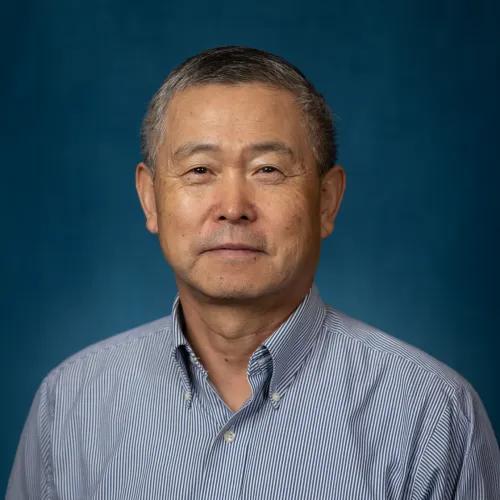
Taihao Quan is a Research Professor in the Department of Dermatology at the University of Michigan in Ann Arbor. He obtained his PhD from Akita University School of Medicine, Akita, Japan (1992) and MD degree from Norman Bethune University Medical Science, ChangChun, China (1983). Dr Quan received his postdoctoral training at Wayne State University and University of Michigan in the Department of Dermatology (1997).
Research in Dr. Quan's laboratory studies the molecular mechanisms of skin aging and age-related diseases focusing on three major areas: matrix biology, cell-matrix interaction, and tumor microenvironment and skin cancer. His current efforts are focused on age-associated dermal microenvironment (AADM) impairs skin structure/function and creates a tissue microenvironment that promotes age-related skin diseases, like poor wound healing and development of skin cancer. Dr. Quan's laboratory is specifically interested in the biological functions of CCN1, a secreted, extracellular matrix-associated protein that regulates a broad range of cellular activities through direct binding to cell surface integrin receptors. Elevated CCN1 expression in aged human skin reduces collagen production and increased collagen fragmentation and alters expression of numerous other secreted proteins, which together have potential deleterious effects on the dermal microenvironment. Research in Dr. Quan's laboratory also studies collagen regulation and degradation focusing on TGF-ß/Smad signaling and MMPs.
Dr. Quan has published over 65 peer-reviewed papers, review articles, and book chapters. His research has received support from the Nathan Shock Center for the Biology of Aging, the Dermatology Foundation, and from multiple NIH grants.
Recent Publications
-
Quan T. Ageing Research Reviews, 2026 Nov 1; 122:Journal ArticleThe dark side of the matrix: Elastin-derived fragments drive aging by igniting the immune system
DOI:10.1016/j.arr.2026.103332 PMID: 42632460 -
Quan T. Mechanisms of Ageing and Development, 2026 Oct 1; 233:Journal ArticleCirculating elastin fragments drive systemic aging: Where do pro-aging elastin fragments come from? A mini-review
DOI:10.1016/j.mad.2026.112218 PMID: 42413831 -
Liufu Q, Qin Z, Yan Y, Xu Y, He T, Liu Y, Xiang Y, Guo C, Quan T. Journal of Cell Communication and Signaling, 2026 Sep 1; 20 (3):Journal ArticleExtracellular high mobility group box 1 as a UV-induced alarmin driving cutaneous inflammation and photoaging via TLR4 signaling
DOI:10.1002/ccs3.70109 -
Quan T, Wang F, Marella S, Billi AC, Qin Z, Weng S, Fu J, Gudjonsson JE, Voorhees JJ, Fisher GJ. Journal of Investigative Dermatology, 2026 Jul 16;Journal ArticleCollapsed fibroblasts in aged human skin in vivo - A critical driver of dermal aging
-
He T, Bergin IL, Kim JY, Guo C, Chu CQ, Fisher GJ, Voorhees JJ, Quan T. Journal of Investigative Dermatology, 2026 Jul 1; 146 (7): 2016 - 2020.e2.Journal ArticleFibroblast-specific deletion of Tgfbr2 in mouse skin recapitulates human skin dermal aging by suppressing collagen production
DOI:10.1016/j.jid.2025.10.541 PMID: 41130513 -
Quan T. Biomolecules, 2026 Mar 1; 16 (3):Journal ArticleThe Matrisome as an Immunomodulator: A Role Far Beyond Its Structural Support
DOI:10.3390/biom16030408 PMID: 41897344 -
Ermilov AN, Kim AJ, Hansen KC, McCabe M, Kim JY, Qin Z, Zhang Z, He T, Guo C, Voorhees JJ, Fisher GJ, Quan T. Journal of Investigative Dermatology, 2026 Jan 1;Journal ArticleFibroblast-specific deletion of Yap/Taz impairs mouse postnatal dermal development by diminishing collagenous matrix
DOI:10.1016/j.jid.2026.05.034 PMID: 42314933 -
Quan T. Journal of Clinical Medicine, 2026 Jan 1; 15 (2):Journal ArticleFibroblasts as Immunological Sentinels in Cutaneous Inflammation: A Review
DOI:10.3390/jcm15020556
