
Hitinder Gurm
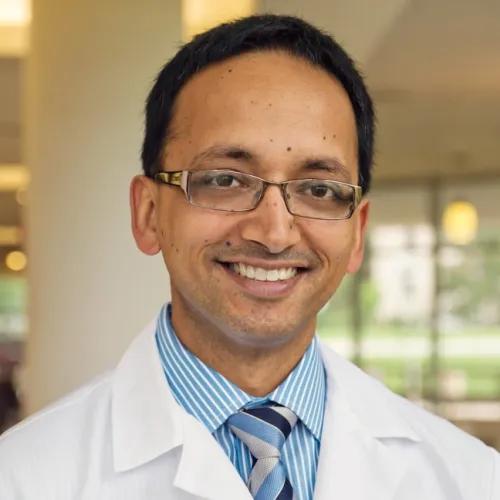
Park Willis III Legacy Professor of Cardiovascular Medicine
Professor of Internal Medicine
Chief Medical Officer
Medical School
Email:
[email protected]
Available to mentor
Hitinder Gurm
Chief Medical Officer
Manage Your Profile
Center Memberships
-
Center MemberInstitute for Healthcare Policy and Innovation
-
Center MemberWeil Institute for Critical Care Research
-
Center MemberSamuel and Jean Frankel Cardiovascular Center
Recent Publications
-
Yakubov SJ, Anderson C, McCutcheon M, Thorsten J, Chisena RS, Gurm HS, Kandzari DE. Jacc Cardiovascular Interventions, 2026 Sep 14; 19 (17): 2400 - 2403.Journal ArticlePulsatile Intravascular Lithotripsy Produces Coronary Calcium Modification in Perfused Cadaveric Hearts
DOI:10.1016/j.jcin.2026.06.026 PMID: 42735976 -
Mwipatayi BP, Lee BJ, Daudu D, Santana NE, Lansky A, Chisena RS, Gurm HS, Traficante R, George JC. Journal of Clinical Medicine, 2026 Sep 1; 15 (17):Journal ArticlePulsatile Intravascular Lithotripsy for Heavily Calcified Femoropopliteal Arterial Disease: First-in-Human Results from the POWER PAD I Feasibility Study
DOI:10.3390/jcm15176589 -
Poletti E, Thotakura S, Kearney KE, Lombardi WL, Hamilton DE, Gurm HS, Brilakis ES, Azzalini L. American Heart Journal, 2026 Jul 1; 297:Journal ArticleComparative validation of risk scores for in-hospital complications following chronic total occlusion percutaneous coronary intervention
DOI:10.1016/j.ahj.2026.107427 PMID: 41864398 -
Hyder SN, Seth M, Hamilton DE, Stoute H, Daher E, Chattahi J, Samman B, Gupta V, Briguori C, Rudnick M, Sukul D, Gurm HS. Circ Cardiovasc Interv, 2026 Feb 5; e015645Journal ArticleReno-Protective Effects of SGLT2 Inhibitors in Patients With Diabetes Undergoing Percutaneous Coronary Intervention: Insights From the BMC2 Registry.
DOI:10.1161/CIRCINTERVENTIONS.125.015645 PMID: 41641530 -
Madder R, Seth M, Sukul D, Gandhi S, Nigatu A, Chen K, Alaswad K, Gibbs J, Cantey E, Gurm H. Catheterization and Cardiovascular Interventions, 2026 Jan 1;Journal ArticleIntracoronary Imaging to Guide PCI in Acute Coronary Syndromes: A Report From the BMC2 Registry
DOI:10.1002/ccd.70723 -
Gurm HS, Hamilton DE. JACC Cardiovasc Interv, 2025 Oct 25;Journal ArticleWhen the Kidney Says "No" But the Heart Says "Go": Complete Revascularization Across the Renal Spectrum.
DOI:10.1016/j.jcin.2025.09.035 PMID: 41137835 -
Basala T, Seth M, Madder RD, Wanamaker B, Fuller B, Shlofmitz E, Daher E, Tucciarone M, Alraies C, Kaki A, Rao SV, Gurm HS, Sukul D. Circ Cardiovasc Interv, 2025 Aug 19; e014886Journal ArticleSafety and Effectiveness of Intracoronary Imaging-Guided PCI in Contemporary Practice: Insights From BMC2.
DOI:10.1161/CIRCINTERVENTIONS.124.014886 PMID: 40827405 -
Chatur S, Seth M, Casey M, Thompson MP, Qureshi MI, Gupta V, Qureshi M, Samman B, Forest A, Gurm HS, Sukul D, Vaduganathan M. American Heart Journal, 2025 Jul 1; 285: 12 - 20.Journal ArticleReminders embedded in PCI reports to optimize discharge diabetes mellitus care (REMIND-DM): Rationale, design, and baseline characteristics
DOI:10.1016/j.ahj.2025.01.020 PMID: 39988205
Featured News & Stories

News Release
University of Michigan Health named Michigan’s top hospital, earns spot on U.S. News honor roll
University of Michigan Health in Ann Arbor ranks among the nation’s best — and is the top hospital in Michigan — according to the U.S. News & World Report Best Hospitals rankings for 2026-2027.
Health Lab
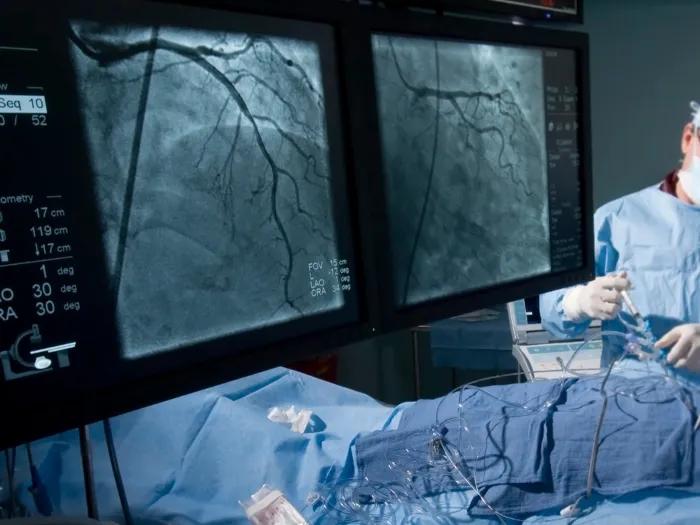
Researchers find significant differences in care of life threatening shock after heart attack
A study finds most hospitals don’t see many cardiogenic shock patients. When they do, providers often do not have a standardized way of treating them.
Research News
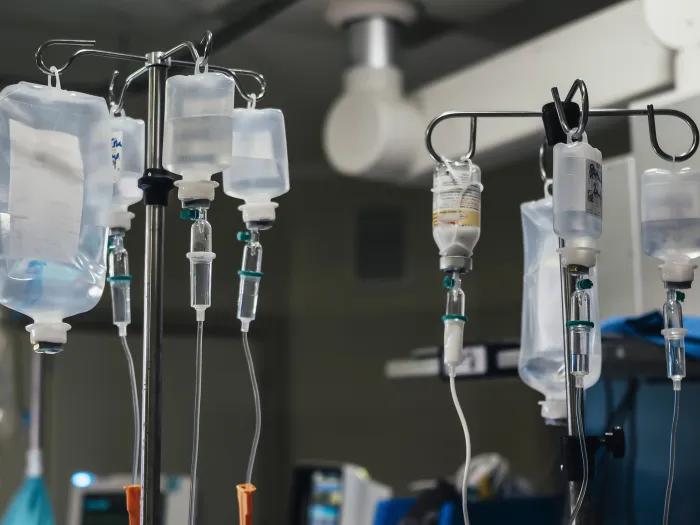
U-M & Michigan Medicine collaboration addresses IV fluid shortage in less than 24 hours
In a rapid response to the dire shortage of intravenous (IV) fluid bags currently affecting hospitals nationwide, investigators from the University of Michigan (U-M) Max Harry Weil Institute for Critical Care Research and Innovation and U-M Precision Health have developed a novel projection model to help U-M Health teams conserve critical medical supplies.
