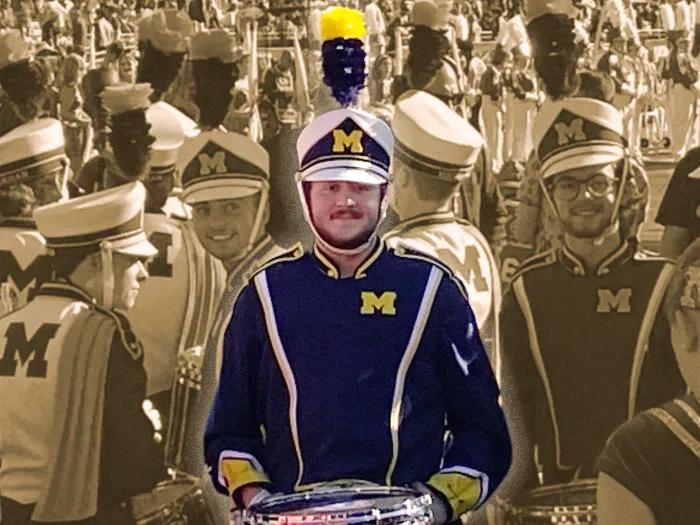
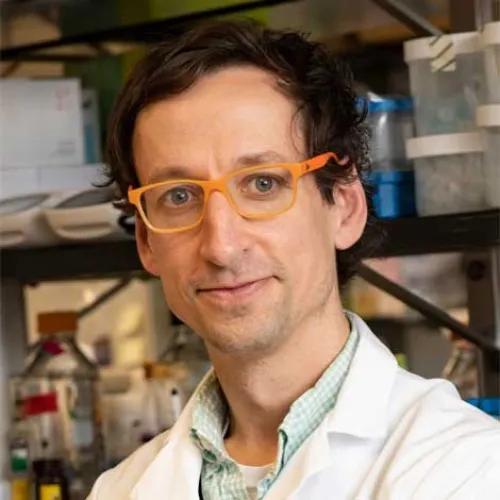
Carl Koschmann, MD
Manage Your Profile
About
Dr. Carl Koschmann is an Associate Professor with Tenure and the Chad Carr Pediatric Brain Tumor Center Research Professor in the Department of Pediatrics at the University of Michigan. He is also the Chad Carr Pediatric Brain Tumor Center Clinical Research Director and the Children’s Brain Tumor Foundation Co-Scientific Director.
Links
Lab Website twitter
Qualifications
-
MDUniversity of Wisconsin School of Medicine, Madison, WI, United States
2003 - 2007
Center Memberships
-
Center MemberRogel Cancer Center
Research Overview
The Koschmann Lab investigates the molecular mechanisms by which mutations in pediatric high-grade glioma (pHGG), including diffuse midline glioma (DMG) and DIPG promote tumor growth and affect response to therapy. Our long-standing project on the role of ATRX in pHGG has uncovered its impact on cell cycle control and targeted therapeutics. This work led to the successful attainment of an NIH/NINDS K08 Award (2016-2021) and an NIH/NINDS R01 (2021-2026). Multiple publications have resulted from this project, including publications in Science Translational Medicine and Cancer Research.
Additionally, the Koschmann Lab has established an intrauterine electroporation (IUE) model that is driven by pHGG drivers (e.g., H3F3A and PDGFRA), recently published in JCI. This model is the basis of translational studies supported by a U.S. Department of Defense (DoD) Cancer Translational Team Science Award (Co-PI, 2021-2026) and a second NIH/NINDS R01 (PI, 2022-2027) studying the efficacy and mechanism of ONC201 treatment in DMG, which was detailed in our recent manuscript in Cancer Discovery.
Finally, Dr. Koschmann serves as the PI/Co-PI for multiple early phase studies in pHGG/DMG for which our lab performs analysis of correlate tumor and CSF samples, as detailed in recent manuscripts in Clinical Cancer Research and Neuro-Oncology.
Recent Publications
-
Venneti S, Kawakibi AR, Ji S, Waszak SM, Sweha SR, Mota M, Pun M, Deogharkar A, Chung C, Tarapore RS, Ramage S, Chi A, Wen PY, Arrillaga-Romany I, Batchelor TT, Butowski NA, Sumrall A, Shonka N, Harrison RA, de Groot J, Mehta M, Hall MD, Daghistani D, Cloughesy TF, Ellingson BM, Beccaria K, Varlet P, Kim MM, Umemura Y, Garton H, Franson A, Schwartz J, Jain R, Kachman M, Baum H, Burant CF, Mottl SL, Cartaxo RT, John V, Messinger D, Qin T, Peterson E, Sajjakulnukit P, Ravi K, Waugh A, Walling D, Ding Y, Xia Z, Schwendeman A, Hawes D, Yang F, Judkins AR, Wahl D, Lyssiotis CA, de la Nava D, Alonso MM, Eze A, Spitzer J, Schmidt SV, Duchatel RJ, Dun MD, Cain JE, Jiang L, Stopka SA, Baquer G, Regan MS, Filbin MG, Agar NYR, Zhao L, Kumar-Sinha C, Mody R, Chinnaiyan A, Kurokawa R, Pratt D, Yadav VN, Grill J, Kline C, Mueller S, Resnick A, Nazarian J, Allen JE, Odia Y, Gardner SL, Koschmann C. Cancer Discov, 2023 Nov 1; 13 (11): 2370 - 2393.Journal ArticleClinical Efficacy of ONC201 in H3K27M-Mutant Diffuse Midline Gliomas Is Driven by Disruption of Integrated Metabolic and Epigenetic Pathways.
DOI:10.1158/2159-8290.CD-23-0131 PMID: PMC10618742 -
Pun M, Deogharkar A, Natarajan SK, Nuechterlein N, Tian W, Ji S, Young E, Yang F, Hawes D, Andren AC, Owen JH, Rau S, Su F, Cao X, Parolia A, Prince M, Fry J, Gardner PA, Yang R, Judkins AR, Koschmann CJ, Venteicher AS, Lyssiotis CA, Chinnaiyan AM, Venneti S. Acta Neuropathologica, 2026 Dec 1; 152 (1):Journal ArticleTargeting chordoma via an isocitrate dehydrogenase-1-dependent susceptibility to redox metabolism
DOI:10.1007/s00401-026-03048-9 -
Schwark K, Wink K, Miclea M, Patel T, Kong S, Stanczak S, Lau B, Cartaxo R, Messinger D, Doherty R, Ji S, Wadden J, Clausen M, Pearson A, de la Nava D, Goethe P, Momen F, Adam T, Hutchinson A, Niculcea M, Serhan H, Merrill N, Edmonds A, Mayr L, Neyazi S, Munoz D, Nuechterlein N, Calvo Fernandeza E, Califano A, Pavisic J, Garton H, Rao R, Upadhyaya S, Skrypek M, Bendel A, Lobbous M, Klawinski D, Meraiver S, Koptyra M, Resnick A, Nazarian J, Venneti S, Waszak S, Chavez L, Gojo J, Filbin M, Beck A, Coppe J-P, Koschmann C. 2026 Nov 12; 341 - 341.Proceeding / Abstract / PosterCombinatorial Targeting of Avapritinib-Driven MAP Kinase Activation in High-Grade Glioma
-
Deng B, Zhong X, Xin D, Huang X, Soni UK, Ma W, Cai M, Liang P-Y, Bai J, Qin Q, Mishra S, Hu M, Bayat AE, Luo Z, Diao J, Xin M, Pillay-Smiley N, Hummel TR, Stevenson CB, Foster JB, de Blank P, Raskin S, Koschmann C, Cancelas JA, Zheng Y, Lu QR. Neuro Oncol, 2026 Aug 31;Journal ArticleA CAR-T Tonic Signaling Code Predicts Anti-Tumor Efficacy in Diffuse Midline Glioma.
DOI:10.1093/neuonc/noag205 PMID: 42675603 -
Lau BC, Ajaero DP, Hoff BA, Pearson A, Sajjakulnukit P, Wadden J, Adam T, Ji S, Green AL, Nabavizadeh A, Cao Y, Aryal M, Upadhyaya S, Franson A, Galban S, Venneti S, Federowicz B, Shapiro MA, Stuhlmiller TJ, Lyssiotis C, Galban CJ, Parmar HA, Ibrahim M, Koschmann C. Neuro Oncol, 2026 Jul 28;Journal ArticleEarly increase in apparent diffusion coefficient predicts favorable response to Dordaviprone (ONC201) therapy in H3K27M-mutant diffuse midline glioma.
DOI:10.1093/neuonc/noag164 -
Peterson ER, Parsels LA, Li Z, Zhao X, Hess LD, Guo Y, Messinger D, Parsels JD, Wang Z, Qin T, Valvo VM, Franson AT, Castro MG, Yadav VN, Lawrence TS, Koschmann C, Zhang Q, Wahl DR, Morgan MA. Mol Cancer Ther, 2026 Jul 14;Journal ArticleH3K27M enhances basal ATM signaling but is not required for radiosensitization of diffuse midline glioma via ATM inhibition with AZD1390.
DOI:10.1158/1535-7163.MCT-24-1019 PMID: 42444560 -
Subramaniam B, Feher F, Knowles T, Yadavilli S, Sunjoing J, Koschmann C, Mueller S, Nazarian J, Waszak S. Neuro-Oncology Pediatrics, 2026 Jun 25; 2 (Supplement_1): wuag026.499Journal ArticleID #1110 Evolutionary history of dordaviprone-treated H3K27-altered diffuse midline glioma
DOI:10.1093/neuped/wuag026.499 -
Wang L, Oill AT, Lindner S, Stiller T, Blanchard MS, Mudunuri R, Kilpatrick J, Stratman J, Hibbard J, Sepulveda S, Peter L, Chen D, Munoz M, Wagner J, Nisis M, Dolatabadi A, Gomez G, Natri H, Forman S, Ressler J, Arvanitis L, Campbell K, Cotter J, Richman S, D’Apuzzo M, Tamrazi B, Badie B, Read J, Upadhyaya S, Koschmann C, Davidson T, Banovich N, Brown C. Neuro-Oncology Pediatrics, 2026 Jun 25; 2 (Supplement_1): wuag026.186Journal ArticleID #510 Intraventricular delivery of IL13Rα2-targeting CAR T cells in pediatric and young adult patients with recurrent or refractory central nervous system tumors: results of a Phase 1 trial
DOI:10.1093/neuped/wuag026.186
Featured News & Stories
For Families Facing a Deadly Brain Cancer, Scientific Progress Can’t Come Soon Enough
Defying the Odds Through a Clinical Trial
Catching Up With Jack

Brain cancer patient finds a way forward
FDA clears new DMG treatment: What it means for a deadly pediatric brain tumor