Denise E Kirschner, PhD

Microbiology and Immunology
1150 W. Medical Center Drive, 6730 MedSci II
Ann Arbor, MI 48109
Manage Your Profile
About
Dr. Kirschner is a professor in the department of Microbiology and Immunology at the University of Michigan. She received her Bachelors, Masters and PhD in applied mathematics from Tulane University. She did graduate work also at Los Alamos National Labs and a postdoctoral fellowship at Vanderbilt University joint with the departments of Mathematics and Infectious Diseases. For the past 25 years, her research focus has been on building multi-scale models to describe the host immune response to M. tuberculosis at multiple spatial and time scales and in multiple physiological sites including lung, lymph nodes and blood. To date she has worked and collaborated with experimentalists generating data on TB with mouse, non-human primate and human studies. Dr. Kirschner currently serves (and has for the past 20 years) as Editor-in-Chief of the Journal of Theoretical Biology. She serves as the founding co-director of The Center for Systems Biology at the University of Michigan, an interdisciplinary center at the University of Michigan aimed to facilitate research and training between wet-lab and theoretical scientists.
Links
Denise Kirschner Home Page Kirschner Lab
Qualifications
-
Postdoctoral FellowVanderbilt University Medical Center, Mathematical Modeling, Nashville, United States
1991 - 1994
Postdoctoral Fellowship
-
PhDTulane University, New Orleans, LA, United States
1988 - 1991
-
MSTulane University, New Orleans, LA, United States
1985 - 1988
-
BSTulane University, New Orleans, LA, United States
1981 - 1985
Center Memberships
-
Center MemberCenter for Computational Medicine and Bioinformatics
Research Overview
The work in my laboratory focuses mainly on questions related to host-pathogen interactions in infectious diseases. This means defining both the immune responses and the microbial characteristics that lead to infection and disease. In particular, our main focus is studying persistent infections - infections that the host is not able to clear. The persistent pathogens we focus on include both bacteria (e.g. Helicobacter pylori and Mycobacterium tuberculosis) and HIV-1. Such pathogens have evolved strategies to evade or circumvent the host-immune response and our goal is to understand the complex dynamic involved in host-pathogen interactions, together with how perturbations to this interaction (via treatment with chemotherapies or immunotherapies) can lead to prolonged or permanent health of the patient. Drug-resistance and the effects of treatment can be efficiently studied in this setting.
Currently, our research focus is on the role of the host response in pathogenesis at multiple spatial and time scales. The grants funding our work aim to examine the immune responses in the lymph nodes and lung also during TB infection. There are unique structures, granulomas, which are involved in the immune response to M. tuberculosis and we are developing methods to better understand their formation and function. This data could have a profound impact on our understanding the different disease trajectories seen in patients infected with persistent pathogens.
We apply a range of computational tools from deterministic mathematical models to more discrete stochastic ones such as Agent Based Models and PDEs to examine spatial questions as well. We are focused on not only building multi-scale models, as that is key to studying these more complex biological systems but using them to study large open-questions related to biomarker discovery, treatment and vaccine development and testing.
Recent Publications
-
Michael CT, Budak M, Kirschner D. Bulletin of Mathematical Biology, 2026 Nov 1; 88 (11):Journal ArticleA Comparison of Mechanisms Driving Lesion Outcomes During Lung Tumor and Tuberculosis Granuloma Formation
DOI:10.1007/s11538-026-01763-8 PMID: 42839156 -
Michael CT, Budak M, Lin PL, Kirschner D. mBio, 2026 Oct 14; 17 (10): e0197726Journal ArticleExperimental versus clinical studies capture distinct types of relapse in tuberculosis.
DOI:10.1128/mbio.01977-26 PMID: 42757856 -
Kaondera-Shava RF, Michael CT, Kirschner D, Bowness R. Frontiers in Immunology, 2026 Sep 3; 17: 1 - 22.Journal ArticleThe eight pillars of within-host tuberculosis modelling
DOI:10.3389/fimmu.2026.1920524 PMID: 42756726 -
McCaffrey EF, Delmastro AC, Fitzhugh I, Ranek JS, Douglas S, Peters JM, Fullaway CC, Bosse M, Liu CC, Gillen C, Greenwald NF, Anzick S, Martens C, Winfree S, Bai Y, Sowers C, Goldston M, Kong A, Boonrat P, Bigbee CL, Venugopalan R, Maiello P, Klein E, Rodgers MA, Scanga CA, Lin PL, Bendall SC, Kirschner DE, Fortune SM, Bryson BD, Butler JR, Mattila JT, Flynn JAL, Angelo M. Nature Immunology, 2026 Apr 1; 27 (4): 867 - 880.Journal ArticleThe immunometabolic topography of cellular organization and bacterial control in tuberculosis granulomas
DOI:10.1038/s41590-026-02431-8 PMID: 41731147 -
Budak M, Nanda P, Kirschner D. Numerical Algebra Control and Optimization, 2026 Jan 1; 18: 116 - 145.Journal ArticleA NOVEL MACHINE-LEARNING BASED OPTIMIZATION: IDENTIFYING NEW TREATMENT REGIMENS FOR TUBERCULOSIS
DOI:10.3934/naco.2025025 -
Irfan B, Attarian H, Irfan M, Sankari A, Kirschner D, Khan M. Sleep Medicine Reviews, 2025 Oct 1; 83:Journal ArticleReligious and culturally conscious sleep care for Muslim patients: Clinical considerations and recommendations
DOI:10.1016/j.smrv.2025.102138 PMID: 40737804 -
Michael CT, Budak M, Maiello P, Kracinovsky K, Rodgers M, Tomko J, Lin PL, Flynn JA, Linderman JJ, Kirschner D. Journal of Theoretical Biology, 2025 Aug 21; 611:Journal ArticleRankings of tuberculosis antibiotic treatment regimens are sensitive to spatial scale, detection limit, and initial host bacterial burden
DOI:10.1016/j.jtbi.2025.112176 PMID: 40460906 -
Krupinsky KC, Michael CT, Nanda P, Mattila JT, Kirschner D. Plos Computational Biology, 2025 May 1; 21 (5 May):Journal ArticleDistinguishing multiple roles of T cell and macrophage involvement in determining lymph node fates during Mycobacterium tuberculosis infection
DOI:10.1371/journal.pcbi.1013033 PMID: 40334195
Featured News & Stories
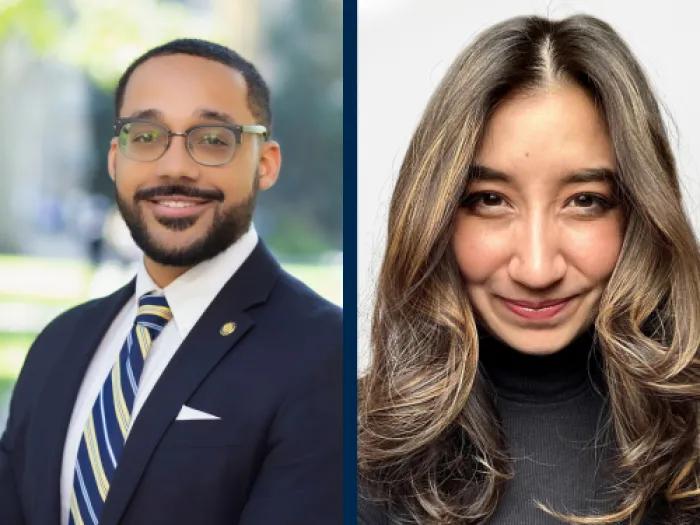
Adam Hafner and Katy Krupinsky receive Rackham Predoctoral Fellowships
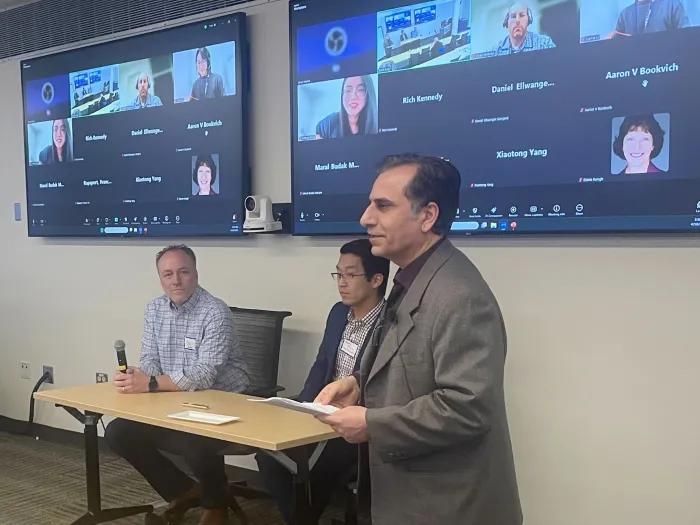
DATA for drug discovery and treatment assessment: DATA Center 2025 Spring Meeting