Yatrik M Shah

Manage Your Profile
About
Dr. Shah received his PhD from the University of Toledo Health Science Center. After a postdoctoral fellowship at National Cancer Institute, he began his career as a principal investigator at the University of Michigan in 2010 in the Department of Molecular & Integrative Physiology and Internal Medicine, Division of Gastroenterology.
Center Memberships
-
Center MemberCenter for Cell Plasticity and Organ Design
-
Center MemberAI and Digital Health Innovation
-
Center MemberCaswell Diabetes Institute
-
Center MemberRogel Cancer Center
-
Center MemberSamuel and Jean Frankel Cardiovascular Center
Research Overview
Our laboratory studies changes in oxygen, metabolic waste products and nutrients from both systemic and cellular perspectives in the GI tract. Our interests lie in understanding how these factors coordinate proliferation and cell death during development, maintain functional tissues/organs, and how dysregulation culminate in disease. Our goal is to provide fundamental insights into how oxygen, metabolic waste products and nutrients are integrated into tissue and cellular metabolic homeostasis, and to understand precise mechanisms by which cellular dysregulation of these pathways impacts anemia, hemochromatosis, inflammation and cancer.
Recent Publications
-
Solanki S, Sanchez K, Ponnusamy V, Kota V, Bell HN, Cho CS, Kowalsky AH, Green M, Lee JH, Shah YM. Gastroenterology, 2023 Mar 1; 164 (3): 376 - 391.e13.Journal ArticleDysregulated Amino Acid Sensing Drives Colorectal Cancer Growth and Metabolic Reprogramming Leading to Chemoresistance
DOI:10.1053/j.gastro.2022.11.014 PMID: 36410445 -
Bell HN, Huber AK, Singhal R, Korimerla N, Rebernick RJ, Kumar R, El-derany MO, Sajjakulnukit P, Das NK, Kerk SA, Solanki S, James JG, Kim D, Zhang L, Chen B, Mehra R, Frankel TL, Győrffy B, Fearon ER, Pasca di Magliano M, Gonzalez FJ, Banerjee R, Wahl DR, Lyssiotis CA, Green M, Shah YM. Cell Metabolism, 2023 Jan 3; 35 (1): 134 - 149.e6.Journal ArticleMicroenvironmental ammonia enhances T cell exhaustion in colorectal cancer
DOI:10.1016/j.cmet.2022.11.013 PMID: 36528023 -
Das NK, Jain C, Sankar A, Schwartz AJ, Santana-Codina N, Solanki S, Zhang Z, Ma X, Parimi S, Rui L, Mancias JD, Shah YM. Blood, 2022 Apr 21; 139 (16): 2547 - 2552.Journal ArticleModulation of the HIF2α-NCOA4 axis in enterocytes attenuates iron loading in a mouse model of hemochromatosis
DOI:10.1182/blood.2021013452 PMID: 34990508 -
Bell HN, Rebernick RJ, Goyert J, Singhal R, Kuljanin M, Kerk SA, Huang W, Das NK, Andren A, Solanki S, Miller SL, Todd PK, Fearon ER, Lyssiotis CA, Gygi SP, Mancias JD, Shah YM. Cancer Cell, 2021 Dec 1; 2021 Dec:Journal ArticleReuterin in the healthy gut microbiome suppresses colorectal cancer growth through altering redox balance.
-
Schwartz AJ, Goyert JW, Solanki S, Kerk SA, Chen B, Castillo C, Hsu PP, Do BT, Singhal R, Dame MK, Lee HJ, Spence JR, Lakhal-Littleton S, Heiden MGV, Lyssiotis CA, Xue X, Shah YM. Nature Metabolism, 2023 Jul 10; 3 (7): 969 - 982.Journal ArticleHepcidin sequesters iron to sustain nucleotide metabolism and mitochondrial function in colorectal cancer epithelial cells
DOI:10.1038/s42255-021-00406-7 -
Singhal R, Mitta SR, Das NK, Kerk SA, Sajjakulnukit P, Solanki S, Andren A, Kumar R, Olive KP, Banerjee R, Lyssiotis CA, Shah YM. Journal of Clinical Investigation, 2021 Jun 1; 131 (12):Journal ArticleHIF-2α activation potentiates oxidative cell death in colorectal cancers by increasing cellular iron
DOI:10.1172/JCI143691 PMID: 33914705 -
Singhal R, Shah YM. Journal of Biological Chemistry, 2020 Jul 24; 295 (30): 10493 - 10505.Journal ArticleOxygen battle in the gut: Hypoxia and hypoxia-inducible factors in metabolic and inflammatory responses in the intestine
DOI:10.1074/jbc.REV120.011188 PMID: 32503843 -
Stark DC, Chen B, Hickman K, Lyssiotis CA, Shah YM. STAR Protocols, 2026 Sep 18; 7 (3):Journal ArticleProtocol for fluorescence-activated mitochondria sorting in endoplasmic reticulum-mitochondria contact reporter cells
DOI:10.1016/j.xpro.2026.104820
Featured News & Stories
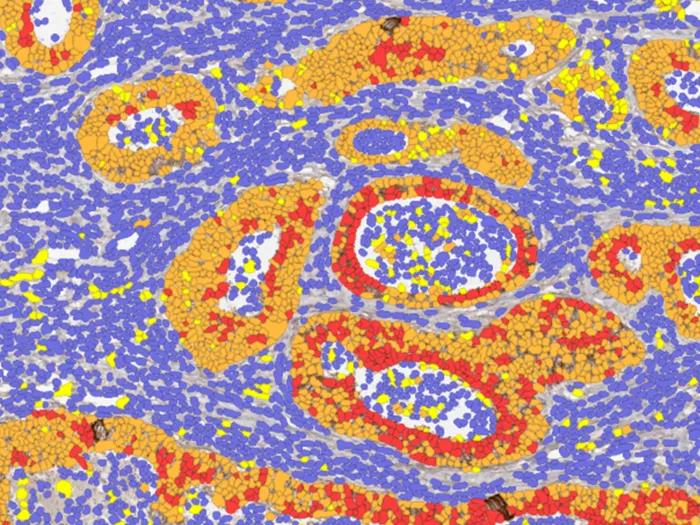
Study explains how colorectal cancer cells maintain high iron levels
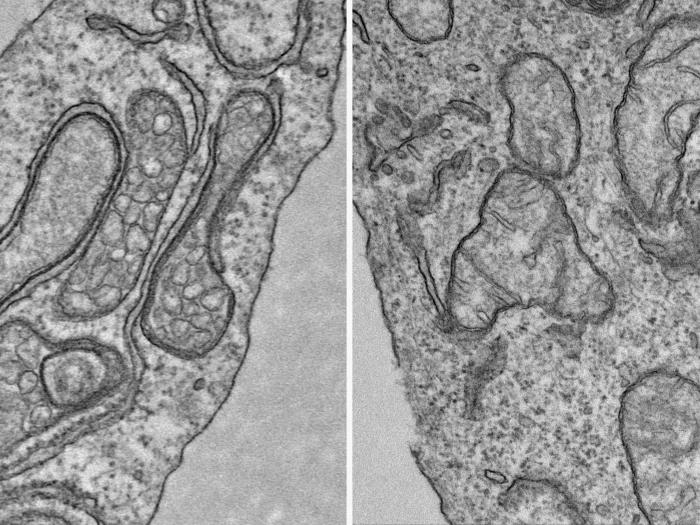
FDA-approved cancer drug fedratinib reshapes how cell organelles communicate, providing new therapeutic avenues

Glucose drives STAT3 activation in colorectal cancer cells, leading to tumor growth
Two U-M PhD students named to the HHMI Gilliam Fellows Program