Yu (Ray) Zuo, MD, MS
Manage Your Profile
About
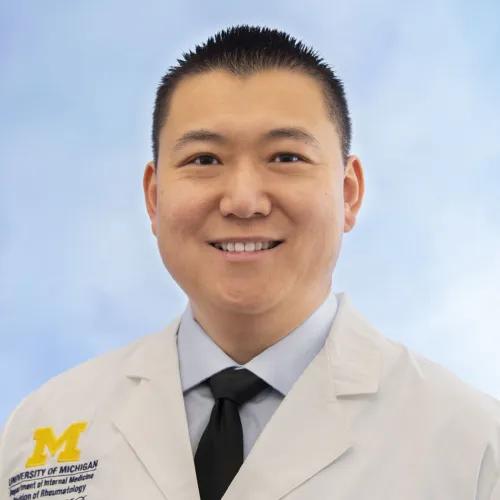
Dr. Zuo is the Edward T. and Ellen K. Dryer Early Career Professor of Rheumatology, Assistant Professor in the Department of Internal Medicine, and the Antiphospholipid Syndrome Program associate director at the University of Michigan. His research focuses on the pathogenic role of neutrophil extracellular traps (NETs) and autoimmunities against NETs in various thromboinflammatory diseases such as antiphospholipid syndrome (APS), vasculitis and COVID-19. He has authored more than 50 papers, and his current research is supported by the National Institute of Health, Taubman Medical Research Institute, Arthritis National Research Foundation, the National Institute of Health, the Rheumatology Research Foundation, and the Frankel Cardiovascular Center at the University of Michigan support his current research. He has earned the distinction of being named a Taubman Institute Emerging Scholar and was also the recipient of the 2024 American Society of Clinical Investigation Young Physician-Scientist Award.
Qualifications
-
MSUT Southwestern Medical Center, 5323 Harry Hines Blvd., Dallas, Texas, 75390, United States
2016 - 2018
-
MDRoss University School of Medicine, 2300 SW 145th Avenue, Miramar, FL, 33027, United States
2007 - 2011
Center Memberships
-
Center MemberSamuel and Jean Frankel Cardiovascular Center
-
Center MemberTaubman Institute
Recent Publications
-
Gan Y, Liang W, Liu C, Yalavarthi S, Warnock M, Sabb K, Sarosh C, Schaefer JK, Tambralli A, Madison JA, Emal CD, Tsou PS, Shi H, Zuo Y, Lawrence DA, Knight JS. Journal of Autoimmunity, 2026 Jun 1; 161:Journal ArticleEndothelial cell-derived plasminogen activator inhibitor-1 potentiates thrombosis in antiphospholipid syndrome
DOI:10.1016/j.jaut.2026.103563 PMID: 42048835 -
de Moraes Mazetto Fonseca B, NaveenKumar SK, Yalavarthi S, Sugur K, Newman TG, Hoy CK, Sarosh C, Schaefer JK, Tambralli A, Madison JA, Zuo Y, Orsi FA, Holinstat M, Knight JS. Arthritis and Rheumatology, 2026 Apr 1; 78 (4): 896 - 903.Journal ArticleProthrombotic Activation of Platelet Pannexin-1 Channels in Antiphospholipid Syndrome
DOI:10.1002/art.70001 PMID: 41327823 -
Thaler J, Parides M, de Andrade DCO, Ruiz DP, Tektonidou MG, Pengo V, Sciascia S, Nalli C, de Jesús G, Fortin PR, Efthymiou M, Belmont HM, Petri M, Cervera R, Skeith L, Atsumi T, López-Pedrera C, Zuo Y, Branch DW, Willis R, Kello N, Zhang Z, Almaraz ER, Artim-Esen B, Pardos-Gea J, Pons-Estel G, Pazzola G, Shi H, Duarte-Garcia A, Barbhaiya M, Yelnik C, Meroni P, Roubey R, Bertolaccini ML, Cohen H, Rand JH, Erkan D. Annals of the Rheumatic Diseases, 2026 Mar 1; 85 (3): 497 - 506.Journal ArticleClinical and biologic predictors of thrombosis in persistently antiphospholipid antibody-positive patients: Prospective analysis of the International APS ACTION Clinical Database and Repository (‘Registry’)
DOI:10.1016/j.ard.2025.10.019 PMID: 41266210 -
Kmetova K, Zuo, MD, MS YR, Gewurz-Singer O. 2026 Feb 23;Proceeding / Abstract / PosterThe Association of Calprotectin with Vascular Injury and Remodeling in Clinically-Isolated Aortitis
-
Pandya Bhatt J, Dale M, de Andrade DCO, Clarke AE, Tektonidou MG, Pengo V, Sciascia S, Pardos-Gea J, Aguirre-Zamorano MA, Kello N, Paredes-Ruiz D, Belmont HM, Fortin PR, Wahl D, Branch W, Gerosa M, de Jesus G, Zhang Z, Atsumi T, Efthymiou M, Pazzola G, Nalli C, Duarte-Garcia A, Rodriguez Almaraz E, Petri M, Cervera R, Artim-Esen B, Pons-Estel G, Shi H, Zuo Y, Willis R, Barber MRW, Skeith L, Radin M, Anunciacion-Llunell A, Bertolaccini ML, Cohen H, Erkan D. Clinical and Experimental Rheumatology, 2026 Jan 1; 44 (1): 87 - 92.Journal ArticleAntiphospholipid antibody-related clinical manifestations during childhood versus adulthood: descriptive results from the AntiPhospholipid Syndrome Alliance for Clinical Trials and InternatiOnal Networking (APS ACTION) clinical database and repository
DOI:10.55563/clinexprheumatol/t46qkf PMID: 40737058 -
NaveenKumar SK, Newman TG, Mazetto Fonseca B, Yalavarthi S, Flores Nascimento MC, Sabb K, Kmetova K, Chong E, Sugur K, Ranger CH, Tompkins MP, Sarosh C, Madison JA, Tambralli A, Schaefer JK, Holinstat M, Zuo Y, Knight JS. Blood Advances, 2025 Nov 11; 9 (21): 5423 - 5435.Journal ArticleA disrupted adenosinergic axis facilitates platelet activation in APS: exploring a novel therapeutic target
DOI:10.1182/bloodadvances.2025016162 PMID: 40705954 -
Shi H, Liang W, Yang Z, Hoy CK, Wang Q, Ding Z, Pan H, Shi Y, Shen Y, Sarosh C, Yalavarthi S, Kapoor P, Hudgins L, Vance CE, Wasikowski R, Figueroa-Parra G, Tambralli A, Madison JA, Tsoi LC, Gudjonsson JE, Yang C, Duarte-García A, Zuo Y, Billi AC, Tsou PS, Knight JS. Circulation, 2025 Nov 4; 152 (18): 1295 - 1310.Journal ArticleMicrovascular Endothelial Cells License APS Vasculopathy Through YAP1- and CCN2-Mediated Signaling
DOI:10.1161/CIRCULATIONAHA.125.073552 PMID: 40878676 -
King S, Sarosh C, Tambralli A, Madison J, Zuo Y, Sood S, Girard J, Shevell L, Knight J, Schaefer J. Blood, 2025 Dec 8; 146 (Supplement 1): 3109Proceeding / Abstract / PosterAspirin use among patients with thrombotic antiphospholipid antibody syndrome
DOI:10.1182/blood-2025-3109
Featured News & Stories

What Is APS “Brain Fog”? What Are Some Strategies to Help Manage It?
What Is Antiphospholipid Syndrome (APS) “Brain Fog”? If I Have APS “Brain Fog,” What Can I Do To Help?
Using gene expression in blood to personalize care for APS

What can I do to prepare for my holiday trip?
CAR-T Cell Therapy: What It Is and How It Could Help APS Patients in the Future