
Patrick M Carter, MD

Manage Your Profile
About
Dr. Patrick Carter is a Professor of Emergency Medicine (School of Medicine) and Health Behavior & Health Equity (School of Public Health) at the University of Michigan. He is the Co-Director of the University of Michigan Institute for Firearm Injury Prevention and the Co-Director of the CDC-funded University of Michigan Injury Prevention Center. Dr. Carter’s research is within the field of firearm injury prevention, specifically the development, testing, and implementation of emergency department (ED)‐based interventions to decrease firearm violence, youth violence, and associated risk behaviors such as substance use among high‐risk urban youth populations. He also has a line of research focused on using intensive longitudinal data, collected via innovative m-health applications, to characterize epidemiological and contextual factors underlying adolescent risky firearm behaviors. He is the Past-Chair of the ACEP Trauma and Injury Prevention Section, serves as an Assistant Editor for the Annals of Emergency Medicine, and has served as a member of the Technical Advisory Group focused on developing a firearm research agenda for the American College of Emergency Physicians. Dr. Carter has research funding as a PI or Co-I on grants from NIDA, NIAAA, CDCP, and NICHD, all focused within the field of violence and injury prevention.
Administrative Contact
Carrie Musolf
[email protected]
Center Memberships
-
Center MemberInstitute for Healthcare Policy and Innovation
-
Center MemberUniversity of Michigan Injury Prevention Center
-
Center MemberEisenberg Family Depression Center
-
Center MemberInstitute for Firearm Injury Prevention
Research Overview
Firearm Injury and Violence Prevention; Injury Prevention; Opioid Overdose Prevention; Technology-assisted Behavioral Interventions; Health Disparities Research; and, Global Health
Recent Publications
-
Seewald L, Goldstick J, Carter PM, Ngo Q, Bourque C, Pearson C, Battisti KA, Walton MA. Addictive Behaviors, 2027 Jan 1; 184:Journal ArticleDrinking, cannabis use and mental health as predictors of within-person changes in aggression over eight weeks among youth involved with binge drinking
DOI:10.1016/j.addbeh.2026.108870 PMID: 42801892 -
Diaz XN, Lin A, Babcock S, Salvi A, Malveau S, Mann NC, Goldstick JE, Carter PM, Cook JNB, Song X, Wei R, Lundrigan AM, Beckstead R, Hagos B, Newgard CD. Pediatrics, 2026 Oct 1; 158 (4):Journal ArticleAssociation of Community Factors, Firearm Laws, and Pediatric Firearm Injuries.
DOI:10.1542/peds.2025-074149 PMID: 42732887 -
Lee DB, Jacoby SF, Weigend Vargas E, Carter PM, Lopez Cruz A, Delgado MK, Goldstick JE. Journal of Interpersonal Violence, 2026 Sep 1; 41 (17-18): 6440 - 6461.Journal ArticleDiscrimination Experiences and Violent Injury Risk Among Young Adults
DOI:10.1177/08862605261459046 PMID: 42427003 -
Hsieh H-F, Hans Z, Carrillo A, Lee DB, Tran MN, Heinze J, Yang X, Herreshoff E, Rudski CJ, Kalvert S, Schreiner J, Rivera ED, Zimmerman MA, Carter PM, Wu T-Y. AJPM Focus, 2026 Aug 7; 100541Journal ArticleFirearm ownership and storage among Asian American adults: Ethnic subgroup differences in prevalence and psychosocial correlates
DOI:10.1016/j.focus.2026.100541 -
Oliphant SN, Esposti MD, Hastings KG, Hartman HA, Ehrlich PF, Carter PM, Sokol RL. Prev Med, 2026 Jul; 208: 108579Journal ArticleCorrigendum to "Child access prevention laws and firearm storage in the US: Associations by law stringency and social vulnerability" Preventive Medicine Volume 204 (2026), 108516.
DOI:10.1016/j.ypmed.2026.108579 PMID: 42020253 -
Newgard CD, Babcock S, Lin A, Malveau S, Goldstick JE, Carter PM, Cook JNB, Salvi A, Wei R, Fallat ME, Kuppermann N, Jenkins PC, Mann NC, Diaz XN, Lundrigan AM, Beckstead R, Hagos B, Song X. J Pediatr Surg, 2026 Jul; 61 (7): 163089Journal ArticlePediatric firearm risk prediction in trauma centers and after discharge: A machine learning analysis.
DOI:10.1016/j.jpedsurg.2026.163089 PMID: 41903623 -
Hutton DW, Lefler TW, Yang D, Mai S, Holtz M, Zhang H, Modi HS, Hillegass WB, Zimmerman MA, Carter PM. Am J Prev Med, 2026 Jul; 71 (1): 108276Journal ArticleSystematic Review of Nonmedical Costs of Firearm Injury.
DOI:10.1016/j.amepre.2026.108276 PMID: PMC13411774 -
Stearns D, Carter PM, Bonar EE, Stallworth P, Delgado MK, Goldstick JE. Journal of Behavioral Medicine, 2026 Jul 1;Journal ArticleNetwork analysis of risk factors for firearm assault
Featured News & Stories

4 ways to teach your teen safe driving habits

Emergency room intervention pairs smartphone, telehealth counseling to reduce risky firearm behavior

Michigan firearm data now available in near real-time
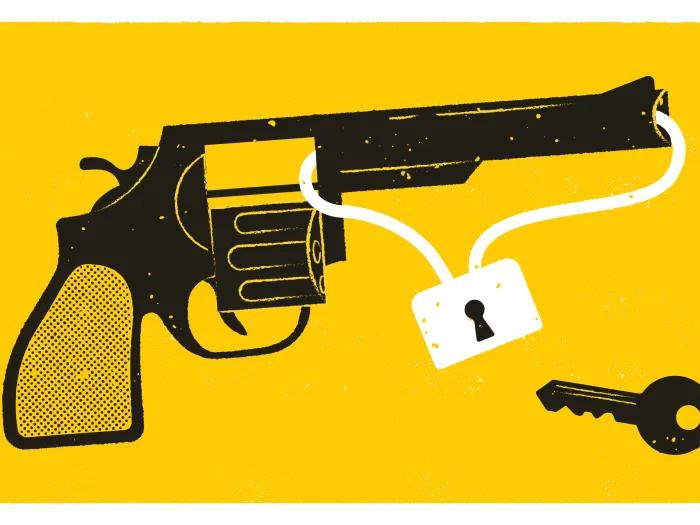
New Michigan laws make storing firearms safely more important than ever

