Jailson Brito Querido

Manage Your Profile
About
Jay Brito Querido obtained his B.S. in biochemistry and M.Sc. in medical biochemistry from the University of Lisbon, Portugal, followed by a Ph.D. in cellular and molecular biology at the University of Strasbourg, France. In 2018, he started his postdoc at the MRC Laboratory of Molecular Biology (United Kingdom) in the laboratory of Dr. Venki Ramakrishnan.
Jay has been named RNA Faculty Scholar by the Center for RNA Biomedicine, a Biological Sciences Scholar by the University of Michigan Medical School, and a member of the University of Michigan Rogel Cancer Center.
Links
Lab Website twitter
Qualifications
-
Postdoctoral ScientistMRC Laboratory of Molecular Biology, Cambridge, United Kingdom
2018 - 2022
-
Postdoctoral Research AssociateUniversity of Cambridge, Clare Hall College, Cambridge, United Kingdom
2019 - 2022
-
Postdoctoral ScientistEuropean Institute of Chemistry and Biology, Bordeaux, France
2018 - 2018
Postdoctoral Research
Research Overview
The regulation of mRNA translation into protein is fundamental for life. Translation is controlled mainly during its initiation stage. Our lab uses cryo-electron microscopy in combination with biochemical and genetic approaches to study the role of a family of enzymes called DEAD-box (DDX) RNA helicases in the regulation of translation initiation, and how this initiation is regulated in health and disease.
Recent Publications
-
Dong W, Wang F, Saladin BA, Leskaj S, Neupane R, Carruthers V, Querido JB. 2026 Jul 24;PreprintStructural basis for emetine inhibition of ribosome translocation in Toxoplasma gondii.
DOI:10.64898/2026.07.23.740346 PMID: 42539200 -
Saladin BA, Brito Querido J. Trends in Biochemical Sciences, 2026 Jan 1;Journal ArticleSNOR: a path for ribosome recovery after hibernation
DOI:10.1016/j.tibs.2026.08.009 -
Wolin E, Guo JK, Blanco MR, Goronzy IN, Gorhe D, Dong W, Perez AA, Keskin A, Valenzuela E, Abdou AA, Urbinati CR, Kaufhold R, Rube HT, Brito Querido J, Guttman M, Jovanovic M. Cell, 2025 Sep 30; 188 (19): 5384 - 5402.e25.Journal ArticleSPIDR enables multiplexed mapping of RNA-protein interactions and uncovers a mechanism for selective translational suppression upon cell stress
DOI:10.1016/j.cell.2025.06.042 -
Brito Querido J, Sokabe M, Díaz-López I, Gordiyenko Y, Zuber P, Du Y, Albacete-Albacete L, Ramakrishnan V, Fraser CS. Nature Communications, 2025 Sep 30; 15 (1):Journal ArticleHuman tumor suppressor protein Pdcd4 binds at the mRNA entry channel in the 40S small ribosomal subunit
DOI:10.1038/s41467-024-50672-8 -
Wang F, Holmes MJ, Hong HJ, Thaprawat P, Kannan G, Huynh MH, Schultz TL, Licon MH, Lourido S, Dong W, Brito Querido J, Sullivan WJ, O’Leary SE, Carruthers VB. Nature Communications, 2024 Dec 1; 15 (1):Journal ArticleTranslation initiation factor eIF1.2 promotes Toxoplasma stage conversion by regulating levels of key differentiation factors
DOI:10.1038/s41467-024-48685-4 PMID: 38782906 -
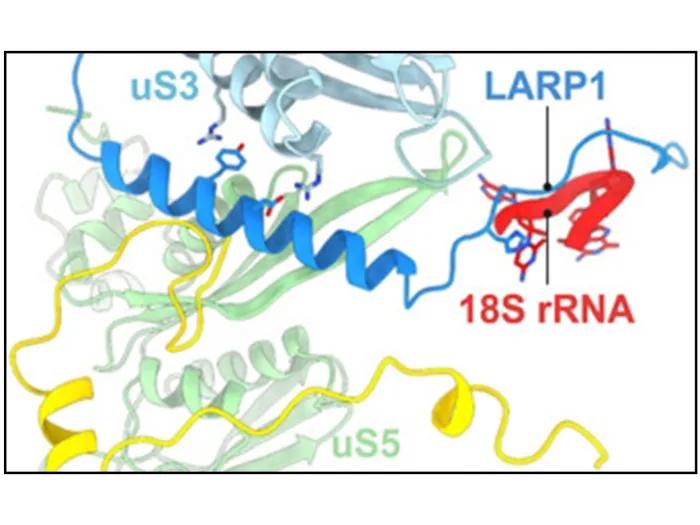
Brito Querido J. 2025 Oct 2;PresentationStructural basis for LARP1 binding to the 40S small ribosomal subunit and its implications in translation initiation
-
Wang F, Holmes MJ, Hong HJ, Thaprawat P, Kannan G, Huynh M-H, Schultz TL, Licon MH, Lourido S, Dong W, Querido JB, Sullivan WJ, O'Leary SE, Carruthers VB. 2024 May 15;PreprintTranslation initiation factor eIF1.2 promotes Toxoplasma stage conversion by regulating levels of key differentiation factors.
DOI:10.1101/2023.11.03.565545 PMID: 37961607 -
Querido JB. Structure, 2025 Sep 30; 32 (4): 377 - 379.Journal ArticleA glimpse into Giardia lamblia unique translational machinery
DOI:10.1016/j.str.2024.03.001
Featured News & Stories
Jay Brito Querido and John Prensner receive funding from the Matthew Larson Foundation for Pediatric Brain Tumors
Jay Brito Querido, Ph.D.: Unlocking the mysteries surrounding ALS starts with understanding protein development