Lydia Freddolino, PhD

1150 W. Medical Center Dr.
Ann Arbor, MI 48109-0600
Manage Your Profile
About
The regulatory networks of bacteria play a key role in their information processing capabilities, coordinating and executing interactions with their environments. Quantitative, predictive models of these networks would be tremendously beneficial for facilitating the development of new antimicrobial therapies, enabling synthetic biology applications, and understanding bacterial evolution and ecology. Ultimately, the aim of my laboratory is to build a multiscale framework enabling modeling of bacterial regulatory networks at any level of detail, from atomistic to cellular. To this end, we develop and apply high-throughput experimental methods for measuring biomolecular interactions and cellular regulatory states in vivo, and for profiling the phenotypic consequences of regulatory changes. In tandem with these experimental approaches, we use molecular simulation and mathematical modeling to obtain high-resolution insight into the biomolecular interactions driving regulatory networks, and the systems-level effects of altering them.
Links
Freddolino Lab
Qualifications
-
Postdoctoral fellowColumbia University, Systems Biology, United States
2011 - 2014
-
Postdoctoral researcherPrinceton University, Molecular Biology, United States
2009 - 2011
-
PhDUniversity of Illinois at Urbana-Champaign, Urbana, IL, United States
2004 - 2009
-
BSCalifornia Institute of Technology, Pasadena, CA, United States
2000 - 2004
Research Overview
* Interplay of protein occupancy, chromosomal structure, and gene regulation in bacteria
* New mechanisms of bacterial transcriptional regulation
* High-performance methods for protein structure prediction
* Functions and physiological roles of poorly annotated proteins
Recent Publications
-
Hurto RL, Schroeder JW, Trouillon J, Sauer U, Freddolino L. Nature Protocols, 2026 Oct 1; 21 (10): 4729 - 4769.Journal ArticleProfiling large-scale protein occupancy on bacterial genomes using IPOD-HR
DOI:10.1038/s41596-026-01357-7 PMID: 42050335 -
Schroeder JW, Ramirez V, Wolfe MB, Freddolino L. Journal of Molecular Biology, 2026 Sep 15; 438 (18):Journal ArticleShapeME: A Tool and Web Front-end for De Novo Discovery of Structural Motifs Underpinning Protein-DNA Interactions
DOI:10.1016/j.jmb.2026.169810 PMID: 41997213 -
Amemiya HM, Goss TJ, Nye TM, Hurto R, Simmons LA, Freddolino L. EMBO Journal, 2026 Aug 17; 45 (16): 5973Journal ArticleAuthor Correction: Distinct heterochromatin‐like domains promote transcriptional memory and silence parasitic genetic elements in bacteria (The EMBO Journal, (2022), 41, 3, (EMBJ2021108708), 10.15252/embj.2021108708)
DOI:10.1038/s44318-026-00860-7 PMID: 42469447 -
Bernstein HD, Detweiler CS, Freddolino L, Karp P, Lovett ST, Slauch JM, Torres AG. Microbiology and Molecular Biology Reviews Mmbr, 2026 Jun 25; 90 (2): e0010526Journal ArticleEscherichia coli and Salmonella: their past, present, and future in scientific research and publications
DOI:10.1128/mmbr.00105-26 PMID: 42227755 -
Peng C, Schreiber H, Zhang C, Liu Q, Hultgren S, Freddolino L. bioRxiv, 2026 Jun 16;Journal ArticleWhole-proteome structure/function prediction in Uropathogenic E. coli reveals previously missed host-microbe and microbe-phage interaction pathways.
DOI:10.64898/2026.06.16.732597 PMID: PMC13308129 -
Hale JJ, Larkin AJ, Rapala JR, Hurto R, Zhao G, Elson BE, Freddolino L, Snitkin ES, O'Meara TR. 2026 May 13;PreprintDefining the Candidozyma auris pan-genome and essentiality.
DOI:10.64898/2026.05.12.724661 PMID: 42182103 -
Guan J, Hurto RL, Rai A, Bhattrai J, Azaldegui CA, Ortiz-Rodríguez LA, Liu Q, Biteen JS, Freddolino L, Jakob U. Plos Biology, 2026 Apr 27; 24 (4):Journal ArticlePolyphosphate modulates the stress-responsive formation of functional RNA-protein condensates in bacteria and mammalian cells
DOI:10.1371/journal.pbio.3003775 PMID: 42044170 -
Zheng W, Wuyun Q, Li Y, Liu Q, Zhou X, Peng C, Zhu Y, Freddolino L, Zhang Y. Nature Biotechnology, 2026 Apr 1; 44 (4): 641 - 653.Journal ArticleDeep-learning-based single-domain and multidomain protein structure prediction with D-I-TASSER
DOI:10.1038/s41587-025-02654-4 PMID: 40410405
Featured News & Stories
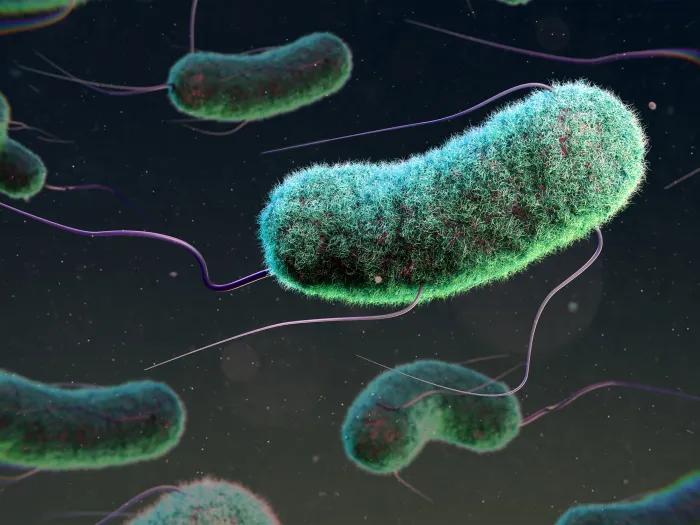
Scientists discover that bacteria use an understudied polymer found in all life to protect cell functions during stress

Alan Boyle, Lydia Freddolino and Lam (Alex) Tsoi receive promotions!

Five Biological Chemistry faculty members receive promotions in 2025
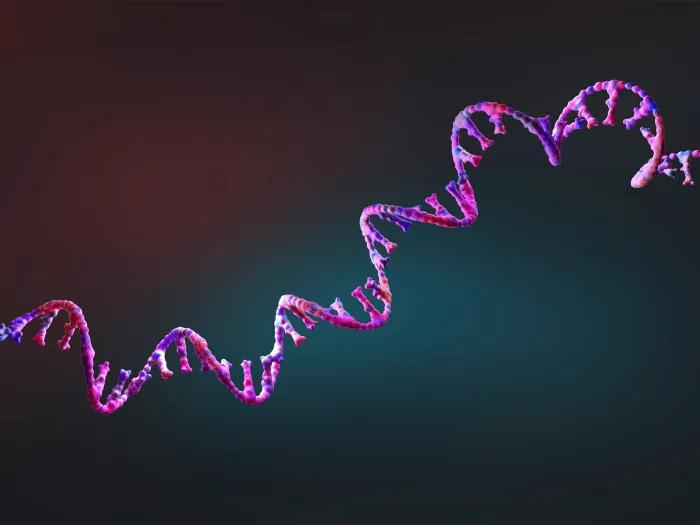
A structural biologist weighs in on the tricky task of determining RNA’s shape