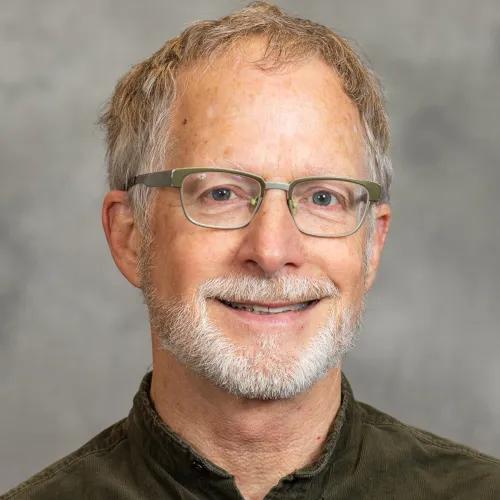
Stephen W Ragsdale
Department of Biological Chemistry
1150 W. Medical Center Dr., 5220D MSRB III
Ann Arbor, MI 48109
Manage Your Profile
About
I'm interested in the chemistry and biology of metabolic pathways that regulate the global carbon cycle. We work with microbes that make methane, fix carbon monoxide and carbon dioxide, isolate the enzymes responsible for these processes, and use kinetic, structural, and spectroscopic methods to characterize their mechanisms. This work has led to the discovery of an organometallic reaction sequence for the conversion of CO and CO2 into acetyl-CoA, a major precursor of many cellular metabolites. My lab's research has been crucial in advancing the use of acetogens for sustainable biofuel and biochemical production from industrial waste gases. Clostridium ragsdalei was named as a direct tribute to our contributions to the fields of microbiology and biochemistry. I'm also interested in the regulation of metabolic pathways in humans by metal ions with a major focus on iron and heme. This includes key proteins involved in iron uptake, heme metabolism and carbon monoxide regulation. This work has led to the discovery of a regulatory network that interlinks redox, heme, and CO, allowing crosstalk between metal homeostasis and cellular redox states. Outside the lab, I practice yoga, play jazz guitar and enjoy reading and spending time with family and friends.
Links
Michigan Experts Profile
Qualifications
-
Postdoctoral ScientistCase Western Reserve University, Cleveland, OH, United States
1984 - 1987
Postdoctoral Research
-
PhDThe University of Georgia, Athens, GA, United States
1979 - 1983
-
BSThe University of Georgia, Athens, GA, United States
1975 - 1979
Research Overview
The students and postdoctoral scientists in my laboratory work at the interfaces between chemistry, biology, and physics and are studying processes that are important in the global carbon cycle, basic energy sciences, and in biomedical problems. We focus on three major areas: microbial metabolism of one-carbon compounds (CO, CO2, methane); the roles of metal ions in biology (including the mechanisms of nickel, B12, heme, and iron-sulfur enzymes); the regulation of metabolism and protein function by heme, CO, and thiol-disulfide redox switches. Techniques that we use in addressing research questions in these areas include transient and steady-state kinetics, spectroscopy, cell biology, genetics and molecular biology. The research is funded by NIH and DOE.
Microbial Methane Biosynthesis: Methanogens are masters at carbon dioxide reduction and the key enzyme in their metabolism is methyl coenzyme M reductase (MCR), which contains a nickel tetrapyrrolic cofactor. MCR is responsible for over 90 percent of all biologically generated methane on Earth. Based on recent studies in which we trapped intermediates in the MCR reaction mechanism and characterized them by spectroscopic and crystallographic methods, our work has revealed a mechanism for methane synthesis involving methyl radical intermediate. We solved a decade-old question about whether MCR uses an organometallic or radical mechanism and revealed the methyl radical transition state. Based on spectroscopic studies, we proposed a novel (Ni-sulfonate) mode of substrate binding that overcomes some drawbacks of previous mechanisms (. We recently determined the first structure of the active Ni(I) state of MCR. In work that is relevant for studying many metalloenzymes, we required development of a novel anaerobic crystallography toolbox to generate and maintain highly oxygen-sensitive states of protein crystals during structure determination. We are using a wide range of approaches to fill large remaining gaps in our understanding of the MCR reaction mechanism.
Microbial CO2 and CO Metabolism: I first characterized the signature WLP enzymes: CO dehydrogenase (CODH), acetyl-CoA synthase (ACS), corrinoid iron-sulfur protein (CFeSP), and methyltransferase (MeTr). I also characterized enzymes involved in converting CO2 to methyl-THF. My lab was first to sequence the genome of an acetogenic bacterium. We determined crystal structures of these proteins and defined large protein conformational changes occurring during their catalytic cycles. My lab has discovered novel nickel-iron-sulfur clusters in CODH and ACS and revealed that their enzymatic mechanisms involve a series of organometallic (CH3-Co, CH3-Ni, Ni-CO, acetyl-Ni) intermediates. While the PI proposed this bioorganometallic mechanism decades ago, it is unprecedented in biochemistry, and only recently did we validate it by revealing structures and catalytic competence of each of these intermediates. Beyond the bioinorganic realm, we revealed a long tunnel linking CODH and ACS and recently revealed that ACS contains a cage of amino acid residues called "the alcove" at the "ACS end" of the protein tunnel that is required for CO binding and for autotrophic growth on the WLP. Our results indicate that tuning the CO affinity of the alcove offers a way to "improve" the WLP. My lab has made major strides in understanding the biochemistry of tetrapyrrole cofactors (B12, heme, Factor 430). We uncovered the first "base-off" state of a B12 protein and its significance in forming the organometallic (CH3-Co) intermediate in the WLP, a biochemical "trick" now recognized to be used by most methyltransferases.
Heme, Iron, and CO regulation and metabolism, Our focuses on the heme degradation enzymes, heme oxygenase-2 (HO2) and -1 (HO1) and the CO-regulated transcriptional regulator Rev-Erbβ. When HO degrades heme, CO is formed. This is the sole human metabolic reaction that generates CO, an important gas signaling molecule. We have shown that HO2, which evolved from HO1 with emergence of the amniotes, binds three molecules of heme: one at the catalytic site and two at heme responsive motifs (HRMs), which occur in an unstructured region of HO2 and are absent in HO1. We are defining how the active sites and the HRMs coordinate heme and CO metabolism, how CO is generated in humans, and how CO and heme regulate metabolism, circadian rhythms, and inflammation We demonstrated that the HRM acts as multilevel sensor allowing proteins to be regulated by redox, heme and gas CO and NO) signaling molecules. We showed that for both HO2 and Rev-Erb, the heme Fe3+/2+ and thiol/disulfide components of the HRM act as redox switches with redox potentials that titrate with the intracellular redox poise and validated the physiological relevance of these switches by in vitro and in cellulo approaches. We revealed how HRMs at the C-terminal tail of HO2 bind heme and actively shuttle it to the catalytic core for degradation to biliverdin, Fe and CO. We demonstrated that the HRM on Rev-Erbβ rests in the ferric state, yet it acts as a redox-regulated CO and NO sensor through a chemical coupling mechanism involving the rapid and tight binding of gas molecules, and interaction with the nuclear corepressor NCoRI..We also discovered a new cellular role for HO2 to regulate heme homeostasis by heme sequestration and by proteolysis and showed that glyceraldehyde phosphate dehydrogenase (GAPDH) acts as a heme chaperone that transfers heme to HO2 .
Microbial Mercury Methylation: In collaboration with the Mercury Science Focus Area at Oak Ridge National Laboratory (ORNL) (link is external), we are studying the enzymes involved in methylation of mercury. Methylmercury (MeHg) is a neurotoxin and widespread environmental pollutant with no known biological function. Anaerobic microorganisms produce this highly toxic compound by methylating less toxic inorganic mercury (Hg) species in the environment, but the biosynthetic pathway by which this occurs is unknown. We are studying HgcA, a membrane-associated cobalamin-containing protein and HgcB, a soluble iron-sulfur protein.
The Ragsdale laboratory has been certified as a Platinum Level Sustainable Laboratory by the Office of Campus Sustainability at the University of Michigan.
We in my laboratory, department and at U-M believe in fostering innovation, strengthening research capacity, and broadening the impact of research on society to our mission of catalyzing, supporting, and safeguarding research to serve the world.
Recent Publications
-
Zhao K, Abernathy MJ, Griffith C, Kountz DJ, Esckilsen D, Ragsdale SW, Sarangi R. Journal of Inorganic Biochemistry, 2026 Aug 1; 281:Journal ArticleInvestigating weak axial ligation in corrinoids by X-ray absorption spectroscopy: Implications for corrinoid iron-sulfur protein
DOI:10.1016/j.jinorgbio.2026.113323 PMID: 41950862 -
Fleischhacker AS, Blume-La-Torre J, Pendill K, Dozier K, Ragsdale SW. Journal of Inorganic Biochemistry, 2026 Feb 1; 275:Journal ArticleHeme and CO metabolism by the canonical human heme oxygenases
DOI:10.1016/j.jinorgbio.2025.113111 PMID: 41110378 -
Abernathy M, Aboulhosn K, Ohmer C, Ragsdale S, Sarangi R. 2026 Jan 22;PreprintUse of Substrate Analogues and X-ray spectroscopy Reveals an all Ferrous C-Cluster in CO Dehydrogenase.
DOI:10.64898/2026.01.21.700957 PMID: 41648618 -
Ohmer CJ, Abernathy MJ, Marchany-Rivera D, Villareal DG, Simon PS, Lyubimov A, Bhowmick A, Chatterjee K, Makita H, Tiwari V, Dasgupta M, Keable S, Mittan-Moreau D, Paley DW, Moriarty NW, Sanchez H, Rosenberg DJ, Gee LB, Alonso-Mori R, Sauter NK, Brewster AS, Bergmann U, Yachandra VK, Cohen AE, Yano J, Kern JF, Sarangi R, Ragsdale SW. 2025 Apr 30; bioRxiv,PreprintStructure of active methyl-CoM reductase, Earth’s main methane producer
DOI:10.1101/2025.04.26.650772 -
Ginovska B, Raugei S, Ragsdale SW, Ohmer C, Sarangi R. Accounts of Chemical Research, 2025 Mar 18; 58 (6): 824 - 833.Journal ArticleStructural and Mechanistic Advances in the Chemistry of Methyl-Coenzyme M Reductase (MCR)
DOI:10.1021/acs.accounts.4c00730 PMID: 40042658 -
Ohmer C, Villareal D, Dasgupta M, Marchany-Rivera D, Simon P, Makita H, Kern J, Yachandra V, Yano J, Cohen A, Ragsdale S. Structural Dynamics, 2025 Apr 12; 12 (2): a236 - a236.Journal ArticleDevelopment of Anaerobic Tools to Determine the Structure of the Active Ni(I) State of Methyl-Coenzyme M Reductase: Nature’s Catalyst for Methane Synthesis, Activation, and Oxidation
DOI:10.1063/4.0000542 -
Zheng K, Rush KW, Date SS, Johs A, Parks JM, Fleischhacker AS, Abernathy M, Sarangi R, Ragsdale SW. Proceedings of the National Academy of Sciences of the United States of America, 2024 May 16; e2408086121 (47): e2408086121 - e2408086121.Journal ArticleS-adenosyl-L-methionine is the unexpected methyl donor for the methylation of mercury by the membrane-associated HgcAB complex
DOI:10.1073/pnas.2408086121 -
Wang Y, Das S, Aboulhosn K, Champagne SE, Gemmel PM, Skinner KC, Ragsdale SW, Zimmerman PM, Narayan ARH. Journal of the American Chemical Society, 2024 Aug 21; 146 (33): 23321 - 23329.Journal ArticleNature-Inspired Radical Pyridoxal-Mediated C-C Bond Formation
DOI:10.1021/jacs.4c05997 PMID: 39106078
Featured News & Stories