Adults with Long-Term Physical Disabilities Describe How They Experience Ableism and Other Attitudes in their Environment.
Structures have the power to provide or deny needed accommodations, resources, and support, and they often reflect and influence societal views.
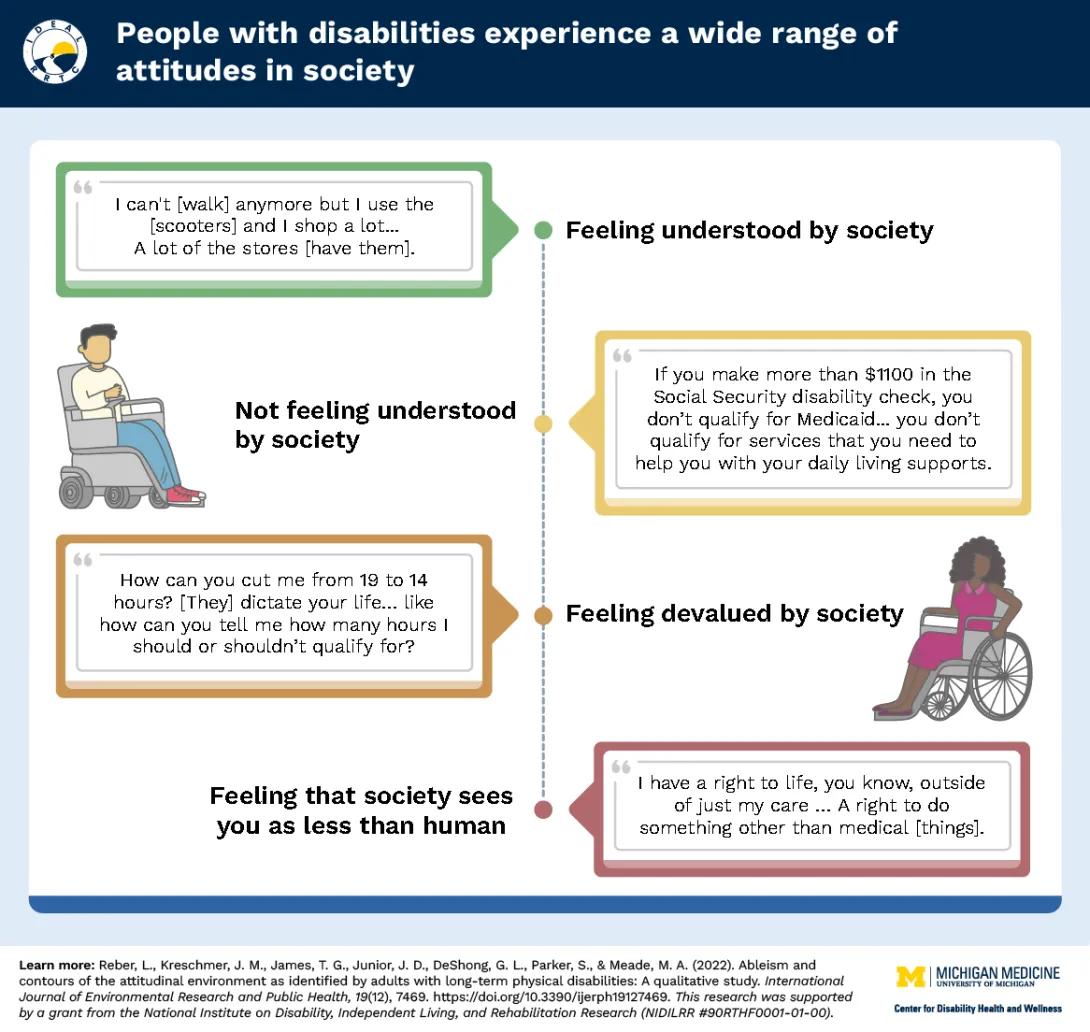
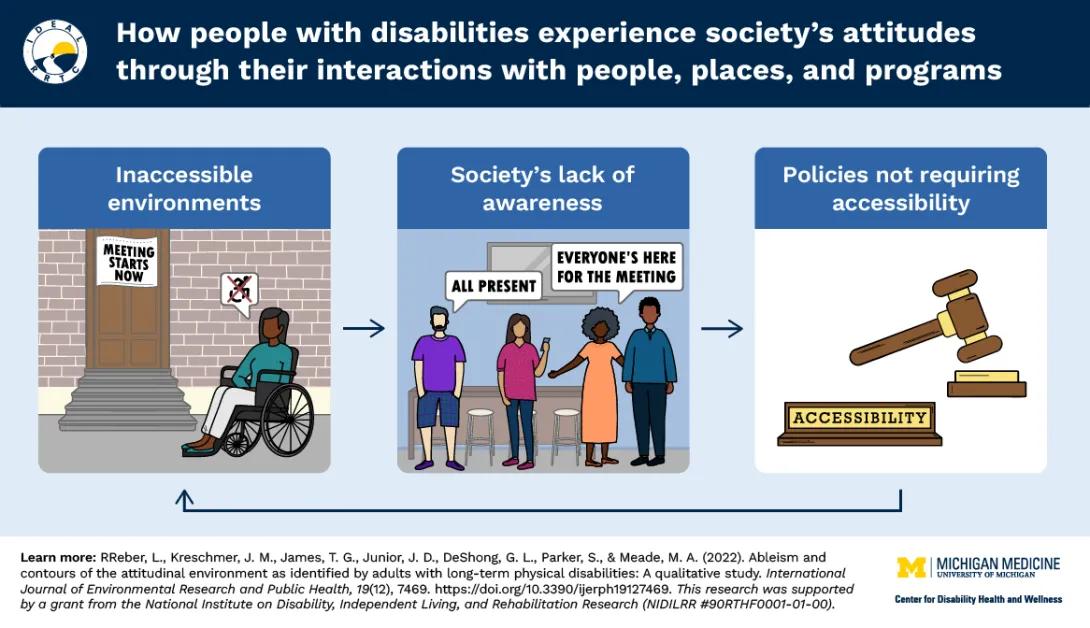
The Center for Disability Health and Wellness conducted focus groups and interviews with adults with physical disabilities in 2019 and 2020. The participants discussed environmental factors that impact healthy aging. Analyses of their responses revealed that they did not perceive the attitudes or viewpoints that they came across as simply positive or negative. Instead, they experienced them as a range of attitudes, from understanding and supportive, to not understanding, to being viewed and treated as less than human. In addition, these attitudes were experienced not only when talking to people but were perceived all around them, in all of the environments in which they led their lives. This included interacting with social institutions, organizations and their programs, and more. All these structures have the power to provide or deny needed accommodations, resources, and support, and they often reflect and influence societal views. They all carry very real material consequences for the lives of adults with physical disabilities.
We have illustrated the findings of this study below.
For more information:
Reber, L., Kreschmer, J. M., James, T. G., Junior, J. D., DeShong, G. L., Parker, S., & Meade, M. A. (2022). Ableism and contours of the attitudinal environment as identified by adults with long-term physical disabilities: A qualitative study. International Journal of Environmental Research and Public Health, 19(12), 7469. https://doi.org/10.3390/ijerph19127469.
The contents of this research were developed under a grant from the National Institute on Disability, Independent Living, and Rehabilitation Research (NIDILRR grant number 90RTHF0001). NIDILRR is a Center within the Administration for Community Living (ACL), Department of Health and Human Services (HHS). The contents of this research do not necessarily represent the policy of NIDILRR, ACL, or HHS, and you should not assume endorsement by the Federal Government.
Featured News & Stories
Research may help better predict outcomes in kids with congenital cytomegalovirus
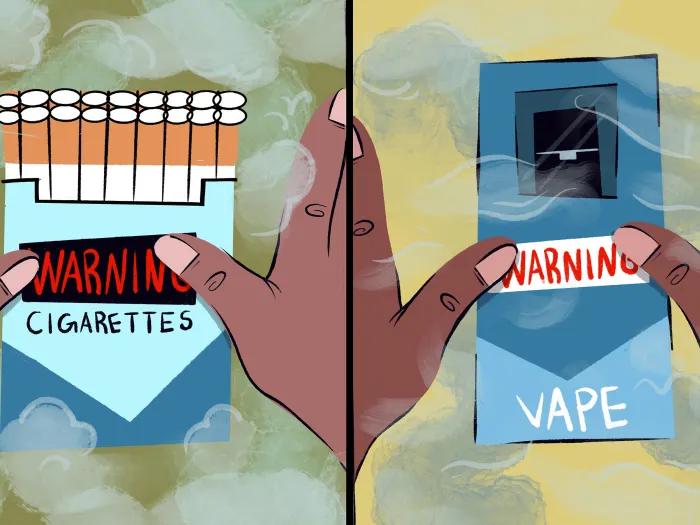
A link between e-cigarettes and oral cancer
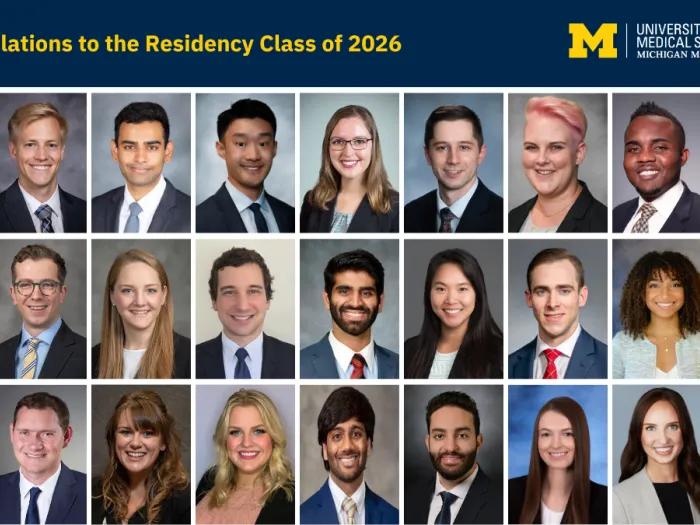
Celebrating the Anesthesiology Residency Class of 2026
LGBTQ+ Aging in America
MyVoice poll finds youth have mixed perceptions of oral nicotine pouches