AI powers a new front in the fight against Alzheimer’s
Article originally published in December 2025 edition of Michigan Research.
Why does Alzheimer’s disease cause debilitating dementia in some patients, while others exhibit the disease’s characteristic brain changes yet are seemingly unaffected?
The phenomenon, called “cognitive resilience,” is not well understood. And with the number of Americans suffering from Alzheimer’s-related cognitive decline projected to grow from more than 7 million today to 13 million by 2050, the need for answers is more urgent than ever.
In a lab at the University of Michigan, math, medicine and AI are coming together to spark new hope. The research, which has attracted funding from a variety of sources including the National Institutes of Health, could one day fight Alzheimer’s with drug treatments that stoke patients’ cognitive resilience against the disease’s hallmark plaques and tangles in the brain.
The work is a major departure from traditional Alzheimer’s research, which has focused on slowing or preventing the brain changes themselves.
“People have not traditionally studied resiliency because they didn’t have the tools to get a handle on it,” said Catherine Kaczorowski, the Elinor Levine Professor of Dementia Research at the U-M Medical School and a lead researcher on the project. “These people have the genetic risk, they have the damage in memory-relevant brain regions, but they haven’t lost memory function. How in the world does that happen, where are those memories stored in resilient individuals, and how do you even start to look for it?”
Kaczorowski has teamed up with Anne Draelos, U-M assistant professor of biomedical engineering, to tackle the challenge; the research team also includes Yiding Cao, U-M Medical School neurological research fellow.
Today, typical lab experiments analyze just a few genes or potential treatments at a time–far too slow to ever build an understanding of the millions of interactions that could take place in the brain over a patient’s lifetime. Draelos has applied advanced machine learning and generative AI to crunch the data, adapting techniques that are often used for applications like video production and autonomous driving.
“What those applications have in common with neuroscience is that their data has a high degree of dimensionality; there’s the need to integrate many different kinds of data into a single mathematical model,” Draelos said. “That huge diversity of genetic data was what initially attracted me to Catherine’s work.”
"Eventually, we want to be able to take a blood sample, sequence the patient’s genome to identify their specific risk profile and then determine which drugs could promote resiliency networks. We’ll be working with pharmaceutical companies and other collaborators to identify drugs that are already FDA-approved and could improve outcomes for dementia patients."
Catherine Kaczorowski, Elinor Levine Professor of Dementia Research, U-M Medical School
Powered by computing resources at U-M’s Advanced Research Computing, the technique generates a holistic view of the genetic interactions in the brain. In addition, the team is using generative AI to produce models of entire hypothetical brains and then project how potential treatments would affect them. This enables them to map out a detailed spectrum of possible variations between those that show cognitive resilience and those that don’t.
Preliminary studies in mice have demonstrated that the approach generates meaningful insights that could be used to better understand the mechanisms behind cognitive resilience.
“Eventually, we want to be able to take a blood sample, sequence the patient’s genome to identify their specific risk profile and then determine which drugs could promote resiliency networks,” Kaczorowski said. “We’ll be working with pharmaceutical companies and other collaborators to identify drugs that are already FDA-approved and could improve outcomes for dementia patients.”
Draelos and Kaczorowski believe their approach could ultimately be useful in fighting a wide variety of neurological disorders that are poorly understood today, including schizophrenia, stroke, epilepsy and Parkinson’s disease.
“I really hope that what Anne and I develop here can be a blueprint to discovering resilience mechanisms for those kinds of disorders,” Kaczorowski said.
While treatments based on the technology are likely years away, the project’s collaborative nature is already paying dividends in the classroom. Draelos says her broadened perspective helps her better equip her students to apply their skills to real-world challenges.
“A huge part of this project was translation between the machine learning realm and the language of neuroscience,” she said. “And I teach my students that learning to do that sort of translation is very important if you want to take your work out of theory and into practice.”
In This Story
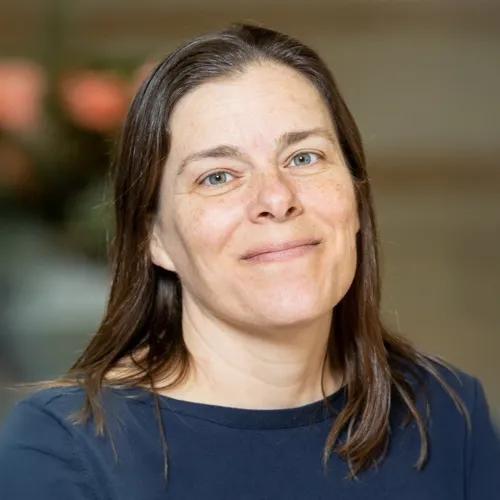
Catherine C Kaczorowski, BA, PhD
Professor
Featured News & Stories
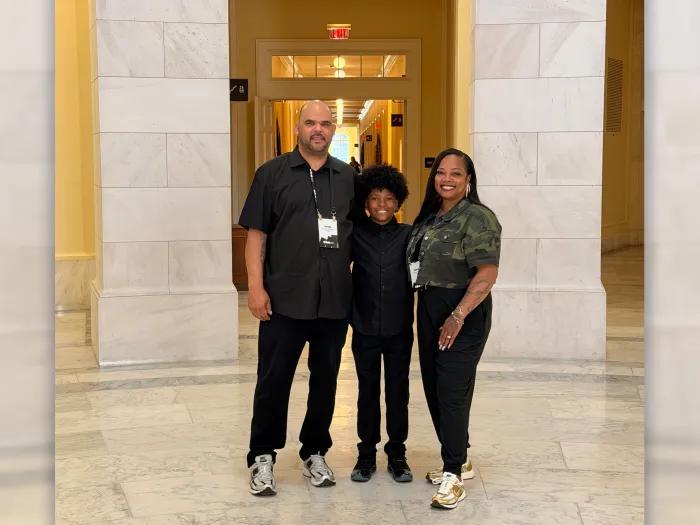
12-year-old shares journey with sickle cell anemia on Capitol Hill
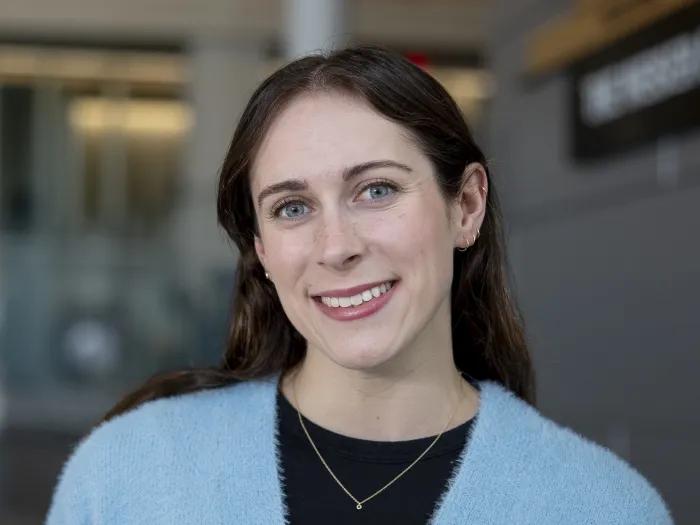
MyVoice poll finds youth have mixed perceptions of oral nicotine pouches

LGBTQ+ Aging in America

Michigan’s aging brains need more protection, poll shows

ASCO 2026 Rogel Recap