The ALS Exposome in Nature Reviews Neurology
Just what is the exposome?
Eva Feldman, M.D., Ph.D., James W. Albers Distinguished University Professor, and Russel N. DeJong Professor of Neurology, explains that it is the amalgamation of what comes into our body from the outside.
“It’s our environment, broadly defined, whether that’s climate, what you eat, what you’re exposed to, and what you drink,” says Dr. Feldman. “The exposome really plays a major role, coupled with genetics, as to whether or not you’re going to get the disease or not.”
That disease is ALS (Amyotrophic lateral sclerosis), a fatal condition of motor neuron degeneration.
Nature Reviews Neurology, one of the most prestigious academy journals, published “The amyotrophic lateral sclerosis exposome: recent advances and future directions,” in which Dr. Feldman and her team summarize the evidence for an ALS exposome, considering potential mechanisms of exposure-mediated toxicity and suggest future directions for ALS exposome research.
We have broken down the review into seven key points:
1. Genetics cannot fully explain ALS, suggesting possible contributions from environmental factors to disease risk and progression.
2. The gene-time-environment hypothesis of ALS: Genetic burden interacts or accumulates with environmental exposures over an individual’s lifetime to trigger disease.
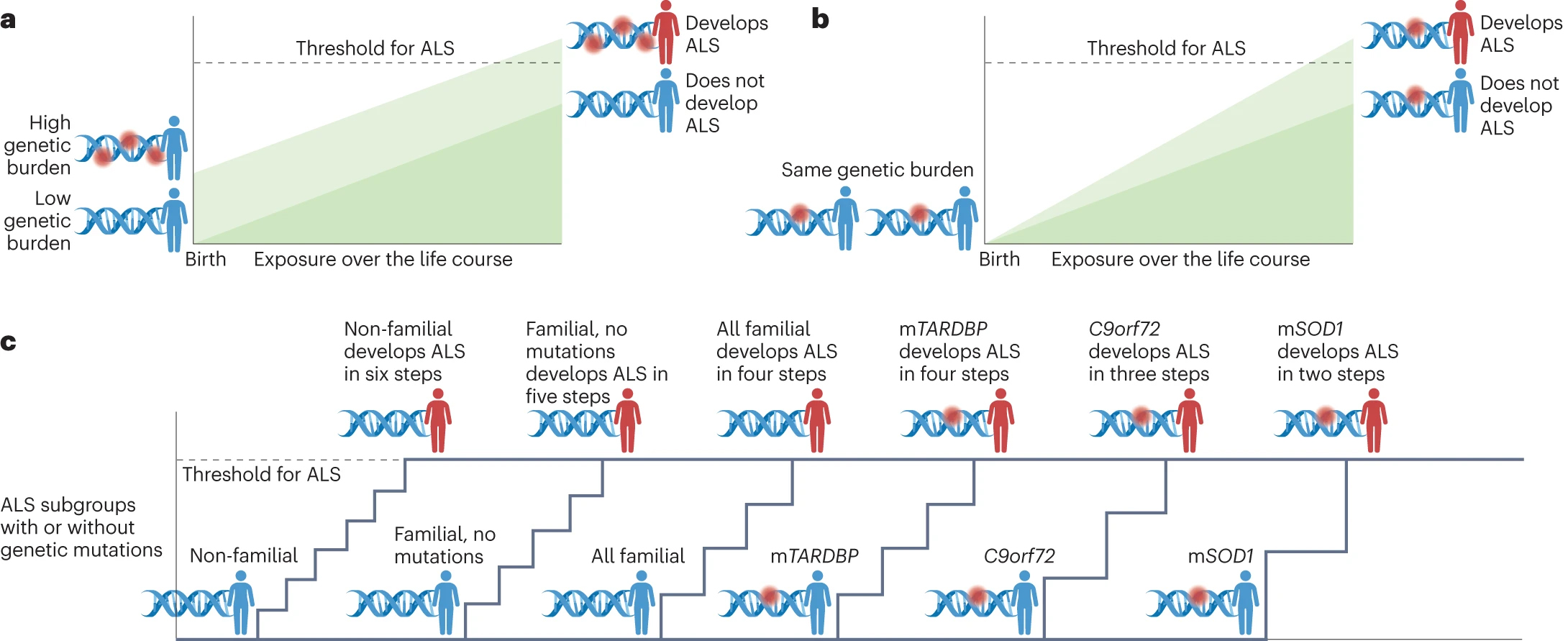 Nature Reviews Neurology, Figure 2: a,b, The gene–time–environment hypothesis of amyotrophic lateral sclerosis(ALS).
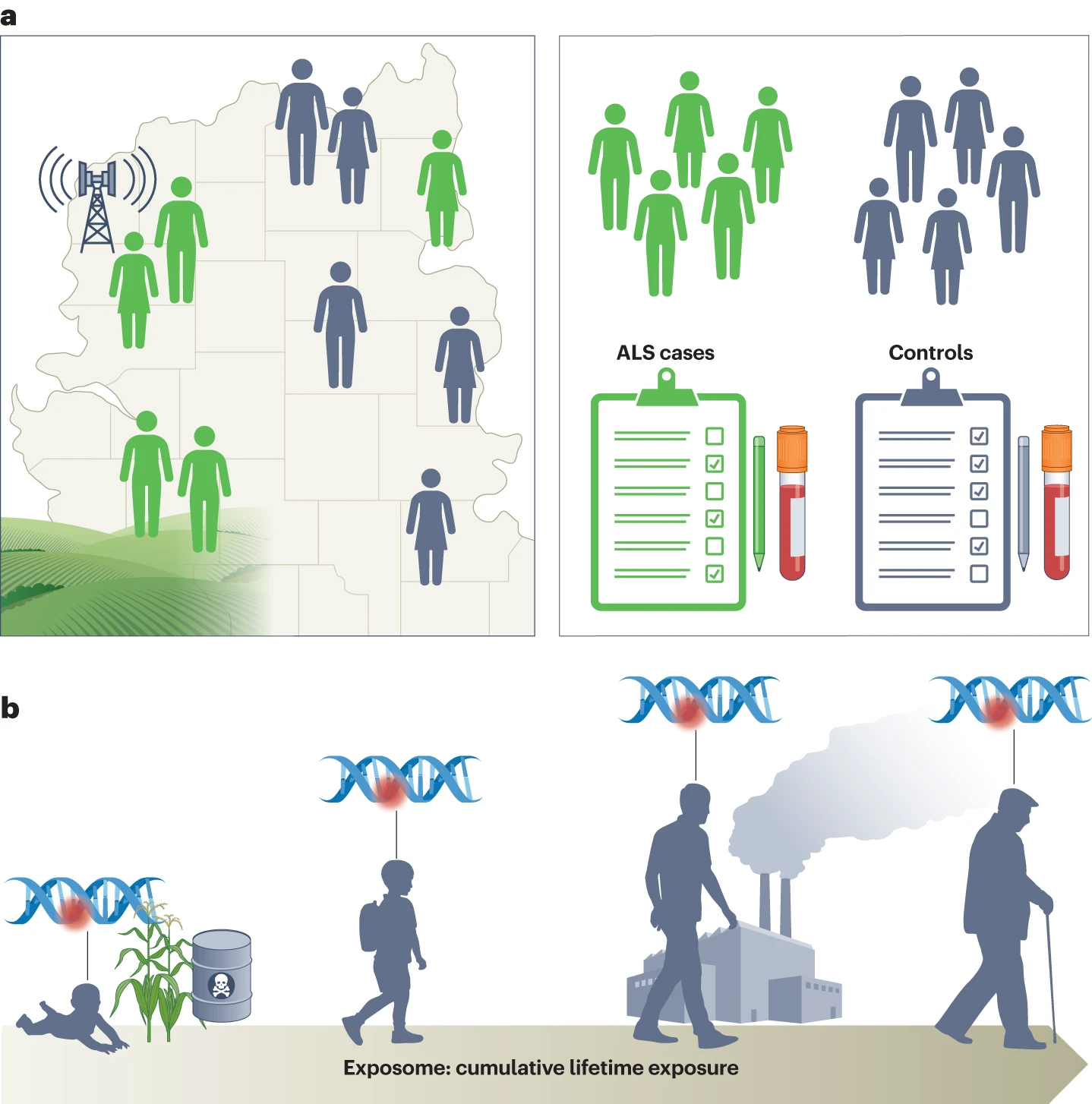
3. ALS multistep model of ALS: multiple ‘hits,’ possibly environmental in origin, conspire to trigger disease, notably in individuals who carry high-risk ALS mutations.
4. Pesticides, metals, air pollution, occupational exposures, electromagnetic fields, trauma, gut microbiome, strenuous sports and physical activity, diet, and lifestyle factors point to influencing ALS risk (by population studies).
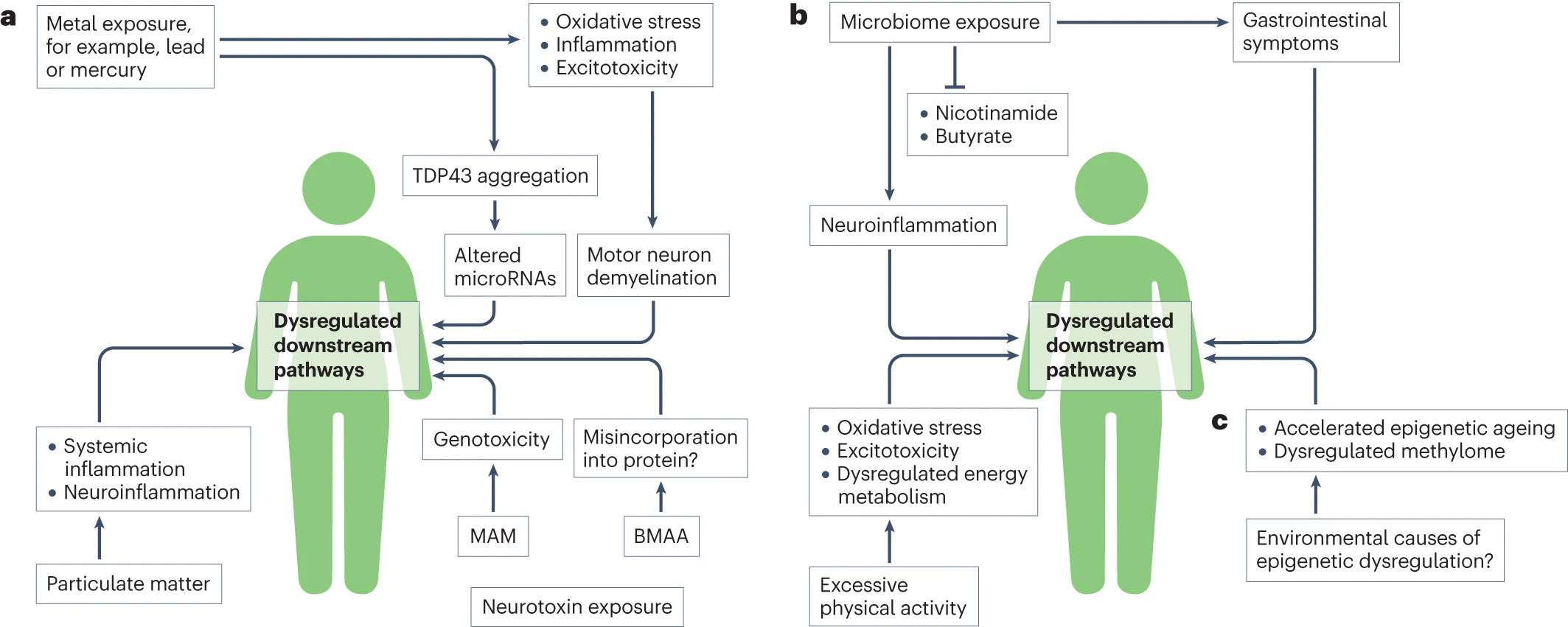
5. How environmental factors trigger ALS isn’t completely understood, but research points to the involvement of neurotoxicity from specific environmental toxins, microbiome-mediated changes, inflammation, and excitotoxicity (i.e., excessive excitation of motor neurons).
6. Most environmental studies of ALS are retrospective, i.e., they use past data or questionnaires to ask ALS patients about past exposures, which may introduce uncertainty in the findings due to recall errors.
7. Future environmental ALS studies will need to be prospective, i.e., query individuals at risk for ALS about their exposures in real-time until they develop ALS. This will capture data more accurately.

“The exosome starts in utero,” says Dr. Feldman. “What you’re exposed to from the day you’re born will impact your disease risk for neurologic diseases like dementia, ALS, or Parkinson’s disease. By understanding the exposome, we can work to one day make them all preventable diseases.”
Featured News & Stories

Emerging into the Future
Ljungman receives $500K from the Little Warrior Foundation for Ewing sarcoma gene-editing therapy
3D-Printed Models - Conjoined Twins
CPOD Faculty Publication Spotlight - Heemskerk Lab
Critical Care Program Fulfills Patients’ Final Wishes, Bringing Comfort to Last Moments