
Emergency Department Communication Between Deaf and Hard-of-Hearing Patients and Their Providers

Researchers at the University of Michigan conducted a qualitative study to evaluate the experiences of Deaf people who use American Sign Language (ASL).

Although health care systems have a legal and ethical responsibility to respect a patient’s ability to communicate, Deaf patients often report that communication can be inaccessible and ineffective. Deaf people who use American Sign Language (ASL) are more likely to use the emergency department (ED) than their English-speaking hearing counterparts. They are also at a higher risk of receiving inaccessible communication. Researchers at the University of Michigan conducted a qualitative study to evaluate their experiences. They found that loss of communication systematically diminished the ability of research participants to engage in shared decision-making about their medical care, increased the likelihood of delaying health care when needed in the future, and impeded efforts to improve health care navigation and self-advocacy.

We have summarized their findings in the infographic below.

Infographic representing findings that the loss of communication systematically diminished the ability of deaf people who use American Sign Language (ASL) to engage in shared decision-making about their medical care, increased the likelihood of delaying health care when needed in the future, and impeded efforts to improve health care navigation and self-advocacy.

View the infographic as a PDF.

For more information: James, T. G., Coady, K. A., Stacciarini, J. R., McKee, M. M., Phillips, D. G., Maruca, D., & Cheong, J. (2022). "They're not willing to accommodate Deaf patients": Communication experiences of Deaf American Sign Language users in the emergency department. Qualitative Health Research, 32(1), 48–63. https://doi.org/10.1177/10497323211046238

Featured News & Stories
Computer generated image of a human brain with lighted up dots
Health Lab

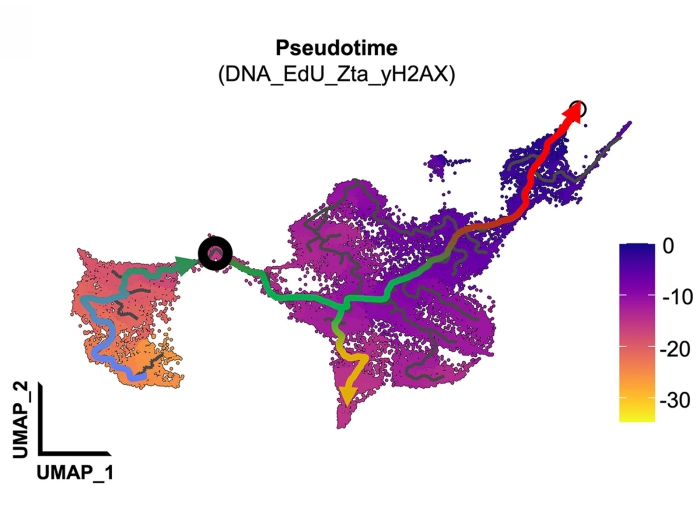
New algorithmic tool enables to scientists to see cells “talk” to one another
A new U-M study, featured in Nature Genetics, details a technique to infer cell-cell communication using spatial transcriptomics
Kretzler
Department News

Dr. Matthias Kretzler Receives ASN's Prestigious 2026 Homer W. Smith Award
Dr. Matthias Kretzler has been selected as the recipient of the 2026 Homer W. Smith Award, one of the highest honors in nephrology, presented by the American Society of Nephrology (ASN). He will be formally recognized at ASN Kidney Week 2026 in Denver this October.
colorful scientific figure showing cell trajectories
Department News

PhD student Dina Tekle publishes a research article in PNAS
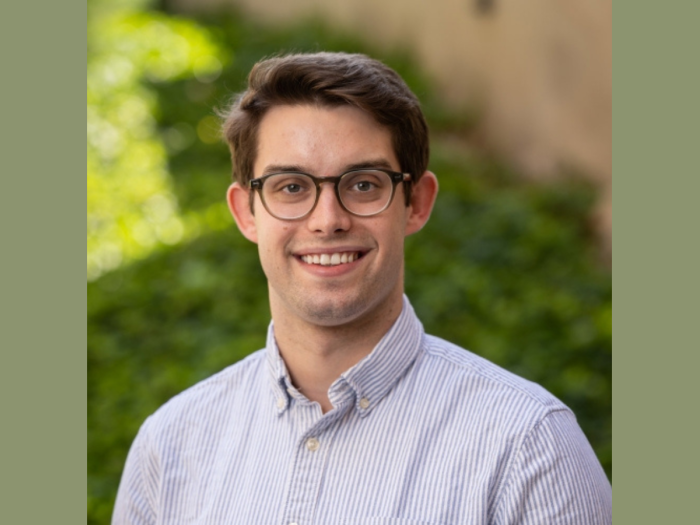
U-M Biological Chemistry PhD student Dina Tekle is the first author of a research article in PNAS.
Jackson Rapala
Department News

Jackson Rapala receives fellowship for research on fungal pathogen

Jackson Rapala received a National Institutes of Health F31 fellowship for his outstanding research on Candida auris.
Outdoor family portrait of five people and a cream-colored dog standing on a sunlit path surrounded by tall grasses. Two adults stand in the center with three boys—two teenagers and a younger child—positioned around them. The family is dressed in coordinated shades of purple, blue, and neutral tones. The dog sits in the foreground, and warm evening light creates a natural, relaxed atmosphere.
Department News

Apply Today! Caswell Diabetes Institute Fernandez Buddin Type 1 Diabetes Fellowship Grant Program

The application for the Caswell Diabetes Institute Fernandez Buddin Type 1 Diabetes Fellowship Grant is now open.
piece of paper with ID card and state outlined blue
Health Lab

Michigan’s Medicaid expansion improved both health and finances

Michigan’s Medicaid expansion, called the Healthy Michigan Plan, helped individuals’ physical, mental and financial health, and supported the hospitals and clinics used by all Michiganders.