Exploring Lunar Cycling in Bipolar Disorder

Dr. Helen Burgess discusses the Prechter "Sleep Across the Seasons Study”.

It is increasingly recognized that lunar cycling may impact sleep and mood in humans. Some studies of people who do not have sleep disorders have reported that people go to bed later on nights around the full moon as compared to the new moon, and this can result in some sleep loss of about 20 minutes per night around the time of the full moon. Other studies have reported lower levels of melatonin secreted during the nights around a full moon versus a new moon — possibly due to increased light exposure around the full moon.

In bipolar disorder, mood changes in association with the lunar cycle have also been reported. Here, in the Prechter study, we have published on one participant who showed lunar cycling in his mood and sleep duration, recorded over 3.3 years. Near the full moon, the participant’s sleep shortened, and his mood was more positive, whereas near the new moon, his sleep lengthened, and his mood was more negative. To further explore this, a small exploratory pilot study of lunar cycling was launched titled “Sleep Across the Seasons Study”. Sleep was objectively tracked with wrist monitors, and mood was tracked with daily self-reports for a month within each season. In addition, urine was collected overnight on the nights of the full and new moons, to explore possible changes in melatonin and in markers of oxidative stress during the lunar cycle. Data analysis is ongoing, and we hope to publish results soon.


More Articles About:

Research

In This Story

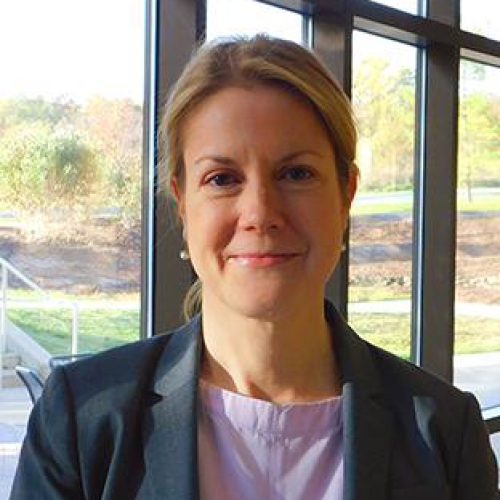
portrait of Helen J Burgess, PhD

Helen J Burgess, PhD

Professor

Featured News & Stories
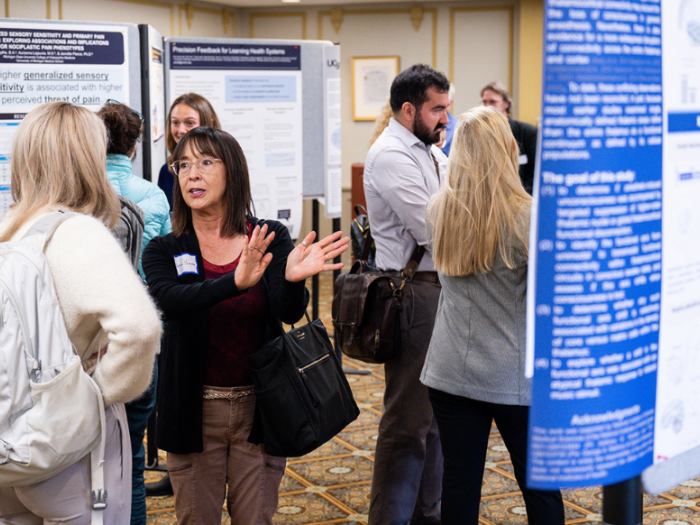
Attendees network at a poster session in a conference hallway, standing in small groups and discussing research displayed on large poster boards and pull-up banners.
Department News

Michigan Anesthesiology ranks No. 2 in NIH funding
The University of Michigan Department of Anesthesiology is ranked second in the country for National Institutes of Health (NIH) research funding in the 2025 Blue Ridge Institute for Medical Research rankings. In FY2025, U-M Anesthesiology researchers received more than $20.8 million in NIH funding for 28 projects.
Child gets a leg cast put on
Department News

Nerve blocks for kids’ broken legs: U-M helps show a safer, faster way to stop the pain
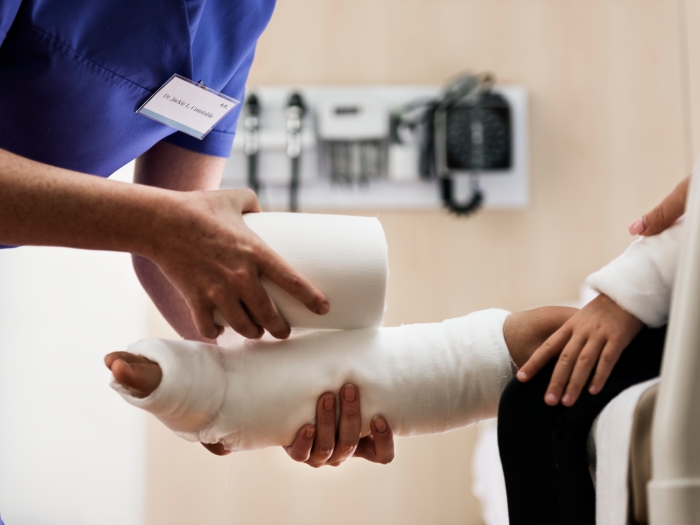
At 12 emergency departments, researchers followed 114 children, ages 4 to 17, with femur fractures. They compared pain medication, like opioids, with ultrasound-guided nerve blocks — injections of long-acting local anesthetic. The University of Michigan led the way with the most enrollees in the study.
Dr. Aliabouzar leaning over a microscope
Office of Research

2025 Research Annual Report Released

Medical School releases 2025 Research Annual Report
people rushing through the emergency room with bed
Department News

Medicaid billed for 52% of U.S. hospital costs from gun injuries

Medicaid reimbursement often falls short of treatment costs, leaving trauma centers on the front lines of the gun violence epidemic to absorb losses Study authors concerned Medicaid funding cuts could further strain trauma centers Costs stayed flat through 2019, then rose 33% from 2019 to 2021, coinciding with a rise in firearm injury during the pandemic
Mark Bicket
Department News

Mark Bicket, MD, PhD, receives the American Society of Anesthesiologists James E. Cottrell, MD, Presidential Scholar Award

Mark Bicket, MD, PhD, is the recipient of the 2025 American Society of Anesthesiologists (ASA) James E. Cottrell, MD, Presidential Scholar Award in recognition of his work to pioneer evidence-based approaches to patient-centered pain care.
Health Lab Podcast in brackets with a background with a dark blue translucent layers over cells
Health Lab Podcast

The gap in dental care for children with sickle cell disease

A study finds that fewer than half of children with sickle cell disease covered by Michigan Medicaid received dental services.