
First-of-its-Kind ALS Study Funded by CDC
The Michigan Brain, Health and Environment Study is led by Drs. Eva Feldman and Stephen Goutman.

Amyotrophic lateral sclerosis (ALS) is a progressive, fatal neurodegenerative disease that lacks effective treatment and has an expected survival of only 2-4 years from diagnosis.
An obstacle to the development of treatment is partly due to the complex nature of the disease ALS is likely preceded by a long pre-symptomatic phase, so it is much more difficult to stop ALS once it has advanced to the point of symptom onset. These obstacles have led to a recent “shift” of the ALS Center for Excellence at Michigan Medicine to advocate for preventative approaches to ALS and pursue new treatment strategies.
For most patients, ALS results from a combination of lifetime non-genetic exposures—defined as the ALS exposome—combined with underlying genetic risk.
“Our past research has already linked several occupational exposures with a higher ALS risk, particularly production occupations and occupational metal exposure,” explains Stephen Goutman, M.D., M.S. “However, we do not know how these exposures accumulate over one’s work history, and how they interact with a lifetime of non-occupational exposures and genetics. This is the knowledge we need to be able to identify modifiable and targetable risk factors and reduce an individual’s likelihood of developing ALS—moving toward making it a preventable disease.”
How will Drs. Feldman and Goutman do this? The new Michigan Brain, Health and Environment Study (Mi-BRAIN), which the Centers for Disease Control (CDC) recently funded, is a first-of-its-kind study to establish a longitudinal prospective cohort of individuals who work in occupations that traditionally have greater exposures. In addition, the EXposure and PhenOtyping Study Examining ALS (EXPOSE-ALS) study is designed to establish a longitudinal prospective cohort of individuals with a family history of ALS. Researchers led by Eva Feldman, M.D., Ph.D. and Dr. Goutman aim to do the following:
Gather real-time information about occupational, residential, recreational, and lifestyle exposures.
Survey and collect data, such as body mass index and motor and cognitive function, to identify indicators of a transition to pre-symptomatic ALS.
Create a biorepository of genetic material to investigate the interaction of the exposome with genetic risk in ALS. This will identify the most critical exposome and genetic factors that drive pre-symptomatic disease, which will guide prevention strategies.
“Gathering this information will allow us to identify critical exposure windows or exposure interactions, which can be targeted to prevent ALS in high-risk people,” explains Dr. Feldman. “This study could have a dramatic impact on how we address the disease, expanding ALS research beyond a treatment-only approach to a paradigm that focuses on a prevention approach. As long as ALS remains incurable, we must increase our efforts to make it preventable.”
Kelly Bakulski, Ph.D., from the School of Public Health, and Adam Patterson and Aanchal Gopalan, both from the ALS Center of Excellence at Michigan Medicine and NeuroNetwork for Emerging Therapies, are also involved in the study.
To learn more about the MiBrain study, which enrolls individuals who experience occupational exposures, please visit: https://www.uofmhealth.org/mi-brain.
To learn more about the EXPOSE-ALS study, which enrolls individuals with a family history of ALS, please visit: https://www.uofmhealth.org/expose-als.
In This Story

Eva L Feldman, MD, PhD
Professor

Stephen A Goutman, MD, MS, FAAN
Professor
Featured News & Stories
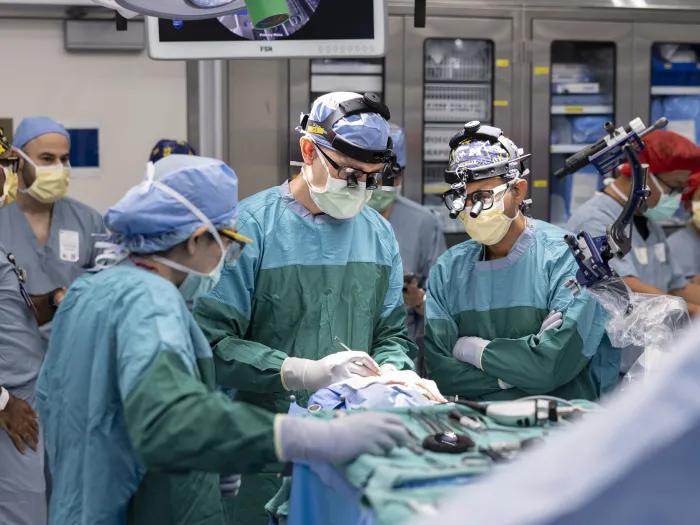
University of Michigan implants first-in-human Paradromics wireless brain-computer interface, designed to restore communication

Six U-M medical research teams picked for virtual science tournament
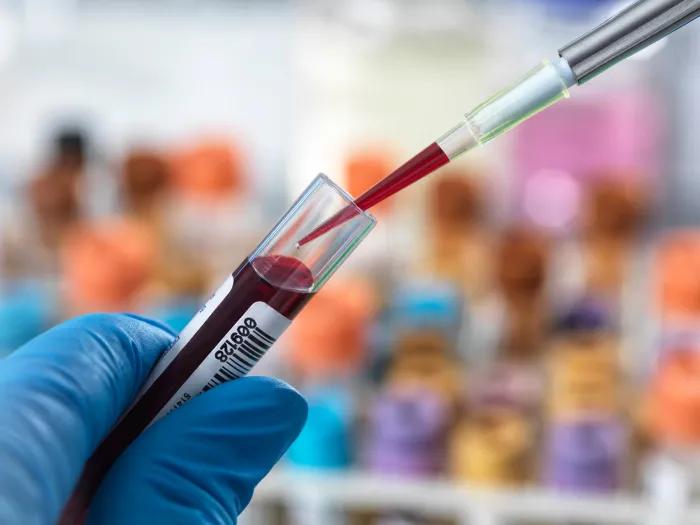
Researchers develop models to help diagnose ALS earlier through blood biomarkers

How virus-like proteins shape a cell’s stress response

ALS diagnosis and survival linked to metals in blood, urine

