The Hallmarks of Skeletal Muscle Health

Dr. Ruas

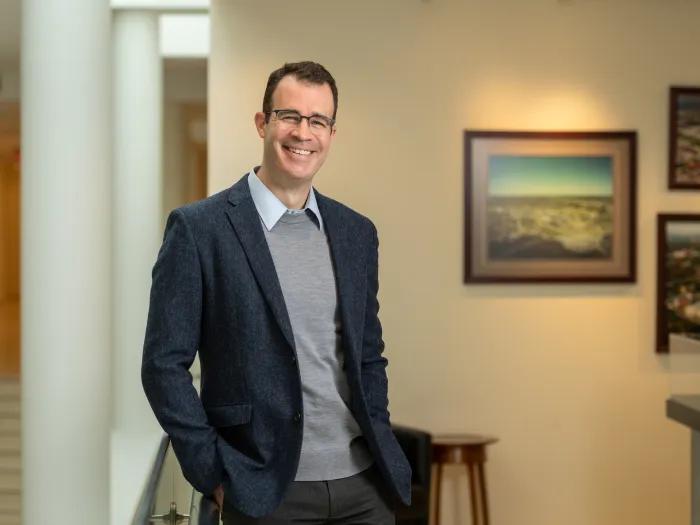
Dr. Jorge Ruas and colleagues are very pleased to share their new paper in Nature Metabolism, "The Hallmarks of Skeletal Muscle Health."

This was a truly international and collaborative effort, bringing together diverse perspectives across muscle biology and clinical research to better define the fundamental components of muscle health. Together, they propose seven interdependent hallmarks of skeletal muscle health and examine how each is altered across disease, how it can be measured, and where it may be modifiable through exercise, nutrition, or therapeutic intervention.

Dr. Ruas and co-authors hope that this framework provides a common language for studying muscle across health, aging, and disease, while helping to connect mechanistic biology with clinically meaningful outcomes.

Read the full article here

Featured News & Stories

UMich Med Mosaic on blue background with colorful geometric shapes
UMich Med Mosaic

Beyond the White Coat: Disability, Neurodiversity and Advocacy in Medical School
In this episode of UMich Med Mosaic, host Mackenzie Kay sits down with medical students Jill Maudlin, Sarah Renberg and Bella Johnson to discuss their experiences as disabled and neurodivergent trainees at the University of Michigan Medical School. They reflect on the personal journeys that led them to medicine, the challenges and strengths that accompany living with disabilities and chronic health conditions and the importance of representation within the medical profession. The conversation explores how disability shapes their approaches to patient care, advocacy and teamwork, as well as the role of the Medical Students for Disability Health Advocacy (MSDHA) organization in creating community and advancing accessibility initiatives. They also discuss Michigan’s accommodations in medical education, efforts to improve disability-related curriculum content and the importance of building a culture where disabled and neurodivergent students can thrive.
Dr. Seth Waits wearing a dark blazer and gray sweater with a collar.
Department News

Seth Waits, M.D., named new section head for the Section of Transplant Surgery

Learn more about Seth Waits, MD, the new head of the Section of Transplant Surgery.
Woman's torso in a blue hospital gown, with her hands holding a pregnant belly and an IV in place.
Health Lab

High dose oxytocin protocol linked to lower postpartum hemorrhage rates

A change in how oxytocin is administered after childbirth may help reduce postpartum hemorrhage, a new study suggests.
Minding Memory with a microphone and a shadow of a microphone on a blue background
Minding Memory

Antipsychotic Use in Nursing Homes: Balancing Medication Safety, Policy, and Dementia Care

In this episode, Lauren Gerlach and Matt Davis speak with Theresa Shireman, PhD, Director of the Center for Gerontology and Healthcare Research and a Professor of Health Services, Policy and Practice and Epidemiology at the Brown University School of Public Health. Dr. Shireman’s research focuses on pharmaceutical policy, pharmacoepidemiology, health services research, and medication use among vulnerable populations. Dr. Shireman discusses her recent study, "Impact of Federal Antipsychotic Use Policy in Nursing Homes on New Diagnoses for Approved Indications in Dementia Residents," published in the Journal of the American Geriatrics Society. The study examines whether federal policies designed to reduce antipsychotic use in nursing homes were associated with increases in new diagnoses of conditions, such as schizophrenia, that exclude residents from publicly report antipsychotic quality measures. Using an interrupted time-series design, the researchers examined changes following the 2012 National Partnership to Improve Dementia Care and the 2015 addition of antipsychotic use to the Nursing home Five-Star Quality Rating System. They found that neither policy was associated with an increase in new exclusionary diagnossees, challenging concerns that nursing homes were increasingly assigning these diagnoses to circumvent restrictions on antipsychotic use. The conversation also explores the benefits and risks of antipsychotic medications for people living with dementia, including the potential for serious adverse effects such as sedation, falls, stroke, and increased mortality. Dr. Shireman discusses how public reporting and financial incentives can influence prescribing practices,the limitations of using a single quality measure to evaluate nursing home care, and the importance of balancing medication safety and residents’ individual needs. The discussion highlights the need for shared decision-making among clinicians, nursing home staff, residents, and families, as well as greater investment in staffing, resources, and nonpharmacological approaches to improve quality of life for people living with dementia. The transcript for this episode can be found here.
Family with mom and dad and three kids sitting on a park bench, dad's arms extended around the family.
Health Lab

Intuition pushed mom to keep checking for breast cancer

Michigan mom had no reason to suspect cancer. But instinct nudged her to find out for sure — and carried her through challenging treatments to remission.
Jackie Yaho portrait
Research News

CMHC 2026 George L. Bakris Scholarship Program Recipient Zhiqi "Jackie" Yao, MD, ScM

Congratulations to 2026 George L. Bakris Scholarship Program Recipient Zhiqi "Jackie" Yao, MD, ScM.