Her ALS Story
A 27-year-old University of Michigan alumna turned an ALS diagnosis into an opportunity to create a community of support for those like her—young women faced with the deadly disease.
Author |
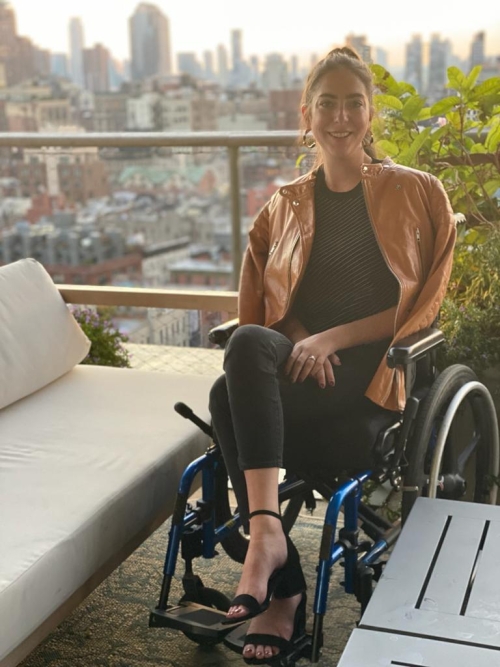
Amyotrophic lateral sclerosis (ALS) is often thought of as an older white man’s disease. While they are the most likely to receive the diagnosis, they are not alone in facing this incurable and fatal disease. In fact, 45% of all cases are women, and in 10% of cases, patients are under the age of 45. Leah Stavenhagen was one of those, diagnosed with ALS at only 26 years of age.
Leah’s story:
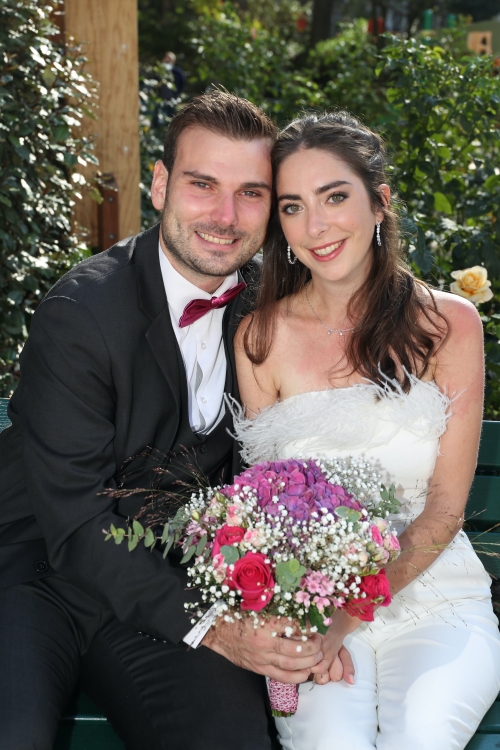
Before her diagnosis, Leah was like most women her age, just embarking on her career. She graduated from the University of Michigan with degrees in political science, comparative literature, and French. During this time, she met her eventual husband, Hugo Taubmann, whom she followed to Paris, where she received her business degree and began working at EY.
Then, in 2018, she began to trip and fall more often than was normal. She wondered why running had become so difficult at the gym, thinking she might need new shoes. Much of her problems were focused on her lower limbs, and Leah assumed she was too stressed and tired. Maybe she just needed to slow down.
Around Christmas, she traveled to Israel with her family. “While hiking, I was having a really hard time keeping up with my sisters,” explained Leah. “The competitive side of me said, ‘This wasn’t right, we need to fix this. I should be in the lead.’”
She went to a doctor who noticed she had no knee-jerk reflex. She was referred to a neurologist who diagnosed her with ALS.
The story behind Her ALS Story:
“ALS is so crazy, and so isolating. I really didn’t know what it was when I was diagnosed,” Leah remembered.”
In the first year she was diagnosed, she dealt with it for the most part on her own. She would go online and try to find information; it was very limited. What she found was more about “how to share a diagnosis with your grandchild” or “how to approach this with your spouse.”
“I really wasn’t there,” Leah explained. “I wasn’t at that stage in my life. I was trying to start my own career. I had a boyfriend and was trying to go out with friends. I had an eagerness to find other people who I could relate to, who were going through the same thing as me.”
Leah first became involved with current ALS advocacy organizations, particularly I AM ALS. She found many fantastic community-building programs, but nothing really for younger people. After sharing her story with I AM ALS, she received responses from a few people who were like her, young women with ALS. Leah found Her ALS Story in 2021 with ten of those people, which today has over 120 members worldwide.
What the group does:
Leah explained that Her ALS Story’s efforts are two-fold. Externally, the goal is to raise awareness about the disease with a special emphasis on more funding for research. Leah believes that as young women constantly faced with the harsh realities of ALS, their voices are especially powerful in revolutionizing treatment options and finding a cure.
Internally, Her ALS Story is building a community, a space where young women with ALS can come together and share everything from tips on simply living more fully to how to deal with a feeding tube and identifying clinical trials. It is also a space where members can just talk about their favorite TV shows with others who know exactly what they are going through. Leah firmly believes that having this space is incredibly important.
Generally, the group communicates via Zoom and a WhatsApp chat, but once a year, Her ALS Story hosts a very special retreat. This year, 37 women with ALS and their caregivers will meet in Cape Cod. It will be an opportunity to travel while all their many equipment needs are taken care of, and everyone will be on the same journey.

What Leah wants others to know:
“It’s important for people to realize it’s a nondiscriminatory disease. It strikes people from all walks of life, all ages, genders, races. People need to pay attention because it will likely affect someone they love at some point.”
What Leah says about the impact of Her ALS Story:
“ALS is very difficult to live with; it makes you reevaluate your future, a lot of different things. I want to empower people to continue living their best lives, and I think that this group does a pretty good job of showing examples of people who are still able to travel, get married, and accomplish other things.
“This is special because, of course, you have this disease; it is horrible, and there isn’t any treatment. But it’s important to go out and live each day to the fullest. Knowing we are not alone empowers us.”
Featured News & Stories
Helping an employee-turned-patient overcome a brain tumor
Shipt gift helps address food insecurity
Family Medicine researchers find clinicians question Black expectant moms more about cannabis use than white moms
BRCF Flow Cytometry Service Enhancements Coming July 1
Celebrating outstanding teaching and research at the 2026 Endowment for Basic Sciences Awards