How does the UM research community feel about AI in healthcare?
TIERRA's work at Researchpalooza
On September 9, 2025, the Office of Research hosted the annual ResearchPalooza where TIERRA joined 70 labs, facilities, and research services that serve biomedical research across the UM campus. This event brought together more than 1,000 faculty, staff, and students to foster collaboration within the research community.
At the TIERRA table, we provided branded items such as informational flyers, pens, notepads, and tissue packs. We also displayed samples of the deliberation booklet used in our 2024 virtual community deliberations. Our table hosted two activities for visitors to engage in. First, we had a poster board with the title, “What are your hopes and concerns about the use of AI in healthcare?” where visitors were encouraged to write their hopes and concerns on sticky notes and place them in the respective column.
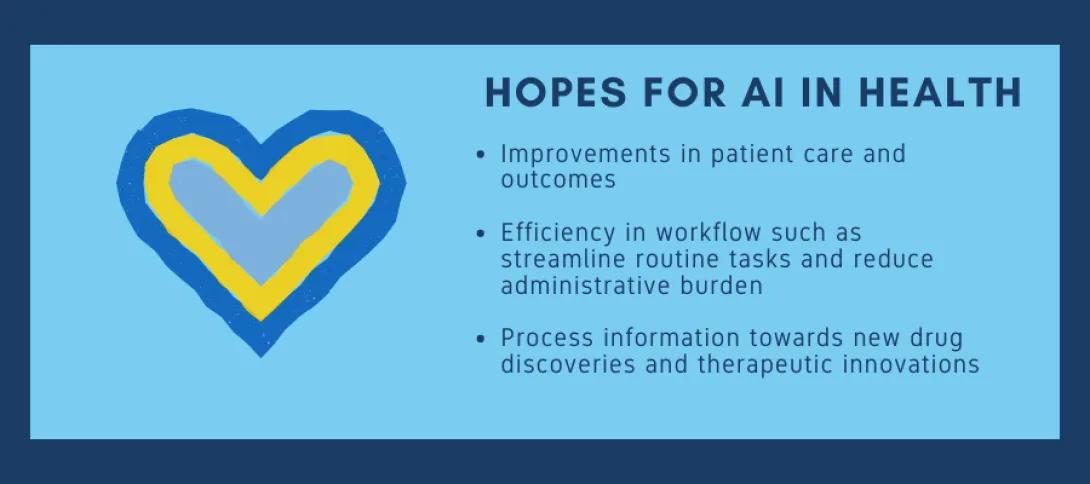
When asked about their hopes for AI in healthcare, attendees’ responses fell into three main themes. Many envisioned improvements in patient care and outcomes ranging from personalized care and faster diagnoses to the possibility of new cures. Others emphasized efficiency and workflow, expressing hope that AI could streamline routine tasks, reduce documentation burdens, and ease workloads, especially in electronic medical record systems. A third group focused on data and research and pointed to AI’s ability to process information quickly to support new discoveries. Some also mentioned “ethics” as a hope, though without clarifying whether they saw it as a strength to be built upon or a challenge to overcome.
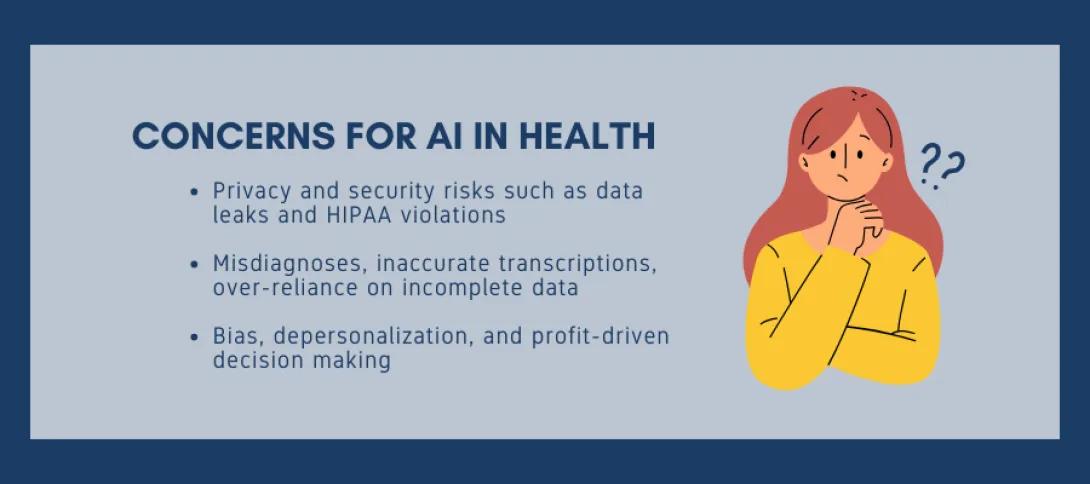
Concerns covered a wider range of issues. Privacy and security risks, such as data leaks and HIPAA violations, were top of mind. People also raised worries about accuracy and reliability, such as the potential for misdiagnoses, inaccurate transcriptions, and overreliance on incomplete datasets. Ethics and equity came up as well, including issues such as bias, depersonalization, and profit-driven decision making. Some noted environmental and resource impacts, like water use, pollution, and allocation of resources. Others shared workforce-related worries about job security and the shift of some nursing roles to remote settings. Finally, broader issues of trust and dependency emerged, such as the fear of becoming unable to tell AI-generated content from reality.
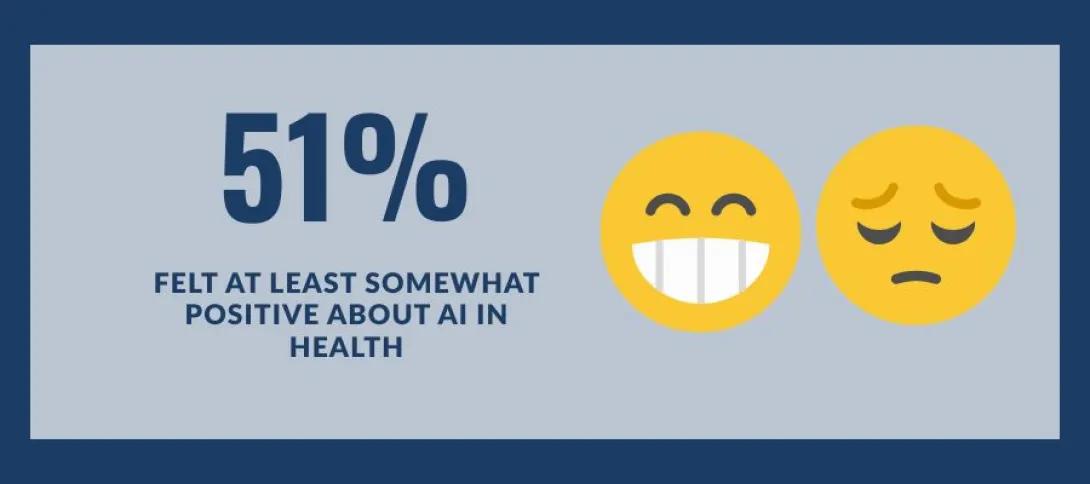
The second activity was a poster board titled “How does AI in healthcare make you feel?” where visitors could see a spectrum of reactions under which to place their corresponding reaction. The options were: Positive, somewhat positive, neutral, somewhat negative, and negative. In response to “How does AI in healthcare make you feel?,” 51% of attendees were at least somewhat positive, 31% were neutral, and only 18% were somewhat negative or negative.
These activities were inspired by the structure and topics of the virtual community deliberations conducted by TIERRA last year. These activities provided a real-time snapshot of the UM community’s views on AI in healthcare, reflecting broader conversations that balance both optimism and caution. Moving forward, the TIERRA team is eager to continue these conversations in larger settings and further understand the context of the general public’s hopes, concerns, and overall sentiments. We remain committed to listening, learning, and sharing insights from our community.
Learn more about our work by visiting our website: TIERRA
In This Story

Morgan Sielaff
Research Area Specialist Associate

Reema Hamasha
Research Area Specialist Intermediate

Sean Tan
Lead Policy Researcher

Kerry Ryan, MA
Senior Research Associate
Jodyn Platt
Associate Professor
Featured News & Stories

Continuing the legacy of a doctor’s doctor

Human Rabies Exposures Growing Across the Country
Karsten Bartels, MD, earns Gladys Sessler Outcomes Research Consortium Award
Highlights from the 2026 Anesthesiology Annual Meeting