
The Impact of Alzheimer's in Zambia
The Zambia Cohort of Healthy Aging and Dementia Study (Z-CHAD) was launched by Andrea and Lawrence A. Wolfe Research Professor Melissa Elafros, M.D., Ph.D., to understand the true impact of dementia on patients in Zambia and their caregivers.

According to the World Health Organization, approximately 55 million people worldwide have dementia. Over the next 25 years, this number will nearly triple to 153 million people. This astronomical growth is due both to people living longer and the widespread increase in traditional dementia risk factors, such as high blood pressure, diabetes, and obesity.
Dementia is a challenging diagnosis for patients and families everywhere, as there are few effective treatments and often limited support for caregivers as the disease progresses. However, nowhere is this more apparent than in low- and middle-income countries, where 60% of dementia patients reside.
"At times, the challenges for patients with dementia seem insurmountable in resource-limited settings like Zambia,” said Andrea and Lawrence A. Wolfe Research Professor Melissa Elafros, M.D., Ph.D.
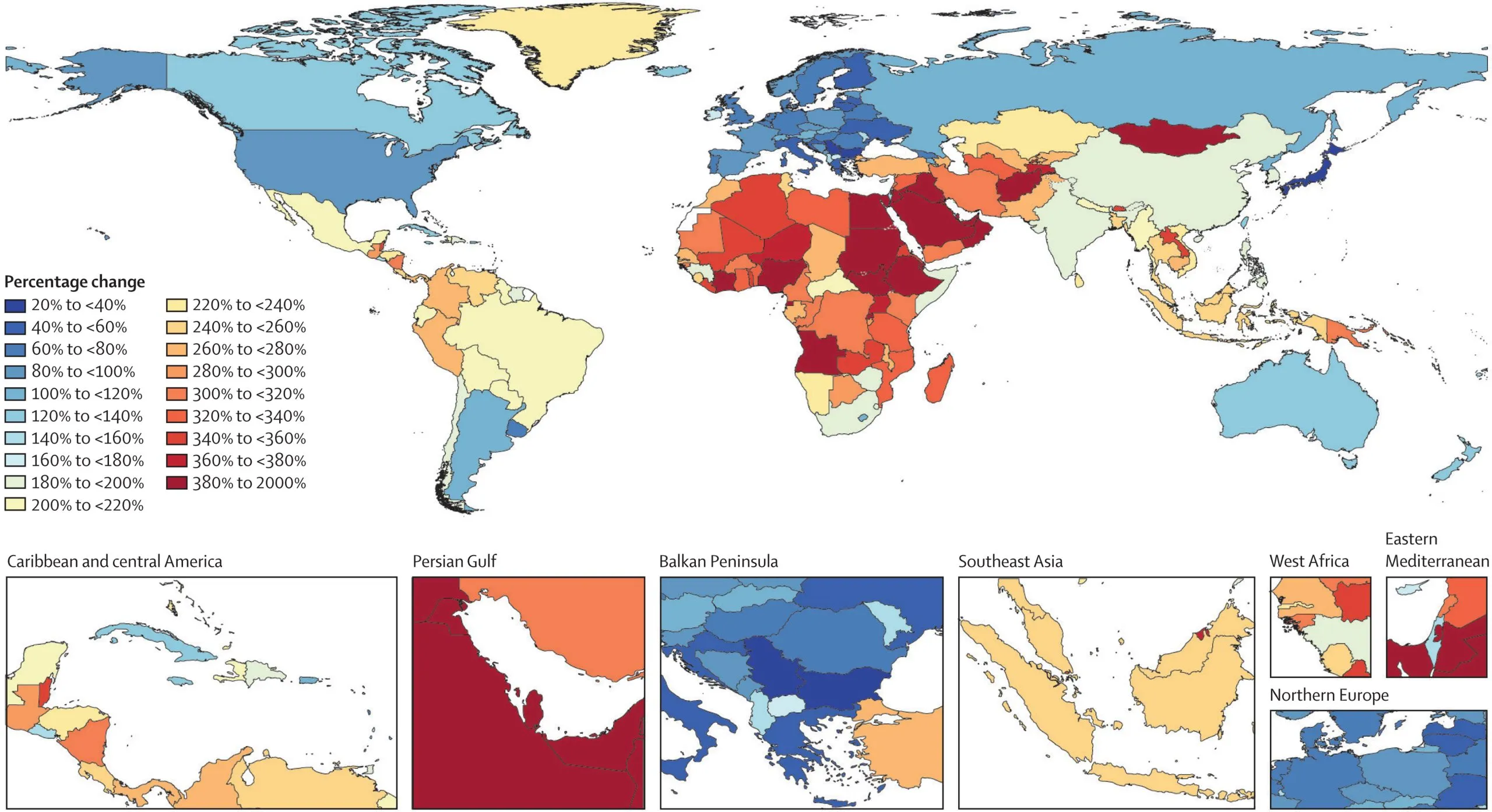
In Zambia, where Dr. Elafros has worked since 2009, the prevalence of dementia is expected to increase by over 340% in the next 25 years. Like many low-income countries, the aging population in Zambia is growing and, along with it, so is the prevalence of the risk factors that lead to dementia. In addition, Zambians also faces challenges that are less of a problem in the United States, like undernutrition and HIV infection (12.3% prevalence), that can also cause dementia.
“On paper, it’s the perfect storm,” said Dr. Elafros, “and, yet there is little data regarding the prevalence of dementia in Zambia.” Without data, it's impossible to design programs to combat the disease. That is why Dr Elafros and her collaborators launched the groundbreaking Zambia Cohort of Healthy Aging and Dementia Study (Z-CHAD) less than a year ago using grants awarded by the Center to Accelerate Population Research in Alzheimer's (CAPRA) through the NIH, African Studies Center, and Global REACH, all University of Michigan Organizations.
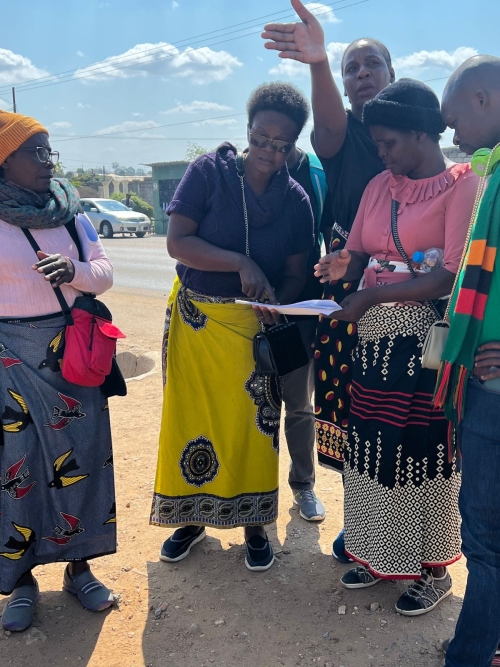
The Zambian Cohort of Healthy Aging and Dementia is conducting door-to-door visits in the capital city Lusaka to identify and screen adults over the age of 50 years for dementia and dementia risk factors. The goals of the study are to provide baseline data regarding the burden of this disease and its risk factors so that interventions can be designed to support Zambian patients and their caregivers.
An under-recognized condition.
In countries like Zambia, limited healthcare resources have long been allocated to combating infectious diseases, like HIV and tuberculosis, and reducing maternal and childhood mortality at the expense of chronic, non-communicable diseases. As a result, few healthcare workers have been trained to recognize and diagnose dementia. Delayed diagnosis and misdiagnosis are common.
"This leads to a very low awareness of dementia among healthcare workers," explained Dr. Mataa Mataa, an adult neurologist and palliative care provider in Zambia and key study collaborator. "Patients presenting with symptoms of dementia are more likely to be told that it is a normal part of aging, which delays health-seeking behavior in the community. In addition, many with dementia are diagnosed as having a psychiatric condition, such as schizophrenia. They may be prescribed anti-psychotic medications and sedatives before the possibility of dementia is even entertained, further delaying diagnosis and the correct treatment."
Little support for caregivers.
Once a diagnosis of dementia is finally made, patients and caregivers are often on their own. Dr. Mataa explained that there are few elder care centers, social workers, or therapists to help. There also aren't caregiver education or support programs, so caregivers often have incredibly high financial and social burdens.
As one caregiver explained, “I try to hide it from my mother that I cannot manage, which makes me get into credits so that she eats. Sometimes we reach a point where there is literally nothing in the house and I don’t know what to do. So, I sit and feel bad and cry.”
Entrenched misconceptions.
When the clinic provides patients and families with few answers, care is often sought elsewhere.
“We take them for prayers. Because maybe it isn’t normal, it may be something done by another person,” explained one caregiver.
Sadly, stories about patients with dementia and witchcraft have been commonly told by study participants. Many caregivers report fears about their relative’s safety if they are found wandering alone and some described being forced to restrict their movements to keep them safe.
Why this study is special.
The study is already game-changing in that it gathers essential information on dementia, which will inform healthcare policy and practice. However, what truly makes this study one of a kind is its community involvement. The team has partnered with community healthcare workers (CHWs) to conduct most data collection. CHWs are community residents who have been trained to deliver a specific healthcare education or services, such as HIV testing and treatment, with no formal, professional certification.
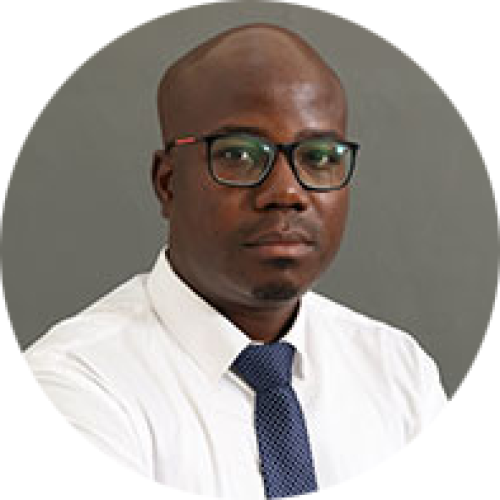
CHWs are knowledgeable about the community from which they collect data and more trusted,” explained Chiti Bwalya, MPH a social scientist and study collaborator, “So, residents feel free and are open about sharing their experiences with them.” Prior dementia studies in Africa have often relied on doctors and nurses to do screening assessments, which stretches already limited healthcare resources. Using CHWs avoids this issue. In addition, CHWs can overcome any barriers created by dementia misconceptions in this setting.
“Our work is just the first of many steps that are needed to improve care for patients with dementia and their families in Zambia,” said Dr Elafros, “But, it is a step, and I am proud of what our team has accomplished so far.”
In This Story

Melissa A Elafros, MD, PhD
Assistant Professor
Featured News & Stories

Could preeclampsia become a thing of the past?

Addressing Senior Social Isolation in the Community
The Impact of Social Isolation and Loneliness on Cognitive Health

Convoys of Caregiving: Arab American Families Living with Dementia
Who should pay for older adults' care? Caregivers answer differently
