Important Grant to Study Health Equity in Alzheimer’s Treatment
NIH support will allow Brian Callaghan, M.D., to study the medical and cost effectiveness of new Alzheimer’s medications in underrepresented communities.
Author |

Today, Alzheimer’s disease and related dementias affect approximately 50 million people across the globe. This number is projected to rise to about 152 million by 2050. While Alzheimer’s disease and related dementias are prevalent in all populations, incidence in Black populations is higher than in other racial groups. Low-income individuals also have a higher risk of dementia. Despite the higher risk, Black and low-income populations are both understudied and underrepresented in clinical trials.
New anti-amyloid treatments for Alzheimer’s disease and related dementias are now available, but they come with a number of downsides, including significant side effects (brain bleeds and other bleeding), and require intravenous infusions and frequent monitoring. This leads to potentially high patient burden.
Additionally, clinical trials, which are how drugs are approved, generally take place in idealized settings with healthier and wealthier patients. They don’t uncover the real-world challenges to using these medications outside the clinical trial, such as the need for diagnostic testing, travel to and from appointments, regular infusions, treatment for side effects, and obstacles yet unknown. This is increasingly true in Black and low-resourced populations.
The HEAT study:
The Health Equity in Alzheimer’s Treatment (HEAT) study, supported by an R61/R33 grant recently awarded by the National Institutes of Health to Brian Callaghan, M.D., M.S., the Eva L. Feldman, MD, PhD, Professor of Neurology. Melissa Elafros, M.D., Ph.D., the Andrea and Lawrence A. Wolfe Research Professor, is consulting.
The goal of the HEAT study is to investigate the issues related to newer anti-amyloid Alzheimer’s disease treatments and to estimate their medical effectiveness and cost-effectiveness in Black and low-income populations in Detroit and Flint. Dr. Callaghan believes that unique factors may exist in these communities that might lead to lower net effectiveness and possibly even net harm, in addition to reduced cost-effectiveness, when compared to other populations. He believes these populations may experience higher adverse events and fewer resources to manage treatment burdens associated with these medications.
The plan:
The HEAT study has three parts or aims. First, Dr. Callaghan and his team will investigate the treatment burdens faced when taking these medications by surveying patients in Flint and Detroit. Second, they will compile databases to better define who uses these medications, if they are being taken as prescribed, how much they cost, and how common the side effects are in real-world populations. Finally, the team will use this information to evaluate whether the benefits of these medications outweigh the drawbacks and if they are cost-effective.
“I hope that we will better understand the full picture of the use and impact of these medications in Black and/or low-resourced populations,” explains Dr. Callaghan. “By doing so we can better inform patients and develop evidence-based policies that better serve our patients.”
In This Story

Brian C Callaghan, MD, MS
Professor
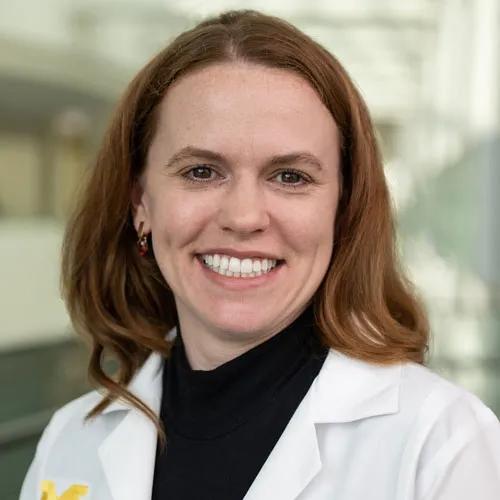
Melissa A Elafros, MD, PhD
Assistant Professor
Featured News & Stories

What I'm Reading in APS Research: June 2026

New algorithmic tool enables to scientists to see cells “talk” to one another

Dr. Matthias Kretzler Receives ASN's Prestigious 2026 Homer W. Smith Award

PhD student Dina Tekle publishes a research article in PNAS
Jackson Rapala receives fellowship for research on fungal pathogen