Improving brain imaging research
Researchers improved an existing analysis approach, making it available for much wider use in brain research.
Author |
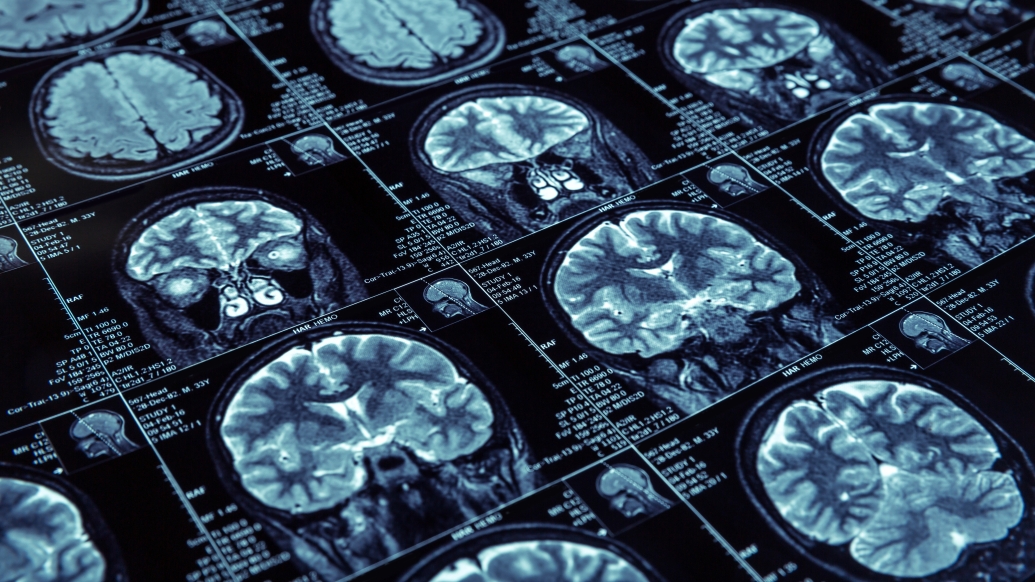
Studies that track people’s brains over many years—called longitudinal studies—can teach us a lot about how the brain changes over time. But there is a problem: if scanning technology and procedures change during the course of the study, as they often do, it is difficult to accurately compare measurements taken at different timepoints.
An analysis tool called BrainChart was developed to help calibrate brain measurements, enabling comparisons across timepoints. However, BrainChart works best when the group being compared has a sample size of 100 or more people. When fewer people are used, the estimates it produces can be unreliable.
Out of necessity, a group of researchers, including Eva L. Feldman, M.D., Ph.D., and Stacey Jacoby, Ph.D., from the NeuroNetwork for Emerging Therapies, along with collaborators in Australia, sought to develop a method of using BrainChart for studies with a smaller number of control patients (fewer than 100). Their method includes an additional level of analysis to improve the reliability of comparisons for studies with fewer repeated control scans at different timepoints.
Their analysis method was tested on both simulated data and real brain imaging datasets, and the results are published in Human Brain Mapping. They found that, in fact, adding this extra level of analysis increased accuracy in datasets with fewer controls. Additionally, they verified accuracy across different time points and with different scanning technologies.
“BrainChart was an important leap for studying the brain over time,” explained Dr. Feldman. “In adding another layer of analysis to support studies with smaller repeat control scans, we made it possible for much wider use, which could be a game changer for many brain studies.”
The software is available on GitHub.
Support for this research includes the National Institutes of Health and the Australian government.
Paper cited: Adamson C, Moran C, Brown A, Collyer TA, Sakowski SA, Srikanth V, Northam EA, Feldman EL, Cameron FJ, Beare R. Leveraging Longitudinal Data to Improve BrainChart Calibration for Small Study Sample Sizes. Hum Brain Mapp. 2026 Feb 15;47(3):e70476. doi: 10.1002/hbm.70476. PMID: 41705288; PMCID: PMC12914350.
In This Story

Eva L Feldman, MD, PhD
Professor
Featured News & Stories

Helping an employee-turned-patient overcome a brain tumor

Shipt gift helps address food insecurity

Family Medicine researchers find clinicians question Black expectant moms more about cannabis use than white moms
BRCF Flow Cytometry Service Enhancements Coming July 1

Celebrating outstanding teaching and research at the 2026 Endowment for Basic Sciences Awards