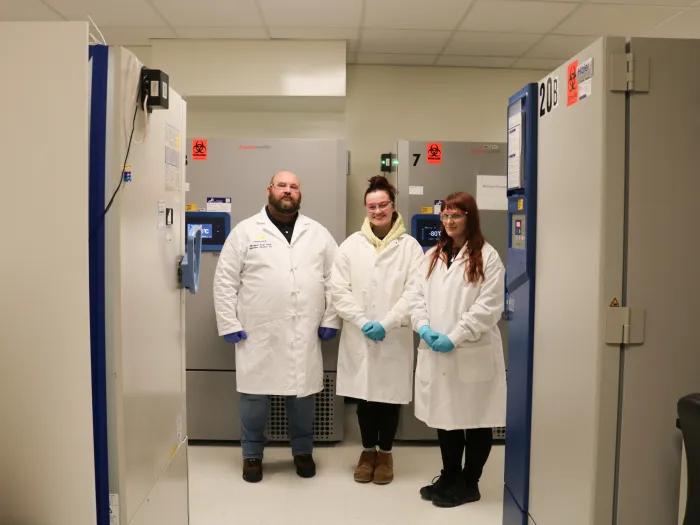
Congratulations to Patrick Monaghan, PhD, Michigan ADRC Research Education Component (REC) Fellow who received the Multiple Sclerosis Research Program (MSRP) Early Investigator Research Award for his work “Biological Versus Chronological Aging: Effects on Mobility and Cognition in Multiple Sclerosis.”
“I am extremely grateful to receive this award, which will allow us to investigate how biological aging intersects with multiple sclerosis to impact mobility and cognition. Older adults living with neurological disorders face the combined burden of both age-related declines in motor and cognitive function, alongside living with a neurological disorder, making it essential to find earlier and more personalized ways to intervene. This study represents a significant step toward enabling individuals with MS to maintain their independence and quality of life. I am also deeply grateful to my mentors, Dr. Nora Fritz, Dr. Ana Daugherty, and Dr. Irving Vega, and to the Michigan ADRC Research Education Component (REC) program. The REC has been instrumental in helping me map out my long-term research program, which directly gave rise to proposals such as this one.”
Dr. Monoghan is a Postdoctoral Researcher in the Neuroimaging and Neurorehabilitation Lab at Wayne State University where he specializes in the neural control of movement. His research aims to uncover the complex cognitive and neural mechanisms that govern movement and postural control in older adults and individuals with neurological disorders. Dr. Monaghan’s long-term goal is to enhance mobility, physical function, and overall quality of life for older adults and individuals with neurological conditions.
This award is sponsored by the Congressionally Directed Medical Research Programs (CDMRP) within the United States Department of Defense. The CDMRP manages Congressional Special Interest Medical Research Programs (CSI) encompassing various diseases, conditions, military health, and other specified areas. The mission of this program is to support pioneering concepts and high-impact research relevant to the prevention, etiology, pathogenesis, assessment, treatment, and ultimate cure of multiple sclerosis for the benefit of Service Members and their Families, Veterans, and the American public. Since its inception in fiscal year 2009, the MSRP has supported innovative and impactful research that addresses fundamental issues and gaps in MS. The vision of the MSRP is to prevent, cure, reverse, or slow the progression and lessen the personal and societal impact of MS.
Congratulations, Paddy!
Featured News & Stories
A protein tape-recorder enables scientists to measure and decode cellular processes at scale and over time

Aging, physical activity, and dementia prevention

Can your diet improve brain health?

Behind the Gold: The People Powering Joy in Medicine

Michigan Alzheimer’s Disease Research Center at AAIC 2025