Peripheral Neuropathy Diagnostic Tools
Researchers compared two diagnostic tools used in neuropathy, one much less invasive, to understand which was more effective.
Author |
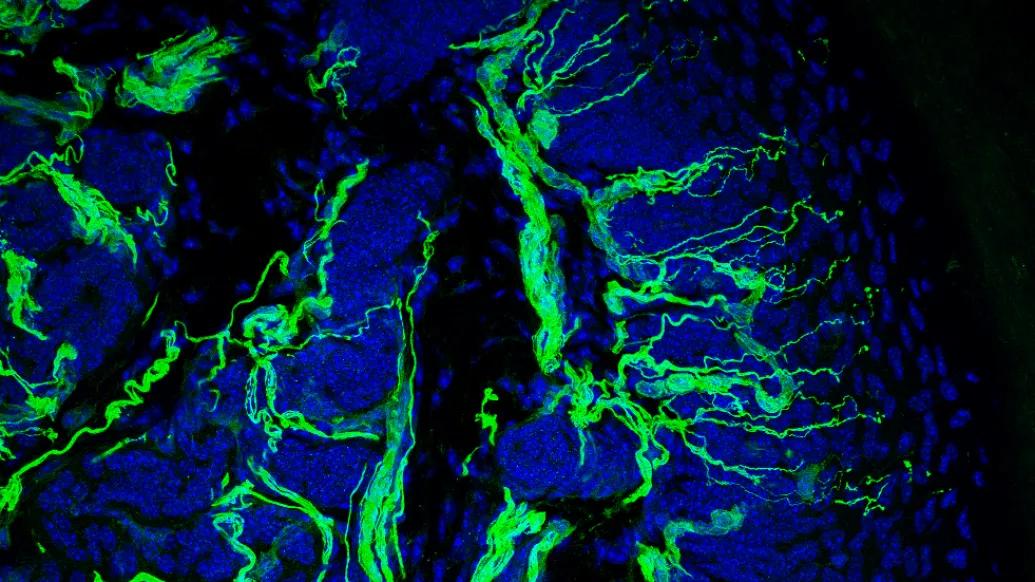
Small fiber neuropathy is a form of peripheral neuropathy that damages small nerve fibers in your skin, causing painful tingling or burning sensations in the hands and feet. It is also a common early sign of distal symmetric polyneuropathy.
Traditionally, small fiber neuropathy is measured by assessing intraepidermal nerve fiber density from a skin biopsy. However, confocal corneal microscopy, an imaging technique used to obtain detailed, high-resolution pictures of corneal nerve fibers in the eye, has recently emerged as a much less invasive alternative method.
In a study published in Annals of Clinical and Translational Neurology, researchers compared the diagnostic characteristics of these two techniques for both small fiber neuropathy and distal symmetric polyneuropathy. They found that skin biopsies from the lower leg provided the most accurate assessment of the two conditions. Additionally, the technique that used skin biopsies demonstrated superior diagnostic characteristics compared to the imaging technique and was preferred by patients.
Authors: Fallon Koenig, Maya Watanabe, Alyssa Kwiatek, Melissa Elafros, M.D., Ph.D., Amro Stino, M.D., Eva L. Feldman, M.D., Ph.D., Brian Callaghan, M.D., all of University of Michigan, Evan Reynolds, Ph.D. (first author), of Michigan State University, and Don Henderson and David Herrmann, M.B.B.Ch., M.D., of University of Rochester.
Funding for this study was provided in part by the Andrea and Lawrence A. Wolfe Research Professorship, National Institute of Diabetes and Digestive and Kidney Diseases, Sinai Medical Research Foundation, National Institute on Aging, and Andrea and Lawrence A. Wolfe Brain Health Initiative.
Paper cited: Reynolds EL, Koenig F, Watanabe M, Kwiatek A, Elafros MA, Stino A, Henderson D, Herrmann DN, Feldman EL, Callaghan BC. Comparison of intraepidermal nerve fiber density and confocal corneal microscopy for neuropathy. Ann Clin Transl Neurol. 2024 Oct 12. doi: 10.1002/acn3.52218. Epub ahead of print. PMID: 39394845.
In This Story

Melissa A Elafros, MD, PhD
Assistant Professor

Eva L Feldman, MD, PhD
Professor

Brian C Callaghan, MD, MS
Professor
Featured News & Stories

Congratulations to Sondra Auerbach on her retirement!

What should you know before starting a GLP-1?
CPOD Faculty Publication Spotlight - Welch Lab
University of Michigan Professional Nurse Council ratifies contract with University of Michigan Health
CRISPR acts as commander-in-chief for backup defenses in bacteria