Pioneering a precision medicine pipeline for bipolar disorder
Understanding and identifying biomarkers of bipolar disorder.
This article was written by Angel Lopez, Ph.D., a research investigator in the Jenkins Lab in the Department of Pharmacology at the University of Michigan Medical School. The lab is led by Paul Jenkins, Ph.D., associate director of the Heinz C. Prechter Bipolar Research Program.
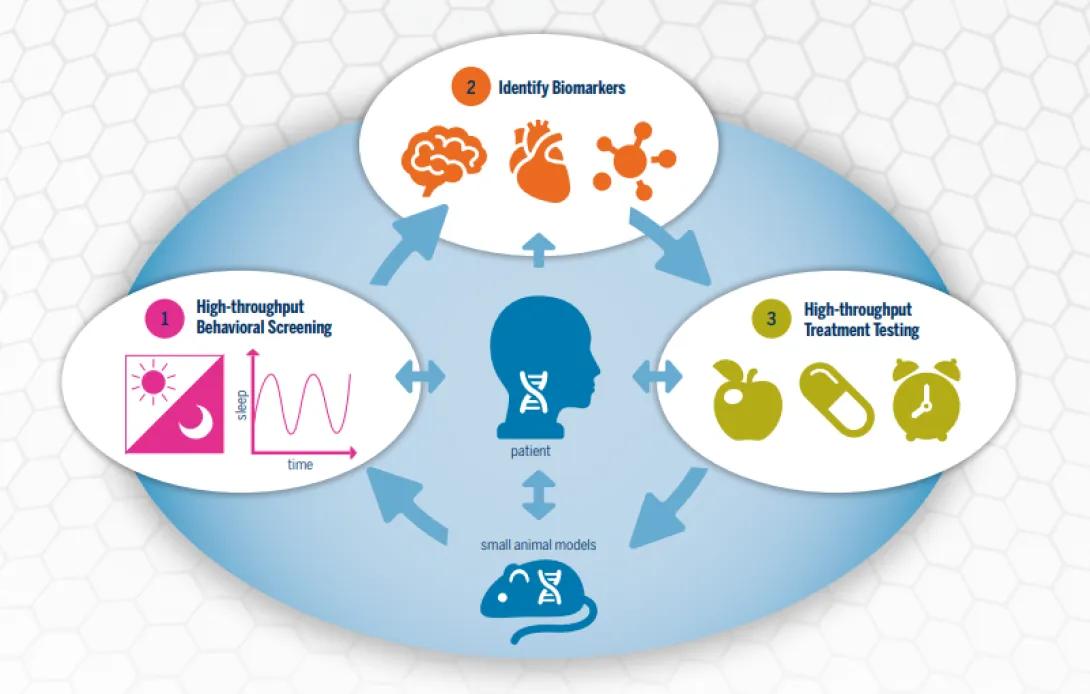
My goal since joining the Prechter Program in 2025 has been to develop a precision medicine pipeline to help inform the diagnosis and treatment of bipolar disorder. This goal is of particular importance to me as a person living with bipolar disorder. Having personally experienced the difficulties, and even dangers, of the standard trial-and-error approach that currently exists in psychiatric treatment, it is my desire to improve this arduous path for both doctors and patients. I have taken a basic science approach using small animal models to understand how genetic variants found in human beings may contribute to the symptoms of bipolar disorder and influence treatment response.
This pipeline consists of three primary points of analysis. First, we utilize a machine learning algorithm to monitor mice in their home cages and look for changes in sleep and activity levels that may result from levels in mice containing genetic variants found in patients with bipolar disorder. At the same time, we record brain activity during sleep and wakefulness to identify changes in how the brain functions, with particular focus on rapid eye movement (REM) and non-rapid eye movement (NREM) sleep.
Our most recent data comes from a mouse model containing a genetic variant which was identified in a family with bipolar disorder who participated in Prechter Program studies. We found that these mice have reduced REM sleep. This finding is interesting and relevant because sleep disturbance is a core symptom of bipolar disorder, and changes in REM sleep have also been observed in patients with the disorder.
Similar changes have been observed in other mouse models relevant to bipolar disorder. This suggests that REM sleep abnormalities may represent a potential biomarker, a measurable sign of disease risk or progression, that could aid in prevention, early detection, or diagnosis. Other types of biomarkers that our pipeline hopes to identify include changes in heart function and small biological molecules that may differ between individuals with and without bipolar disorder.
The third aim of this pipeline is to use these mouse models to help inform patient treatment. The goal is to model genetic variants found in patients to identify more personalized treatment approaches. Our lab has also collected preliminary data with findings that suggest a ketogenic diet may restore REM sleep in mice with the genetic variant to levels comparable to those seen in control animals. While additional research is needed, these results raise the possibility that dietary interventions may help address biological changes associated with specific genetic forms of bipolar disorder in some patients.
Featured News & Stories

Human Rabies Exposures Growing Across the Country

Continuing the legacy of a doctor’s doctor

Dr. Elafros Receives Global Achievement Award

Karsten Bartels, MD, earns Gladys Sessler Outcomes Research Consortium Award

Into the Current: Dr. Nate Hunt Brings Specialized Water Rescue Expertise Back to Michigan Medicine