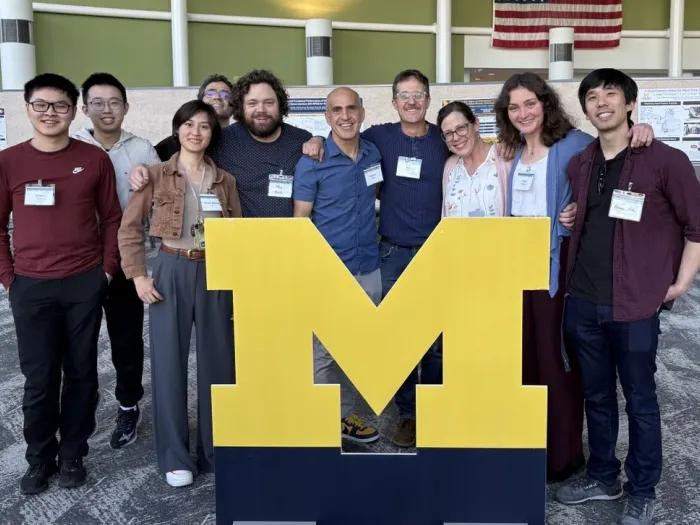
University of Michigan George Orley Student Mental Health Advocate Award Winner Announced
Lillie Birnie, undergraduate honors student in the EmoTe Lab/Prechter Program won the University of Michigan George Orley Student Mental Health Advocate Award for 2025. She was honored at the 2025 Mental Health on College Campuses Conference, hosted by the Eisenberg Family Depression Center.


The University of Michigan George Orley Student Mental Health Advocate Award recognizes college students for outstanding leadership and commitment to campus mental health. Student advocates create healthier campus communities throughout the U.S. by raising awareness about mental health conditions, the need for outreach programs and services, and the importance of eliminating the stigma surrounding these conditions. Each year, we recognize these exceptional individuals for their passion and commitment to improving the lives of their fellow college students.
This award is named in honor of the memory of George Orley, who sadly lost his battle with depression in 2013, just before his junior year at the University of Michigan. It’s made possible through the generous support of his parents, Randy and Diane Orley of Bloomfield Hills, Michigan, along with his siblings, Amanda and Sam.
The 2025 recipient of the George Orley Student Mental Health Advocate Award is Lillie Birnie. Lillie is an undergraduate honors student in the EmoTe Lab/Prechter Program. She is a senior majoring in Biology, Cognition, and Neuroscience with a minor in Intergroup Relations at U-M. Whether through her volunteering, research, or studies, Lillie is a leader amongst her peers in raising awareness about and reducing stigma around bipolar depression and addiction. Lillie's advocacy is far reaching and focuses on reducing stigma and raising awareness about addiction and bipolar disorder and teaching self-care and healthy lifestyles to students to reduce risk.
Lillie serves as a peer facilitator for the Wolverine Support Network, facilitating weekly support groups for undergraduate students and volunteering at campus-wide events promoting mental health awareness and self-care. She serves as a Peer Advocate for the College Recovery Program, speaking across campus to educate students and faculty about recovery and combatting addiction stigma. She was selected to represent this program at the 2024 "Look to Michigan" Campaign Event. Additionally, Lillie serves as a Youth Prevention Educator for Engage@EMU, facilitating programs that introduce middle school through college-age students to healthy lifestyles and coping skills with a focus on preventing depression, substance use, and violence.
Lillie's dedication to reducing stigma and risk does not happen in a silo — it influences her research. In her honor's thesis in the EmoTe Lab in Psychiatry, Lillie focuses on improving the identification of those with bipolar depression at risk for developing co-occurring substance use problems. Lillie challenges herself to integrate her multidisciplinary studies, integrating theories on social group identity and inequality from her Intergroup Relations minor to her thinking about neurobiological risk for depression from her BCN major. This approach will greatly enhance the potential impact of her work, and is a driving factor in receiving the 2025 George Orley Student Mental Health Advocate Award.
There is no student I've worked with that better embodies the values of the George Orley Student Mental Health Advocate Award than Lillie.
— Sarah Sperry, Ph.D., Associate Director of the Heinz C. Prechter Bipolar Research Program and Director of the EmoTe Lab
Featured News & Stories

Krista Goerger awarded the 2026 top graduate student award in cardiovascular research!
Learning Together: Making Space for Growth at Work
Alzheimer's Disease Atlas featured Z-CHAD study

The 20th Annual Prechter Lecture: Celebrating Legacy and the Future is tonight

Top 7 tips for choosing Medicare prescription drug coverage for 2027