Unraveling the Secrets Behind Beta Cells
Exploring this avenue may help to advance diabetes research
Author |
Michigan Medicine's Health Lab recently shared a story on beta cells and their importance in identifying treatment options for diabetes. Scott Soleimanpour, MD is the associate director for the Caswell Diabetes Institute and director of the Michigan Diabetes Research Center. Dr. Soleimanpour shares more on beta cells and our Islet Program, in which he leads.
From Michigan Medicine Health Lab
Diabetes has a significant global impact, affecting 40 million individuals in the United States alone, with burdensome and sometimes devastating complications.
Treating, curing and preventing diabetes requires innovative research in order to lead to groundbreaking therapies.
One approach to better understanding the disease’s mechanisms? Delving into the intricacies of beta cells, say experts of Michigan Medicine’s Caswell Diabetes Institute's Islet Program, a program established in 2020.
The Islet Program at the Caswell Diabetes Institute is at the forefront of this type of revolutionary research, aiming to spearhead the development of effective treatments.
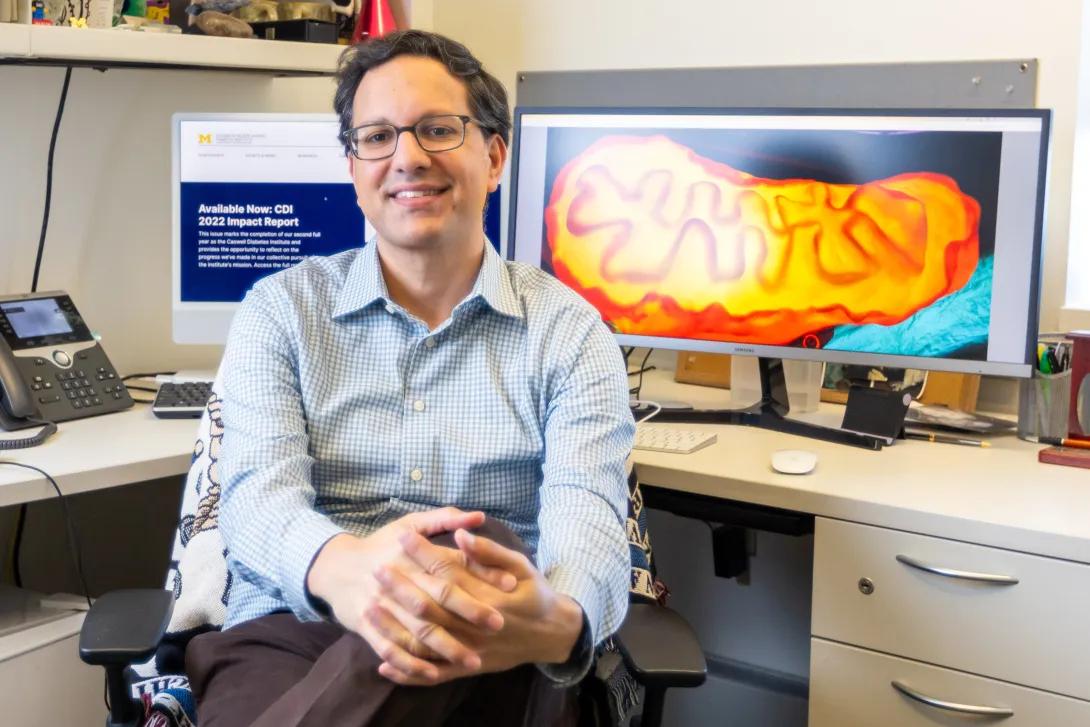
Scott Soleimanpour, M.D., associate director of the Elizabeth Weiser Caswell Diabetes Institute and director of the Michigan Diabetes Research Center, as well as a practicing endocrinologist and diabetes patient himself, is passionate about finding a cure and advancing therapies for the disease.
"The whole point is to cure the disease."
Soleimanpour leads a team dedicated to understanding the behavior and complexities of beta cells. They seek to unlock these secrets of diabetes at a molecular level, and ultimately develop personalized treatments to address the root causes of the condition.
Unraveling beta cell secrets
Within the pancreas live clusters of cells called islets, and it’s within these islets that beta cells are found.
Beta cells are a small, but important, component within the pancreas, making up only 2% of the organ's overall volume.
Despite their small numbers, these cells carry out a crucial function in the body – the production of insulin. Insulin is a hormone that regulates blood sugar by allowing cells to take in glucose from the bloodstream.
In Type 1 diabetes, beta cells don’t work well and the immune system mistakenly destroys beta cells, causing a lack of insulin.
In Type 2 diabetes, beta cells are unable to make enough insulin to keep up with the body’s demand and eventually fail.
Understanding beta cells is important for finding treatments for both of these common conditions, says Soleimanpour.
By providing a support structure for various labs dedicated to beta cell research, the program aims to understand the behavior and complexities of these cells to ultimately find a solution for insulin deficiencies.
Stem cell therapies
And a way the Islet Program is spearheading that?
By developing humanized beta cell systems, which include leveraging reprogrammed stem cells obtained from donors with and without diabetes, to develop realistic representations of human beta cells, as well as developing new technologies to study human islets from deceased donors with diabetes.
These approaches benefits patients by applying research findings and advancing tailored treatments and individualized care.
In this way, stem cell therapies may eventually emerge as a potential alternative to reduce dependence on insulin injections.
"Stem cell therapies, may or may not be the cure, or at least a contributor to one. But either way, we're working aggressively to figure that out in the next two to five years."
The program actively seeks collaborations with funding partners and welcomes investments to support its mission.
The Caswell Diabetes Institute supports rigorous science and its integration with patient centered clinical care, leading the way to prevent, treat, and cure diabetes, its complications, and related metabolic diseases.
Featured News & Stories

Michigan Alzheimer’s Disease Research Center at AAIC 2026
Explore the Department of Human Genetics Annual Newsletter
How AI is helping emergency physicians learn from their patients
Research may help better predict outcomes in kids with congenital cytomegalovirus

A link between e-cigarettes and oral cancer