Weil Institute unites global cardiac arrest experts at eighteenth Wolf Creek Conference
Honoring the fiftieth anniversary of the inaugural 1975 meeting, the conference was a celebration of both the history and the future of resuscitation science.
Author |
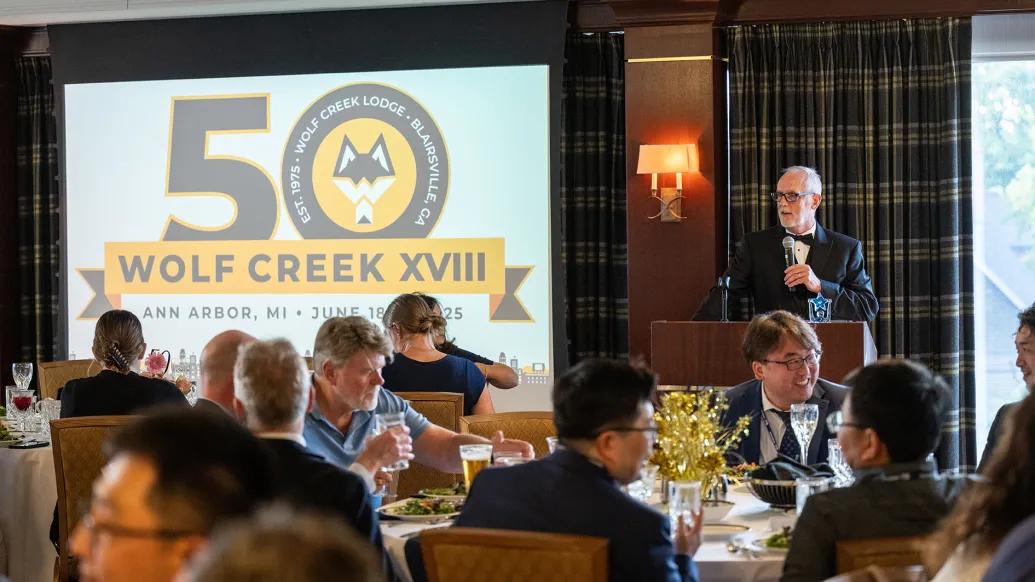
ANN ARBOR, MI – From June 18 to June 21, the Michigan League in downtown Ann Arbor became the global epicenter for cardiac arrest research as 150 of the field’s foremost thought leaders and innovators, along with industry scientists and early-career investigators converged for the eighteenth iteration of the legendary Wolf Creek Conference.
Wolf Creek is a historic tradition in resuscitation science that began in 1975 under the direction of pioneers Drs. James Elam, James Jude and Peter Safar. Named after Dr. Jude’s “Wolf Creek Lodge” where the first conference took place, the goal of the meetings is to foster a robust exchange of ideas among experts, stimulating laboratory and clinical research to transform the future of cardiac arrest care.
Hosted for the second year by the University of Michigan Max Harry Weil Institute for Critical Care Research and Innovation, the 2025 conference embodied the spirit of the seventeen that came before it through its focus on spurring active discussion and debate to determine where future research efforts should be focused. The event was structured around a series of discussion panels that covered key areas of scientific advancement interest in cardiac arrest research and CPR including survivorship, optimizing time intervals in cardiac arrest care, innovations in defibrillation science and ECPR technology, clinical trial design, and optimizing international collaborations.
With debate being a foundational aspect of Wolf Creek, each panel was followed by an open floor session, during which any attendee could step up to the mic to ask questions of both the panelists and fellow guests, to share their own perspectives and pearls of wisdom, and to even offer up biting critiques—all in the service of getting everyone fired up to advance research efforts in cardiac arrest and resuscitation science.
Honoring Both the History and the Future of Resuscitation Science
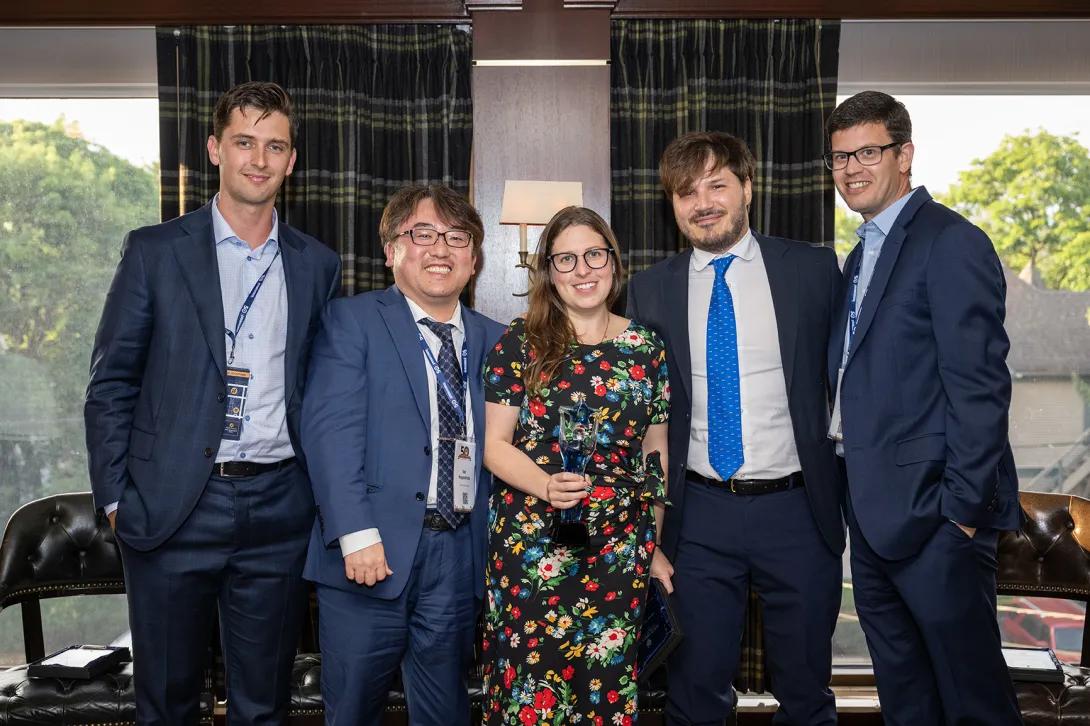
The 2025 Wolf Creek conference was especially unique as it marked the fiftieth anniversary of the inaugural 1975 meeting. In honor of this milestone, the Weil Institute team hosted a special dinner gala celebrating the meeting’s history, complete with a fireside discussion between longstanding attendees—some of whom had been at every Wolf Creek since the third. Between humorous accounts of rogue golf outings and then-greenhorns anxiously presenting their work before the giants of the field, each speaker also reflected on the impact the conference had on both their personal careers and on the field of resuscitation science.
In keeping to the conference’s theme of “The Future of Cardiac Arrest Resuscitation,” a portion of the event was also dedicated to looking ahead at the field’s potential through the Wolf Creek Innovator Award. Originally launched at the 2023 conference, the Innovator Award recognizes early career investigators who are challenging current paradigms in resuscitation science. Following a rigorous application process and proposal review earlier in the year, five finalists from around the world were selected to present their work at Wolf Creek. The winner, selected by audience vote, was Dr. Alexis Steinberg from the University of Pittsburgh School of Medicine, who was awarded $10,000 to further support her research.
More Wolf Creek on the Horizon
While June 21 may have marked the close for Wolf Creek 2025, planning for the next meeting in 2027 has already begun.
“The Weil Institute Events and Marketing teams were true champions that did an incredible job designing and implementing the latest iteration of this incredibly important meeting,” said Dr. Robert Neumar, Chair of the Wolf Creek Program Committee and Professor of Emergency Medicine and Molecular and Integrative Physiology. “National and international recognition of the Weil Institute has grown exponentially due to their efforts.”
Those who are interested in learning more about the conference may view the published proceedings, which will be out later this year in a special edition of Resuscitation Plus. Proceedings from the previous Wolf Creek Conference are available here.
About the Weil Institute
The team at the Max Harry Weil Institute for Critical Care Research and Innovation is dedicated to pushing the leading edge of research to develop new technologies and novel therapies for the most critically ill and injured patients. Through a unique formula of innovation, integration and entrepreneurship that was first imagined by Weil, their multi-disciplinary teams of health providers, basic scientists, engineers, data scientists, commercialization coaches, donors and industry partners are taking a boundless approach to re-imagining every aspect of critical care medicine. For more information, visit weilinstitute.med.umich.edu.
In This Story
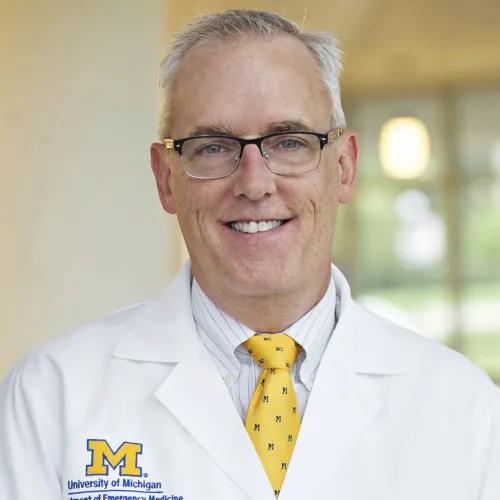
Robert W Neumar, MD, PhD
Professor
Featured News & Stories

Collaboration with community child care centers creates innovative research tool

U-M Emergency Medicine Helps Bring Pre-Hospital Blood Transfusions to Genesee County EMS
From Patient Art to Lifesaving Impact
Barsan Day Highlights Emergency Medicine Research and Innovation
Copper-loaded starch nanoparticles can target bacteria in microbial communities